Venezuela & The Challenge of Latin American Unity
 Facebook
 Twitter
 Linkedin
 Google +
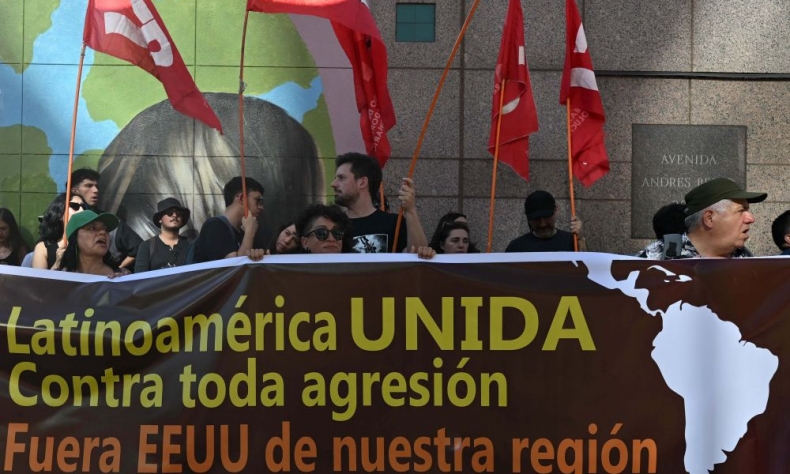
If Washington succeeds, it will reinforce a dangerous U.S. precedent: that political outcomes can be imposed on isolated states at manageable cost, and that regional fragmentation renders sovereignty effectively meaningless.
Two centuries ago, Simón Bolívar penned his legendary Letter from Jamaica, in which he warned that the greatest danger for Latin America after independence would come not only from foreign powers, but also from its own divisions. Newly independent states, if fractured and mistrustful, would remain vulnerable to new forms of domination. Unity, for Bolívar, was not a slogan, but a condition of survival.
That warning now feels uncomfortably current, with invading forces once again threatening Bolívar’s home city. As this article is written, President Nicolás Maduro is being held in New York after being kidnapped by U.S. forces. The elected Venezuelan Government remains in place and is preparing to defend the country as Washington openly signals the possibility of further military action aimed at forcing Venezuela to relinquish both its sovereignty and control over its natural resources. The collapse of any remaining pretense of respect for international law or a rules-based order has exposed, with unusual clarity, how vulnerable Latin American states remain when confronted individually by external coercion.
With U.S. officials now raising the prospect of operations in Colombia, Mexico, and beyond, the region is being forced into a long-avoided reckoning: fragmentation is no longer an abstract historical problem, but an immediate strategic liability.
From independence to managed fragmentation
Latin America did not emerge from colonial rule as a coherent political entity, but as a patchwork of small republics dominated by local elites. Having displaced imperial authority, these elites resisted integration whenever it threatened their control over their parcels of territory, resources, or political power. Bolívar himself was undone by regional elites in Quito and Bogotá, who preferred to rule over their own fiefdoms rather than participate in Gran Colombia, the post-independence state Bolívar built across much of the northern parts of South America, now divided into four separate states all rowing in different directions.
This pattern repeated itself across the region. Unity was sacrificed to regionalism and class interest, producing a map of small, competing states. For external powers, this arrangement proved convenient. A divided region could be pressured selectively. Governments could be isolated, sanctioned, or destabilized one by one, without triggering a collective response. This logic then shaped the 20th century and remains firmly in place today.
The current crisis in Venezuela reflects this reality. Instead of a coordinated regional response grounded in sovereignty and non-intervention, Latin America has once again fractured. Some governments condemned the operation as a violation of international law; others welcomed it for petty conjunctural reasons. The result was predictable.
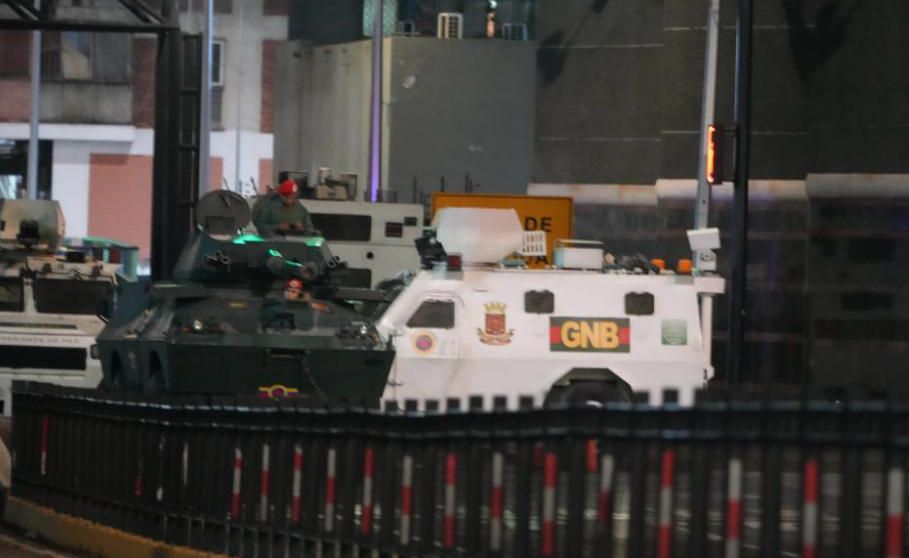
In military terms, the problem runs even deeper. There is not only a total absence of collective security, but also active collaboration by some with the external invading force. Trinidad & Tobago, for example, handed its territory over for use by U.S. forces during the naval buildup.
This is precisely the scenario Bolívar feared: governments calculating survival individually, while collective security exists only in rhetoric.
Sovereignty and strength
The lesson is not that international law is irrelevant, but that it is meaningless without the capacity to defend it. Sovereignty today cannot rest on declarations alone. It requires coordination, resilience, and a willingness to act collectively when core interests are threatened.
Venezuela’s experience over the past decade makes this clear. In 2019, sanctions and diplomatic isolation could be enforced because the region was complicit; every country sharing a land border with Venezuela joined the U.S. in cornering Caracas, while participating in the Lima Group alliance built by Washington. At the same time, regional integration mechanisms such as the Union of South American Nations (UNASUR), a regional organization established in 2008 aimed at enhancing economic, political, and social integration among South American countries, were dismantled, leaving no serious U.S. institutional framework for opposition to the blockade at that time.
The consequences of this disintegration are now being acknowledged, albeit belatedly. In response to the invasion, Chilean President Gabriel Boric warned that “today it’s Venezuela, tomorrow it could be any other country.” It is a straightforward observation, yet one that sits uneasily considering Boric’s years of support for U.S.-backed pressure on Caracas. Only the prospect of presidential kidnapping appears to have jolted him awake.
This divide-and-rule dynamic is not unique to Latin America. Similar strategies have been deployed against other states viewed as adversaries, from efforts to fragment Iran along ethnic lines, to sustained attempts to weaken China by funding separatism in its Xinjiang, Hong Kong, Taiwan, and elsewhere. Fragmentation creates the opening for external domination.
What happens next for Venezuela?
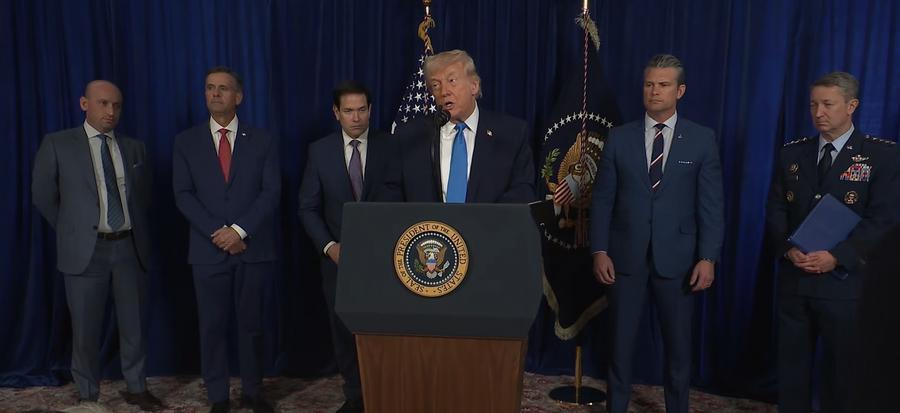
What follows now will matter far beyond Caracas. While the U.S. has not imposed full regime change, it is clearly banking on intimidation to extract concessions over sovereignty and natural resources.
If Washington succeeds, it will reinforce a dangerous U.S. precedent: that political outcomes can be imposed on isolated states at manageable cost, and that regional fragmentation renders sovereignty effectively meaningless.
However, if Venezuela is able to regroup, through institutional continuity and popular mobilization under acting President Delcy Rodríguez, it may gain the space needed to stabilize the situation and defend its independence. Washington’s limited appetite for a prolonged ground war suggests that pressure, rather than occupation, remains the preferred tool, especially now that Trump has a scalp with which to gloat for his domestic audience.
Such a confrontation would amount to more than a national struggle. It would resemble a second war of independence, with implications for the entire region.
Building unity
What Latin America needs now is not nostalgia, but political clarity. Unity must be treated not as a symbolic aspiration, but as a strategic necessity. That means rebuilding regional institutions, deepening economic integration, developing credible forms of collective security, and coordinating diplomatic positions based on a shared understanding that the U.S. is a hostile enemy force for the region.
Latin America faces a choice it has deferred for generations: continue navigating external pressure as isolated states, or begin the difficult work of constructing genuine continental coherence.
A more honest discussion of U.S. imperialism is now possible. Its supporters and collaborators around the world can no longer rely on appeals to universal values to justify their actions, which must instead be recognized and addressed as urgent threats to national security.
Venezuela’s crisis is therefore not Venezuela’s alone. It is a warning to the entire region. How Latin America responds will shape not only the fate of one country, but the credibility of everyone’s claim to independence in a world where power is once again exercised without disguise.
Bolívar understood that independence without unity would remain hollow. Two centuries later, the cost of ignoring that lesson is once again being made clear.
The author is a Bolivian journalist now based in Beijing and formerly a staff writer at teleSUR, Venezuela’s public broadcaster.