When the “World’s Cop” Drops the Rulebook
 Facebook
 Twitter
 Linkedin
 Google +
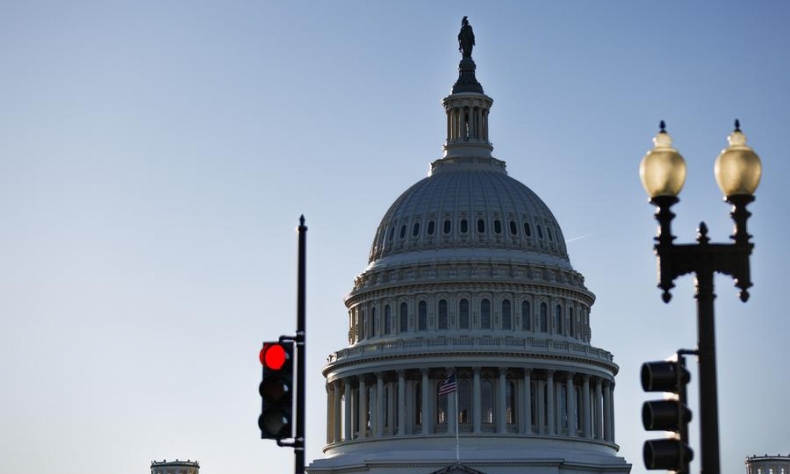
America is tearing apart with its own hands the very post-war order it once helped build, dragging the world back to a jungle era where might makes right.
January 20 marked one year since Donald Trump’s return to the White House. At this time last year, warnings that the U.S. might adopt a more unilateral and confrontational foreign policy, prioritizing its own strategic interests even at great international cost, would likely have been met with widespread skepticism.
Most people worldwide have long viewed the U.S. as a hegemonic power. The 2021 report U.S. Military Interventions 1776-2019 released by Tufts University documented 392 U.S. military interventions from 1776 through 2019, with approximately half occurring after 1950 and about a quarter after the Cold War ended in 1991.
The U.S. has long occupied a paradoxical role in the modern world order. On one hand, it was the principal architect and defender of the post-1945 system, built on principles of sovereignty and international law designed to prevent powerful nations from annexing others at will. This framework meant that even America, to maintain its leadership, had to justify its actions, such as military interventions, within the “fig leaf” of legal and diplomatic legitimacy.
On the other hand, critics argue the U.S. has also acted as the system’s “bad cop,” using its dominant power to suppress challengers and advance its own strategic interests, sometimes at the expense of the very rules it helped establish.
The U.S. launched airstrikes on Venezuela in early January and deployed special forces to abduct the Latin American country’s legitimate president. But what followed left the world more deeply unsettled: A string of statements and moves by U.S. politicians revealed their apparent ambition to gain access to Venezuela’s vast oil reserves. They openly declared that America would control Venezuelan oil sales indefinitely. On January 9, barely a week after the raid, Trump convened more than a dozen American oil giants at the White House, urging them to invest in rebuilding Venezuela’s oil industry and promising handsome returns.
America’s key military actions since the turn of the 21st century have largely centered on securing control over regional oil resources. Previous administrations typically cloaked these interventions in the rhetoric of “humanitarianism” and “post-war rebuilding,” framing the U.S. as a savior. In Venezuela, however, Washington has cast aside that narrative, openly signaling a policy of maximizing profit with minimal investment. Should this approach succeed, other resource-rich nations could face a similar fate.
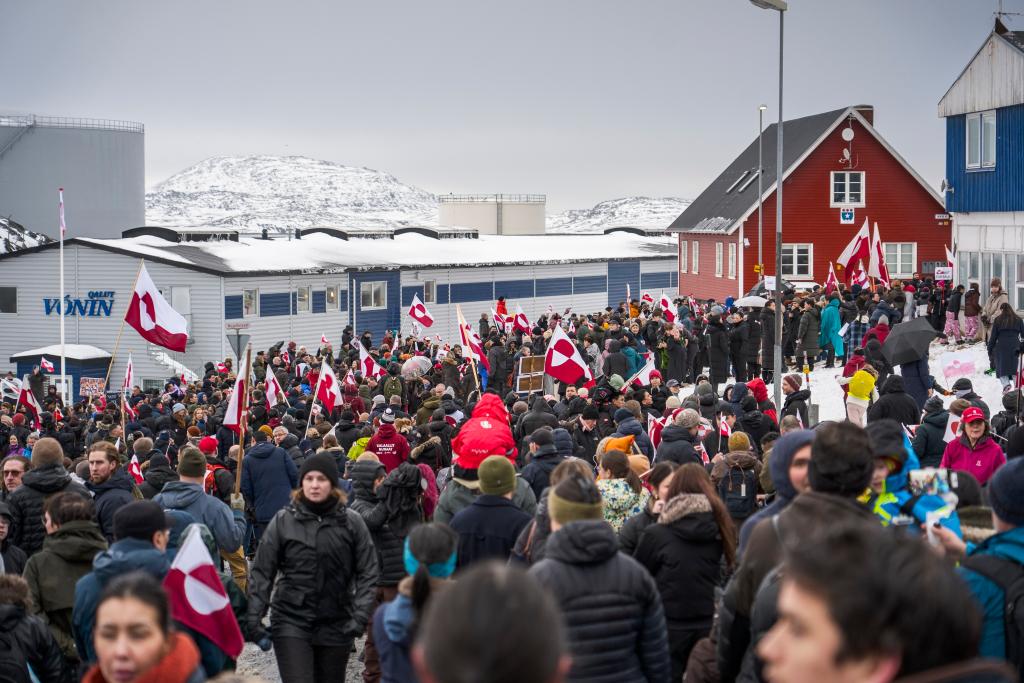
America’s territorial claims on Greenland have sent chills through the world. As the world’s largest island, Greenland boasts immense strategic and economic value. The U.S. military already operates bases there, yet the Trump administration has remained fixated on acquiring outright “ownership” of the island, repeatedly threatening to use military force to seize it. But this was fundamentally different from America’s previous wars of aggression: Greenland is a self-governing territory of Denmark, and Denmark is a NATO member—an American ally. If the U.S. could swallow Greenland whole, what would stop it from making Canada the 51st state?
In a January 7 interview with The New York Times, Trump declared he had “no need for international law.” His own “moral standards and will,” he proclaimed, were the sole constraints on his ability to direct military operations globally. With a self-portrait as a peace-loving leader, yet less than a year into his second presidency, Trump had already launched military strikes against seven nations: Venezuela, Yemen, Syria, Iran, Iraq, Somalia and Nigeria. Over the past year, Trump ordered more than 620 airstrikes against foreign countries.
Trump recently announced that he wants to raise the U.S. military budget to $1.5 trillion for the fiscal year 2027—a 50-percent increase over the currently projected $1 trillion. As it stands, American military spending already accounts for 40 percent of the global total.
Also on January 7, the U.S. announced it would withdraw from 66 international organizations that “no longer serve American interests.” This time, the targets were institutions dedicated to advancing international law, economic development, environmental cooperation and gender equality—precisely the fields where America had once been an undisputed champion and defender.
Flouting international law, openly plundering other nations’ resources, arbitrarily withdrawing from multilateral institutions, recklessly expanding its military arsenal—America is tearing apart with its own hands the very post-war order it once helped build, dragging the world back to a jungle era where might makes right.
Less than a century ago, another nation followed a similar path: One leader rallied the nation around lost honor, scapegoated minorities and turned to military aggression abroad to mask economic failures at home. That nation led the world into a catastrophic war, leaving 70 million dead and 130 million wounded.