Winter Sunshine: ROK Buttresses Ties with China
 Facebook
 Twitter
 Linkedin
 Google +
While our analysis shows the South Korean approach is in part guided by the necessity of better balancing, we must also conclude that Lee appears well-suited to this task, and all the more so because it’s the mature, philosophical value of the party and people he represents.
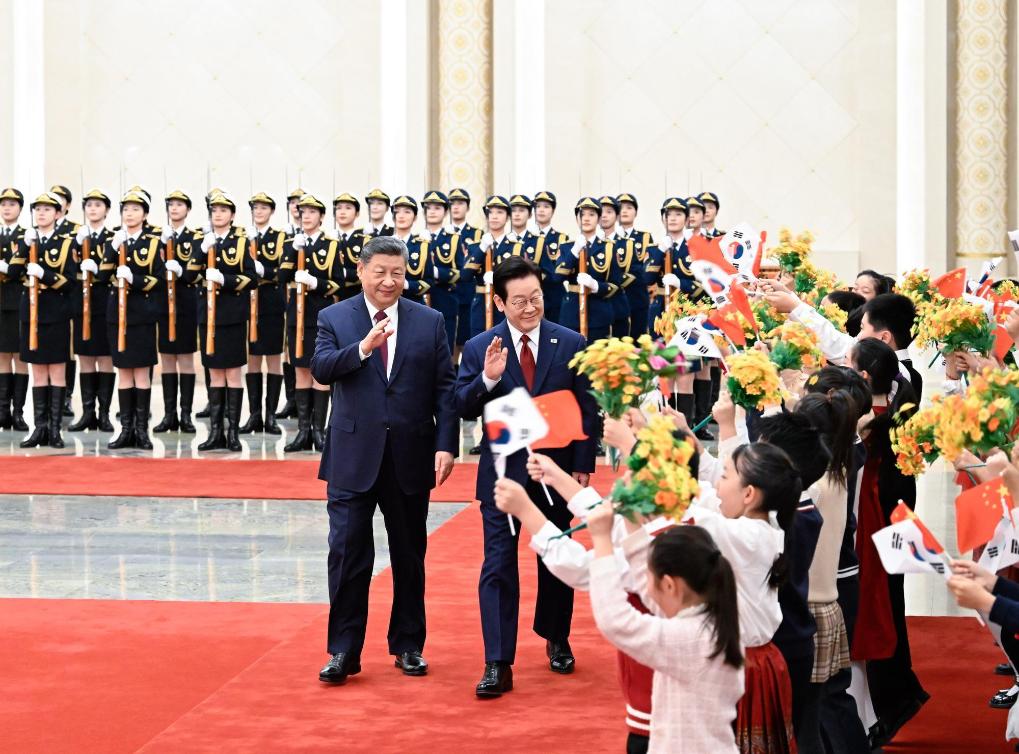
The visit of President Lee Jae Myung of the Republic of Korea (ROK) to China has been widely interpreted as buttressing its ties with China at a time when the United States violates the U.N. Charter, commits acts of war contrary to its own laws as well as international law, advances unprecedented sales of weapons to Taiwan contrary to agreements with China, and acquiesces in a return of Japanese militarism.
President Lee met with Chinese President Xi Jinping in Beijing before visiting Shanghai and hailed his visit as having achieved more success than anticipated, adding, “South Korea-China relations are truly essential for both sides. There is no need to unnecessarily provoke, reject or confront each other.”
This statement carries significant weight and deep implications. Indeed, Lee’s visit to China comes at a fraught time for both regional and global security, taking place ahead of a planned meeting with the new prime minister of Japan. It is in these contexts that we must assess the significance of his positive outreach with China and the warm reception he received.
Shocks in ROK and Japan
Both South Korea and Japan have experienced significant political shocks in the past year, their polarized polities flip-flopping but in inverse ways. The new South Korean leadership is more moderate than its predecessor, while the new Japanese prime minister is not only much more conservative but also much more provocative to its neighbors, including China and South Korea, in ways that touch directly on matters of sovereignty and national security.
To start, however, we need to recall that South Korean leadership has switched back and forth between politicians representing two separate forces: those who prefer a more moderate, peaceful approach in bilateral ties versus those who have taken a more aggressive stance. In the case of the latter, the last two leaders fell due to scandals — one for conspiring illegally with security services to manipulate the election and engaging in garden-variety corruption, the other for illegally declaring martial law.
Unfortunately, both of these leaders contributed significantly to undermining China-South Korea ties, including welcoming advanced U.S. missiles onto South Korean soil, along with accommodating other U.S. efforts to establish a new anti-China containment strategy. These efforts culminated in 2023, when the Biden administration pressured Seoul to ignore the historical sins of Japanese aggression and to accept the return of U.S. nuclear submarine patrols making port calls in South Korea, among other things.
Concessions from ROK and Japan
Nevertheless, Biden’s strategy began to fail in 2023 and was finished by 2024, when it became clear that India, a linchpin of the U.S. strategy, had decided to abandon such direct confrontation with China. By 2025, Donald Trump was back in the White House and advanced a global trade war, targeting China, India, Japan and South Korea among others.
On the one hand, these developments, encouraged in part by the strategic relationships China and India have with Russia, occasioned a thawing of Sino-Indian ties. On the other hand, they also moderated South Korea and Japan toward China, above all as Lee replaced his impeached predecessor and returned his country to a more moderate path, and as both countries weighed a potential trilateral trade agreement with China, motivated in part by U.S. trade aggression.
That said, despite the mercantilist, rent-seeking characteristics of Trump’s trade war and despite it running contrary to international rules, the United States was able to extract significant concessions from both the South Korean and Japanese governments. These concessions did not compromise Lee politically, inasmuch as his constituents understand the security trap they face with the United States, which Trump leveraged to get the trade deal he wanted.
In Japan, however, resistance to concessions by former Prime Minister Shigeru Ishiba contributed to political and economic anxiety in an economy long suffering under massive debt and decades of stagnation, while also stuck in a security trap with the United States, one that has persisted since the end of World War II. Although he ultimately offered concessions, he predictably suffered the fate of disappointing his constituents, given the dual political and economic costs associated with resisting and then conceding. These outcomes occasioned his fall from power and, in his place, the rise of Sanae Takaichi, who immediately ingratiated herself with Trump and advanced various provocations, including a return to militarism and proposing, in essence, a security alliance with “Taiwan independence” secessionists.
A more dependent ROK
A straightforward analysis indicates that between South Korea and Japan, South Korea is more dependent on positive ties with the U.S. militarily and economically. Most experts agree that South Korea believes it depends on the U.S. to prevent a war it could lose immediately. In contrast, Japan believes it depends on the U.S. to maintain a regional balance of power that it can’t manage alone. Meanwhile, Japan has a larger absolute economic relationship with the U.S., but South Korea exhibits a higher degree of relative economic dependence. Indeed, Japan’s relationship is one of deep interdependence between two financial and industrial superpowers, while South Korea’s relationship is characterized by a higher reliance on the U.S. market for its export-driven growth and a more direct integration into U.S.-led strategic supply chains. In short, like matters of national security, South Korea’s economic security is more overtly tied to the health of the alliance.
Consequently, shifts in U.S. economic policy, demand or trade relations typically have a more pronounced and immediate impact on the South Korean economy than on the larger, more diversified Japanese economy.
Lee’s pragmatic approach
Notably, both Japan and South Korea depend significantly on positive trade relations with China, but South Korea appears more vulnerable to short-term disruptions due to its concentrated export structure and deep integration with Chinese manufacturing. Japan, while also highly dependent, has taken more steps to diversify and has a more resilient trade portfolio.
Consequently, both countries face strategic dilemmas when it comes to balancing economic ties with China alongside their security alliances with the U.S., but South Korea is more vulnerable to both China and the U.S. than Japan is, and perhaps more vulnerable to domestic political polarization. Interestingly, these factors have likely contributed to Lee’s pragmatic approach to China, although doing so was already a value of his party, as noted above.
And yet, Takaichi has also taken shots at South Korea recently, asserting claims of sovereignty over Korean islands. Japanese spin doctors have assured Seoul that this messaging is just a rhetorical game for her right-wing supporters. Even so, it has likely reinforced Lee’s determination to improve Sino-South Korean ties ahead of a planned summit with Takaichi. Seoul’s responses have been notably stoic, emphasizing the need to avoid inflammatory language.
Winter sunshine
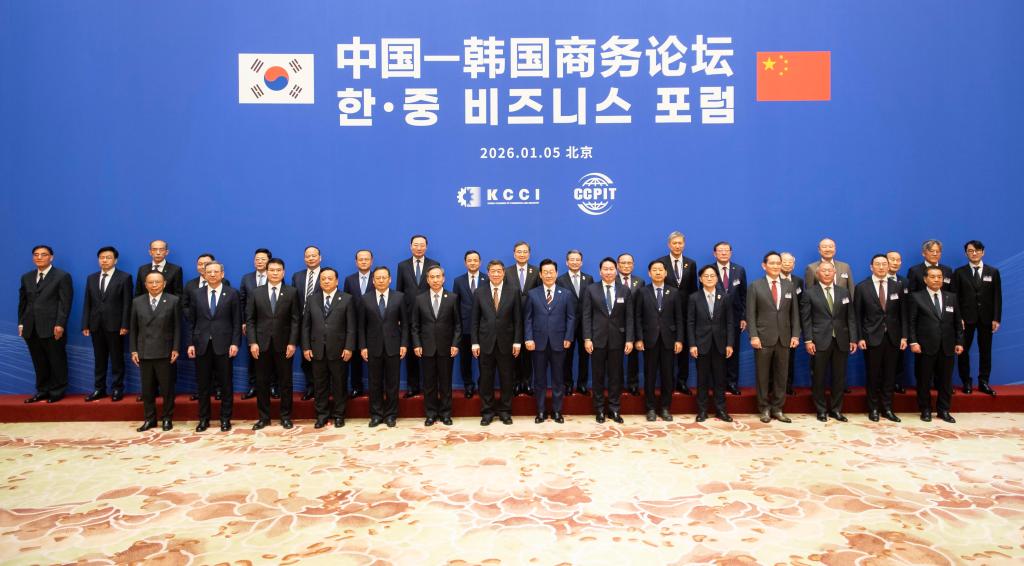
Lee was joined in China by a delegation of around 200 South Korean business leaders, including many from leading chaebol like LG, Hyundai and Samsung, among others. The two presidents witnessed the signing of 15 documents of cooperation. Cross-business ties were also promoted, with Chinese and South Korean businesses signing agreements, including in high-tech areas. Some might interpret this as a growing resistance to U.S. efforts to discipline its allies as it continues to try to impose a technology blockade against China.
During his visit, the Korea Composite Stock Price Index reached a record high, investors buoyed by his deft diplomacy. Many others were likewise happy to see a selfie Lee took, including Xi and their wives, reportedly taken with a Xiaomi smartphone Xi had given him when they met previously in South Korea — a meeting that took place two months ago, a month after Takaichi was elected prime minister. What a remarkable divergence in trajectories, what a tremendous difference in approaches to regional growth and security, and how quickly it has emerged!
But the key point here: while our analysis shows the South Korean approach is in part guided by the necessity of better balancing, we must also conclude that Lee appears well-suited to this task, and all the more so because it’s the mature, philosophical value of the party and people he represents. Let’s hope this balancing act continues, and let’s hope he has a moderating influence on Takaichi, for the greater good of all three countries.
Josef Gregory Mahoney is a professor of politics and international relations and director of the Center for Ecological Civilization at East China Normal University in Shanghai. He is also a senior research fellow with the Institute for the Development of Socialism with Chinese Characteristics at Southeast University in Nanjing.