Young People Share Ideas on the China-Proposed Global Civilizations Initiative And the Path to Mutual Understanding
 Facebook
 Twitter
 Linkedin
 Google +
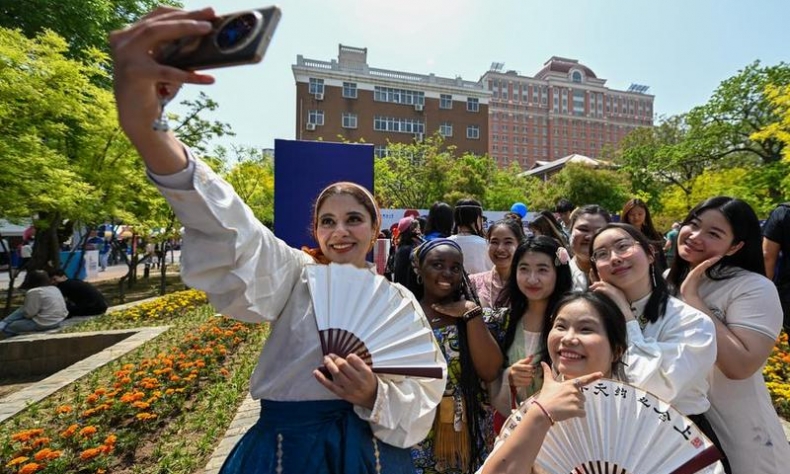
The cure for these misunderstandings is face-to-face dialogue, immersive exchange and mutual respect for civilizational diversity—exactly what the GCI embodies.
Civilizations, like rivers, begin in different mountains and carve different valleys. They nurture different crops and inspire different people, but just as is the case for rivers, the meeting and intermingling of these civilizations is inevitable.
The Global Civilizations Initiative (GCI) was proposed by Chinese President Xi Jinping in March 2023 and calls for respecting civilizational diversity and promoting inter-civilizational exchange. To mark the third anniversary of the GCI, Beijing Review invited six young people from Lebanon, Italy, Brazil, Cameroon, Pakistan and the United States to share their observations on the initiative. They have crossed mountains and drunk from new rivers. And they have discovered something surprising beneath the surface of human difference: a current of shared aspiration running deeper than any divide.
“We share the same appreciation for beauty, admiration for quality and love of art,” said Hainan Li brocade designer Nicki Johnson from the United States, who has spent two decades learning about China’s intangible cultural heritage.
“Despite there being so many differences between civilizations, we are all essentially human and have the same basic needs and dreams—a stable future, a healthy and peaceful life, and being successful in our careers,” Brazilian researcher Rafael Henrique Zerbetto told Beijing Review.
This is not naive idealism. It is hard-won consensus from those who have done the difficult work of genuine exchange. Their stories weave bonds across cultures—not by pretending differences don’t exist, but by discovering what survives the journey when this genuine exchange takes place.
The six youths are all members of the Global Young Leaders Dialogue (GYLD) program launched by the Academy of Contemporary China and World Studies in affiliation with China International Communications Group (CICG). The program was launched in 2020 to promote dialogue and communication among young people from different countries.
Common values
When Adham Sayed spoke about values, his voice carried the weight of Lebanon’s experience. A researcher at the Institute for Mutual Learning of East-West Civilizations at Zhejiang Gongshang University in Hangzhou, Zhejiang Province, Sayed identifies equity, liberation and stability as the values his people hold most dear—values forged in the crucible of what he called the “Arab century of humiliation.”
“This injustice stems from imperialist exploitation and a ‘civilizational hierarchy’ adopted by the dominant power,” Sayed explained, drawing a parallel with China’s history following the Opium Wars in the 19th century, which plunged China into a century of humiliation at the hands of Western powers. “We yearn for liberation from the grip of colonialism that suppresses our right to development. In this regard, we find a deep resonance with the Chinese experience.”
For Sayed, China’s emphasis on common human values—peace, development, equity, justice, democracy and freedom—is not mere rhetoric but a reflection of shared painful history. “China realizes these values must be applied equitably to all nations without exception,” he said.
Across the Mediterranean, Italian Sinologist Dario Famularo traced Italy’s highest values—family, community and quality of life—to the Renaissance humanist tradition that balanced loyalty to la famiglia (family) with commitment to the res publica (public affairs, the state). Now a lecturer at Sichuan International Studies University in Chongqing, Famularo is candid about contradictions within his own heritage. “In Renaissance Florence, wealthy families dominated public office while claiming to serve the common good. Today we see the same tension—elite interests versus collective welfare.” He said China has addressed this more effectively than Italy has in recent decades. “The sense of shared purpose, of contributing to something larger than oneself, feels more tangible here.”
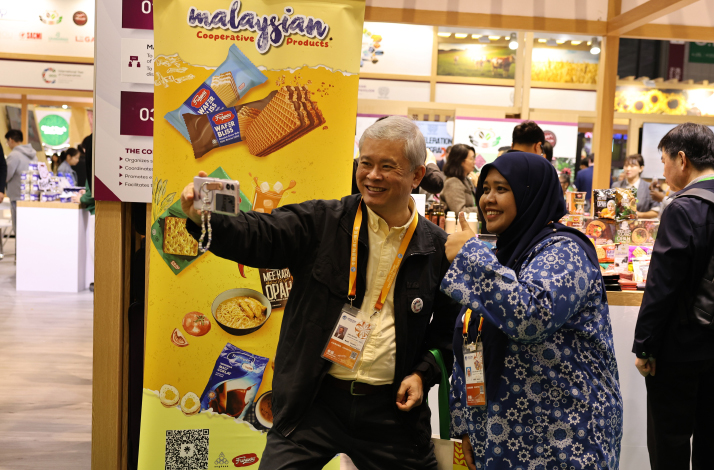
From Cameroon, Joseph Olivier Mendo’o brought to the interview the Ubuntu philosophy that permeates many African societies. A Peking University Ph.D. graduate and head of the African Youth Delegation in China, Mendo’o explained, “In traditional African societies, the most cherished social values are communal solidarity, shared equity, mutual respect, collective progress and harmonious coexistence.” The African proverb “If you want to go fast, go alone; if you want to go far, go together” captures this ethos perfectly, according to him.
“Freedom in our culture is not unbridled individualism, but freedom to thrive alongside one’s community,” he added.
For Mendo’o, China’s advocacy of common human values resonates deeply with Ubuntu. “These values are not a Western monopoly, nor are they confined to a single civilization; they are universal aspirations that bind all humanity,” he said.
Having witnessed China’s poverty alleviation efforts firsthand in rural villages, Mendo’o has seen the concrete manifestation of these principles. “China champions these common values because it understands a fundamental truth: No civilization can flourish in isolation, and no nation can achieve lasting peace if the world is divided by inequity,” he noted.
Bridging the gap
The greatest obstacle to inter-civilizational harmony, according to these young voices, is not cultural difference itself but the misinterpretation and weaponization of those differences.
Sayed identifies the core problem as the West’s attempt to force Westernization on non-Western peoples. “They consider their civilizational model the sole benchmark for progress, labeling anything else as ‘backwardness’ to justify military intervention. This moral monopoly is the primary driver of global wars and crises,” he said. The solution, he continued, lies in the GCI, which “calls for respecting diversity and recognizing that our strength as humans lies in our differences.”
“The ancient Silk Road, linking China to Europe through Central Asia and Arab countries, is the best example in history demonstrating that international exchange can bring positive outcomes to everyone,” Zerbetto said. Beyond silk and spices, the trade route network also served as a conduit for ideas—advancing medicine, astronomy and agriculture across continents. For him, “cultural exchanges are the key for the success of international cooperation, because only through communication between people from different civilizations can we learn and get used to seeing the world from a different perspective.”
He distinguished between misunderstandings caused by language differences and those rooted in cultural barriers, saying, “Language differences are easier to surpass—we just need to learn other languages or use interpreters. But cultural barriers are much more complicated.”
Working as a language consultant with the CICG Center for the Asia-Pacific, Zerbetto participates in multilingual cross-cultural communication and translation projects aimed at reducing misunderstandings between China and Latin American countries. These are practical actions to promote mutual learning among civilizations under the framework of the GCI.
Famularo drew on sinological history to make a related point. “The great intercultural communicators, from Matteo Ricci to 19th-century scholars, have always emphasized that similarities are more important than differences. They sought points of connection—shared human experiences, comparable philosophical concerns and parallel literary expressions,” he said.
Yet today’s nationalist rhetoric obscures this truth. “It makes us lose sight of the most important thing: that we are all human beings first. Italian, Chinese, whatever—we all want dignity for our families, safety for our children and hope for the future,” Famularo added.
Mendo’o diagnoses the problem as “ignorance-driven stereotyping and the false belief that civilizations must clash rather than collaborate.” Too many people, he argued, judge entire civilizations by fragmented narratives or biased media portrayals. “We see the myth that ‘one size fits all’ for governance, development and culture; we see suspicion replace curiosity and division replace dialogue,” he added.
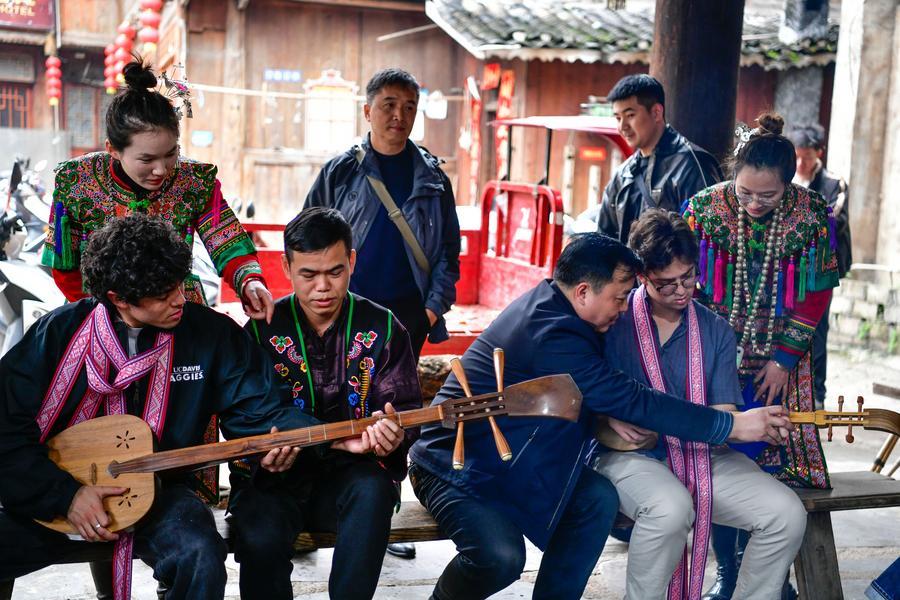
“The cure for these misunderstandings is face-to-face dialogue, immersive exchange and mutual respect for civilizational diversity—exactly what the GCI embodies,” Mendo’o said, adding “having lived in rural China, I have seen this work. When an African farmer talks with a Chinese rice grower about feeding their families, stereotypes melt away and trust takes root.”
Umer Farooq Sansi, who serves as the Gilgit-Baltistan region of Pakistan’s focal person for China affairs and who is involved in youth exchange activities between China and Pakistan, offered a systematic analysis of misunderstandings existing in today’s world. He identified four root causes: historical grievance narratives, media-driven cultural stereotypes, political framing of cultural differences and lack of cross-civilizational literacy in education systems. His proposed solutions include institutionalized inter-civilizational dialogue platforms, reformed education systems emphasizing comparative civilizations, responsible media ecosystems and expanded people-to-people exchange. “Nothing reduces prejudice faster than direct interaction,” he said.
The youth power
How can young people become effective communicators across civilizations? The responses emphasize deep engagement, linguistic competence and genuine curiosity.
Johnson, who lives in Hainan Province and designs products that incorporate the traditional brocade of the local Li ethnic group, advocates for immersive experience of other civilizations. “Young people should spend time traveling to different parts of the world, immersing themselves in local cultures, learning about different ways of life, and studying different languages. Only by understanding other points of view can we truly begin to articulate our own.”
Her own journey has exemplified this. In recent years, she has immersed herself in China’s intangible cultural heritage. “The tenacity and painstaking attention to detail of master artisans has greatly inspired me, and I take great joy in helping to tell their stories to audiences around the world,” she said.
Famularo, however, sounded a note of concern about declining language learning enrollments among young people. “Just when we need them most—when the world is more connected yet more divided—young people are turning away from the very tools that enable real understanding.” He said he worries students see language learning as unnecessary in an age of AI translation. “AI can translate words, but it cannot translate worlds. It cannot explain how to build trust across cultural difference. These things require lived experience, emotional intelligence and deep cultural knowledge.”
Drawing on the work of philosopher Hans-Georg Gadamer, Famularo argued that language is not merely a tool but “the medium through which we understand the world and each other.” His own experience confirmed this, “I understood Italy better after living in China. I understood my own culture’s assumptions only when I encountered a culture that did not share them.”
Sansi outlined practical pathways for youth engagement: developing cross-cultural awareness through study, using digital platforms for global communication, participating in international exchanges, promoting inter-civilizational dialogue through academic initiatives, and combating stereotypes and misinformation. “Digital platforms can become virtual bridges between civilizations, allowing youth to exchange ideas without geographical limitations,” he said.
Famularo’s formative experience came through a project in high school, role-playing a European Parliament session with students from different countries. “For one week, we had to find a way to work together. It was eye-opening, truly life-changing. For the first time, I understood that my Italian perspective was just one perspective among many.”
According to Zerbetto, together with the GCI, the China-proposed Global Development Initiative (GDI), Global Security Initiative (GSI) and Global Governance Initiative (GGI) “make a complete set showing a broad vision on international relations marked by cooperation, mutual respect, solidarity and justice.”
Mendo’o offered a vivid analogy, comparing the four initiatives to branches of a single baobab tree. “GSI is the foundation—without security, there can be no development. GDI is the lifeblood—development lifts people out of despair. GGI is the framework—ensuring the global system works for all. And GCI is the soul—nurturing the human connection at the heart of all global efforts.”
As these voices demonstrate, the path to inter-civilizational understanding requires neither the erasure of differences nor their exoticization, but rather a continuous process of dialogue, translation and mutual learning, which is what the GCI seeks to promote.
In a world grappling with peace deficits and trust deficits, these young people’s experiences offer hope that the bridge-builders are already at work, one conversation at a time.