Zhejiang’s Countryside Code
 Facebook
 Twitter
 Linkedin
 Google +
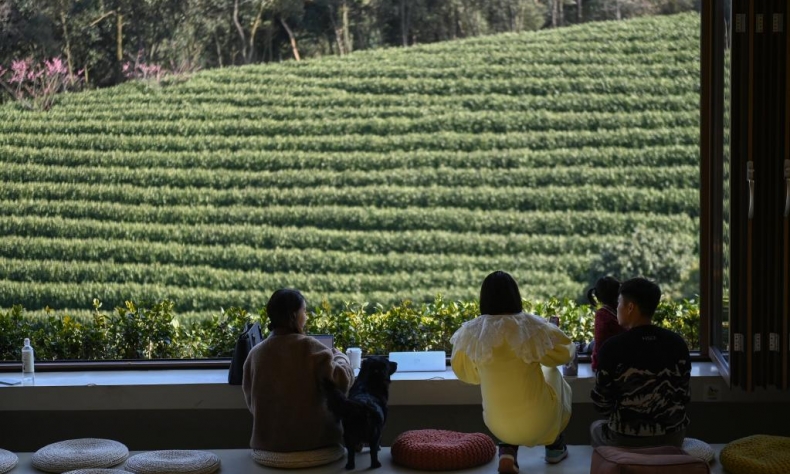
The stories of Zhejiang’s rural transformation show how sustained, localized development can turn once-poor villages into models of shared prosperity.
Fifty-five-year-old Shi Yizhong never imagined fireflies could become the foundation of a serious business. In 2022, Longshan Village in Huzhou’s Wuxing District collaborated with a young entrepreneurial team to create a firefly campsite—a natural attraction where visitors can observe these glowing insects in a preserved habitat. The site quickly drew waves of tourists coming to visit and share their experience online, recouping its initial investment in just two years.
“In our village, there is a group of young entrepreneurs full of creativity. Our stance is clear: We strongly support them,” said Shi, head of Longshan Village. “If their proposals are easy to understand, we push forward right away. Even when an idea isn’t immediately clear to us, as long as it’s feasible, we support it just the same.”
Longshan has encouraged young people who left to pursue studies and careers in cities to return to start businesses and settle locally. What was once a depopulated village has now transformed into an energetic mountain community featuring homestays, cafés, campsites, restaurants and a variety of small enterprises. These diverse ventures reinforce one another, steadily increasing visitor numbers and building a sustainable local economy.
The story of Longshan is a microcosm of Zhejiang’s pursuit of common prosperity. In 2021, China unveiled multiple measures for building a demonstration zone to achieve common prosperity through high-quality development in Zhejiang. Over the past five years, the province has focused on this mission, narrowing gaps between urban and rural areas, between regions, and between income groups—leading to more equitable progress in society.
Common prosperity is a goal China has vowed to largely achieve by the mid-21st century. It means that all Chinese people will be better off as China evolves and no one is left behind. Policies will be tilted in favor of rural areas, less developed regions and vulnerable groups to promote fairness and prevent wealth polarization.
According to data from the Zhejiang Provincial Bureau of Statistics, the per-capita disposable incomes of urban and rural residents in 2024 ranked third and second nationwide, respectively. The urban-rural income ratio narrowed from 1.96 in 2021 to 1.83. Zhejiang’s per-capita GDP rose from $14,600 in 2020 to $19,000 in 2024, and is expected to surpass $20,000 this year, a benchmark held by many experts as the threshold of a developed economy.
Beautiful villages, beautiful economy
“Ecology is our biggest attraction for tourists!” a guide in Yucun Village, Huzhou’s Anji County, told Beijing Review. Since 2005, when all the mines in the village were closed, the village has been exploring new ways to achieve sustainable development and prosperity. Guided by the principle that “lucid waters and lush mountains are invaluable assets,” or “green is gold,” the village has evolved into a nationally renowned scenic area and was recognized as one of the Best Tourism Villages by the United Nations World Tourism Organization in 2021.
President Xi Jinping, then Secretary of the CPC Zhejiang Provincial Committee, first introduced the concept that “green is gold” during a visit to Yucun on August 15, 2005.
In 2024, the village received 1.22 million tourist visits, and its thriving cultural tourism industry has effectively driven the development of local specialty businesses such as homestays and bamboo crafts.
In recent years, the village has also fostered new industries, including digital publishing, Yu Xiaoping, Deputy Secretary of the Communist Party of China (CPC) Yucun Village Branch, said.

The CPC is China’s governing party. According to the CPC Constitution, Party organizations in villages—branches, general branches and committees—provide leadership over work in all areas in their localities to enhance community-level social governance. A village Party organization secretary is elected by Party members there. The secretary is also often elected by villagers to head the villagers’ committee, an organization for a village’s self-management.
In Changxing County, which neighbors Anji, ecological advantages have also been successfully transformed into economic benefits. In the Baduka Scenic Area, villagers sell their agricultural products at the market, while tourists pause to take pictures under ginkgo trees or enjoy a leisurely coffee in one of the cafés housed in renovated old buildings. The area is famous for a 12.5-km-long ginkgo corridor, dotted with over 30,000 pristine ginkgo trees along the way.
“In the past, we sold ginkgo nuts; now, we sell scenery,” Wang Chunhua, Secretary of the CPC Branch of Dakakou Village, a village in the scenic area, explained.
To foster shared growth between businesses and the scenic area, Dakakou has launched an incentive program: a portion of ticket revenue is allocated to directly reward star businesses that help attract visitors to the area.
“For example, one café that has gone viral online brings tourists who specifically come here to visit it. The benefits don’t stop at just one business—when foot traffic increases, nearby restaurants, inns, and cultural and creative shops also see their business thrive,” Wang said.
Changqin Village in Jiaxing’s Nanhu District manages around 320 hectares of high-standard farmland. While historically centered on rice cultivation, the village has been quietly undergoing a transformation. In 2023, Changqin and five neighboring villages joined forces.
“At the heart of this progress are institutional innovation and the return of young talent,” said Xu Zhiqiang, Secretary of the CPC Changqin Village Committee. The village has brought professional teams on board from the outset to co-design projects. Last year, it launched a youth partners initiative, offering free office space to attract young professionals. This has drawn in pet trainers, camping experience designers, content creators and inheritors of intangible cultural heritage.
Today, 28 specialized cooperatives, family farms and agricultural technology companies are operating in the area. They have pioneered a new model: “selling experiences.” Visitors can try their hand at rice harvesting, make traditional rice cakes or enjoy coffee by the fields. As a result, the villages have become popular social media destinations, attracting growing numbers of urban residents.
Cluster-based development
The rural transformation in Zhejiang is also fueled by a strategy of regional integration and cluster-based development, a model formally promoted across the province since 2019.
One typical example is the Baduka area, which spans five villages: Xiaopu, Fangyi, Panlinan, Fangyan and the aforementioned Dakakou. In 2019, they formed a cooperative, later turned into a company, to jointly operate tourism resources led by resource-rich Fangyi. The company partners with professional firms to manage the scenic area and share profits, while each village still runs its own independent projects.
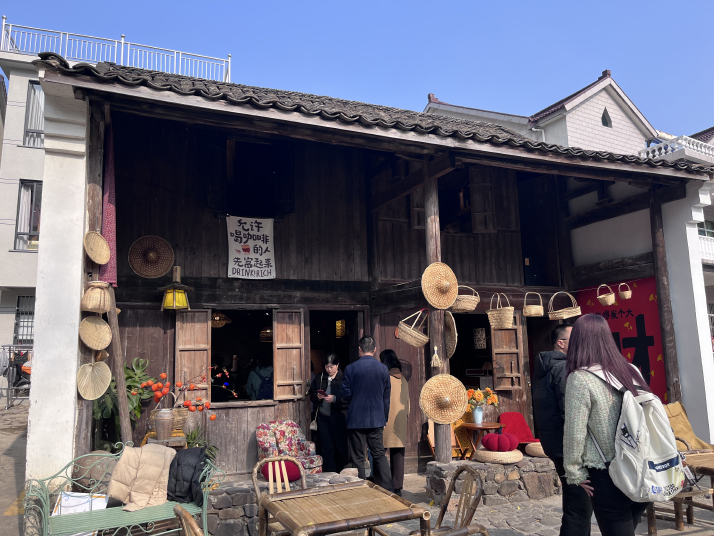
Zhou Liqiang, Secretary of the CPC Fangyi Village Branch, explained, “Each village also operates its own businesses, remaining that revenue locally.”
Another model is the Greater Yucun cluster in Anji, established in 2023. It links 24 villages across 245 square km under unified planning. Each village develops distinct features to avoid competition, while together they build integrated attractions, creating a year-round tourism circuit from spring flowers and summer water activities to skiing.
This cluster approach helps break development bottlenecks and creates a sustainable system where stronger villages support weaker ones. So far, Zhejiang has built 226 provincial-level village clusters, driving growth in 1,447 surrounding villages. By 2027, the province aims to expand this to 500 key clusters benefiting over 3,000 villages.
Building a better life together
With a registered population of just over 1,000, Wandi Village in Ningbo’s Yinzhou District began developing its collective economy more than 40 years ago. In 2024, its collective net assets reached 1.2 billion yuan ($170 million), with an operating income of 51.97 million yuan ($7.3 million). Villagers’ per-capita disposable income hit 77,500 yuan ($10,976), including 27,000 yuan ($3,824) in dividends per person coming from direct cash payments distributed by the village’s collective economic organization.
In China, land in a village is collectively owned by its residents. According to the Law on Rural Collective Economic Organizations, the collective economic organization of a village exercises land ownership on behalf of the residents. The organization manages village assets, conducts business activities and distributes revenue among villagers.
Another example is Miaojia Village in Jiaxing’s Jiashan County. Over 30 years ago, it was economically underdeveloped, with its collective assets almost negligible. By promoting rural tourism, the village diversified its economy, created jobs and raised living standards.
“In 2024, Miaojia Village’s collective revenue reached 18 million yuan ($2.5 million), with a per-capita disposable income of 59,000 yuan ($8,354),” said Huang Qinyan, a villager and guide at the local history museum. Over 30 years ago, the per-capita annual income of villagers was less than 1,000 yuan ($141.6).
Miaojia Village has over 1,100 residents aged 60 and above. In addition to providing them with pensions, the village built a community canteen last year, allocating more than 200,000 yuan ($28,320) annually from the local collective economic organization’s revenue to subsidize meals for the elderly. Those aged 90 and above can eat at the canteen for free.
These stories show how sustained, localized development can turn once-poor villages into models of shared prosperity.