The Board of Peace That Brings No Peace
 Facebook
 Twitter
 Linkedin
 Google +
Clearly, a board of peace of this kind will not, and cannot, bring genuine peace. It is, in essence, an instrument of American hegemony in an era of growing multipolarity.
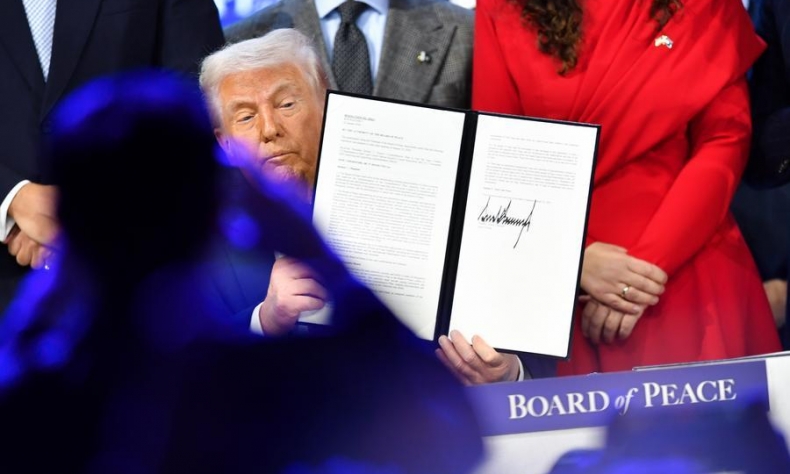
On February 19, the Board of Peace held its inaugural summit in Washington, D.C., the U.S. The meeting focused on Gaza’s reconstruction, and the U.S. claimed that representatives from more than 45 countries and territories attended. President Donald Trump announced a $10-billion U.S. contribution to the board, while other member states collectively pledged $7 billion in seed funding for the reconstruction effort. The board also unveiled plans for a so-called “International Stabilization Force” for deployment in Gaza, consisting of 12,000 police officers and 20,000 troops contributed by members.
The Board of Peace was unveiled by Trump on January 22 at the World Economic Forum Annual Meeting in Davos, Switzerland, as a new international body ostensibly created to “address the Gaza issue” before expanding to other conflicts. Since its inception, the body’s structure and operating model have drawn widespread international controversy. It is built around a lifetime “natural chairman”—Trump himself—and an eight-member “peace executive committee” whose members are all handpicked by him. Six of the founding executive members are Americans, including Secretary of State Marco Rubio, presidential envoy Steve Witkoff and Trump’s son-in-law Jared Kushner.
It operates under rules that reflect a nakedly commercial logic. Countries and territories seeking to join are granted ordinary membership for only three years. A $1-billion donation, however, buys VIP status, effectively a permanent seat on the board. More strikingly, this “membership fee” is placed under the direct control of Trump himself.
Trump initially sent invitations to more than 60 countries, yet only a little over 20 have joined so far. Among the five permanent members of the United Nations Security Council, the U.S. is the only one on the board. The other six G7 members have all declined to participate. The vast majority of G20 countries have likewise remained on the sidelines, and even Palestine itself, a principal party to the Gaza conflict, has refused to join.
The international reaction has been overwhelmingly skeptical. Rather than being an authoritative new international organization for “overseeing the work of the United Nations” or “addressing global conflicts,” the board appears to be little more than a vanity project for Trump’s self-promotion, with neither broad international backing nor institutional legitimacy.
For the Trump administration, the Board of Peace is a major effort to bypass parts of the existing international institutional order and build an alternative framework. Since Trump returned to the White House in January 2025, the U.S. has withdrawn from 66 international organizations, including 31 UN bodies and 35 non-UN ones. Trump has repeatedly criticized the UN, describing it as an organization with “tremendous potential” that has “never lived up to” that potential. During a UN Security Council debate in September 2025, John Kelly, acting U.S. Permanent Representative to the UN, echoed that view and openly challenged the body’s existing framework.
The deeper frustration, however, appears to stem from what the U.S. sees as the Security Council’s failure to effectively serve its strategic interests. On Gaza in particular, Washington has consistently argued that the council has “played no meaningful role” in promoting a ceasefire or facilitating humanitarian aid, and has even sought to advance draft resolutions viewed as unfavorable to Israel.
This is precisely the logic behind the Board of Peace, essentially an American-made UN Security Council. The UN is useful only when it acts in accordance with Washington’s will; otherwise, it is an institution to be bypassed or reshaped to its liking. The board is the parallel structure the Trump administration is determined to build, not to complement the UN, but ultimately to supplant the Security Council altogether.
Few countries have signed on so far. Yet as the U.S. intensifies its disruptive and intimidating actions around the world, more countries may find themselves drawn, under mounting real-world pressure, into a wholly U.S.-dominated framework.
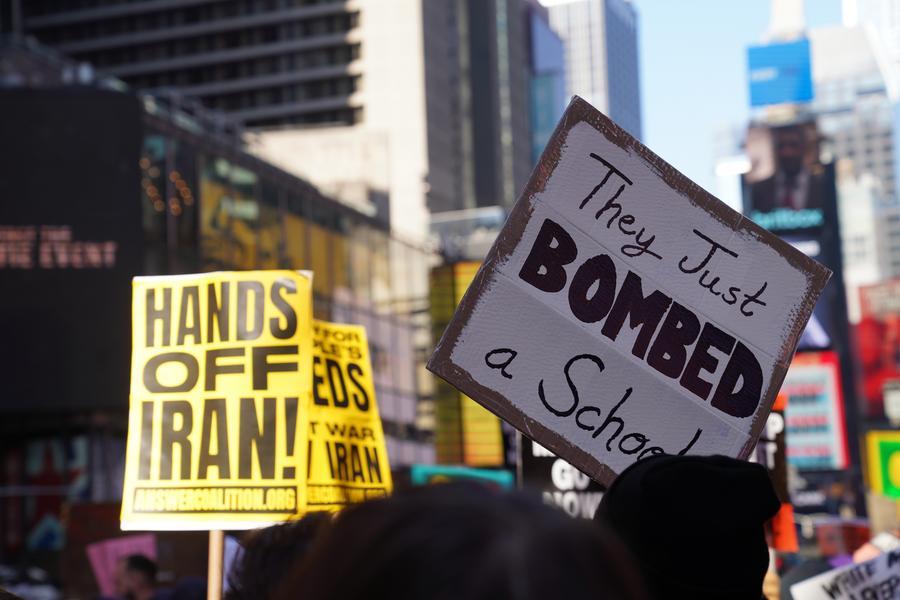
In a bitter irony, even as Trump touted “world peace” and “saving lives” at the board’s inaugural summit, the U.S. was undertaking its largest military buildup in the Middle East since the Iraq War. That same day, February 19, Trump issued an ultimatum giving Iran 10 to 15 days to reach a “meaningful agreement” on its nuclear program and regional security posture or face severe consequences. Tensions across the Middle East have since surged, with the region once again teetering on the brink of a new geopolitical conflict.
Clearly, a board of peace of this kind will not, and cannot, bring genuine peace. It is, in essence, an instrument of American hegemony in an era of growing multipolarity. An international organization financed by American money, governed by American rules, and directed by American political elites will produce no meaningful change, except to further erode the authority and operational mechanisms of the UN.
Genuine peace, after all, requires collective adherence to international law and true respect for the diversity of civilizations and interests.