‘Healing Travel’ Emerges As New Trend in China’s Domestic Tourism
 Facebook
 Twitter
 Linkedin
 Google +
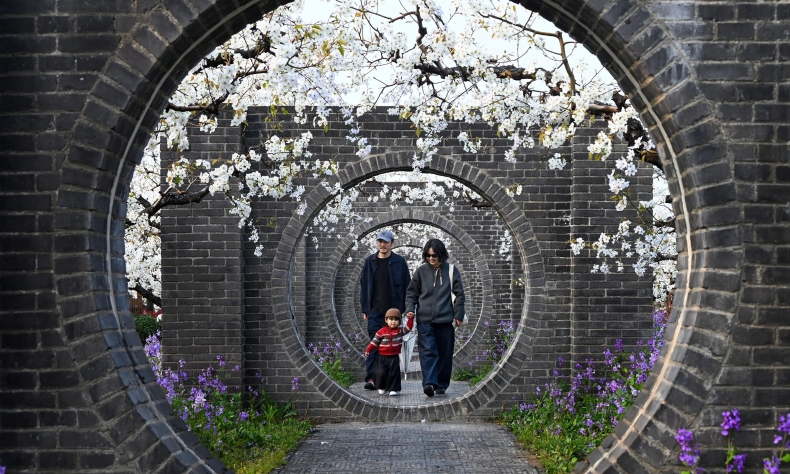
‘Healing travel’ reflects changing expectations of leisure under conditions of urbanization, digital connectivity and lifestyle diversification.
In China’s domestic tourism market, a gradual but noticeable shift is emerging in how younger travelers approach leisure. Alongside the steady expansion of the tourism sector, more people are choosing to travel not primarily for sightseeing, but for rest, emotional comfort and slower-paced experiences. This pattern is commonly referred to as “healing travel” (疗愈旅行; liáoyù lǚxíng), an informal term that has developed through online platforms rather than official classification.
Although it is not a formally defined tourism category, “healing travel” has gained attention as travel behavior becomes increasingly differentiated. It reflects a broader transition within domestic tourism – from trips with packed itineraries toward more flexible, experience-oriented and emotionally guided forms of travel. This change is taking place within a large and resilient tourism market.
According to the Ministry of Culture and Tourism, China recorded 6.5 billion domestic tourist trips in 2025, up 16.2% year on year, with total spending reaching 6.3 trillion yuan, up 9.5%. During the past May Day holiday, domestic trips increased by 3.6% year on year to 325 million, with total domestic tourism spending hitting 185.5 billion yuan, up 2.9%. These figures suggest that overall travel demand remains strong, even as consumption patterns become more segmented.
Within this broader system, “healing travel” has become more popular among younger urban residents. Rather than following fixed itineraries, many travelers are increasingly choosing destinations based on environmental comfort and emotional tone. The focus is less on how many places are visited and more on the quality of the experience itself. On short-video platforms such as Xiaohongshu and Douyin, content related to slower and restorative travel has steadily increased. Instead of highlighting landmark attractions, users often share quiet homestays, lakeside or mountain retreats, rural towns and quiet urban neighborhoods. The emphasis is frequently placed on atmosphere, tranquility and personal experience rather than structured sightseeing.
This trend reflects a shift in how travel is understood. For many young people living in large cities, daily life is marked by intense work pressure, long commutes and continuous digital engagement. In this context, travel is increasingly viewed not only as movement or consumption, but also as a temporary form of emotional recovery and decompression.
This interpretation aligns with broader patterns in domestic tourism participation. Urban residents in China took almost 5 billion domestic trips in 2025, indicating their central role in shaping tourism demand. Within this group, lifestyle-oriented preferences – particularly those emphasizing relaxation and reduced intensity – are becoming more popular. Infrastructure improvements have also supported the trend’s development. The expansion of high-speed rail networks, better regional transport connectivity and the growth of rural tourism facilities have significantly reduced access barriers to smaller cities and more far-flung destinations. As a result, travel flows are no longer concentrated solely in major tourist hubs, but are increasingly distributed across a wider geographic range.
Digital platforms have further influenced how destinations are perceived. Today, travel decisions are strongly shaped by user-generated content online, where emotional presentation often carries significant influence. Short videos and social media posts depicting quiet streets, natural scenery or slow-paced living contribute to shaping how destinations are understood and selected.
This has affected visibility patterns in the tourism sector. Some destinations gain attention not through official promotion efforts or their historical status, but through repeated exposure to online content that emphasizes atmosphere and lived experience. In this process, emotional perception becomes an important factor in destination recognition.
From a consumption perspective, “healing travel” also reflects changing spending priorities. Instead of focusing primarily on attraction tickets or tightly scheduled tour packages, many travelers place greater value on accommodation quality, environmental setting and flexibility of time use. Homestays, boutique hotels and nature-oriented trips have become more prominent in travel decisions, suggesting a stronger emphasis on experiential value.
At the same time, this trend introduces new considerations for local tourism management. Smaller destinations that gain visibility through digital platforms may experience sudden increases in visitor flows, particularly during peak periods. This creates challenges related to infrastructure capacity and service balance, requiring more flexible approaches to tourism planning.
In response, some regions have started developing diversified tourism offerings, including cultural experiences, eco-tourism routes and slower travel products designed to distribute visitor activity more evenly. These measures reflect a broader shift toward experience-oriented tourism development.
Overall, “healing travel” should be understood as an evolving behavioral pattern within China’s domestic tourism system rather than a separate category. It reflects changing expectations of leisure under conditions of urbanization, digital connectivity and lifestyle diversification. From a broader perspective, its significance lies in how it reflects a redefinition of travel itself. Travel is increasingly integrated into daily life management, functioning not only as movement across space, but also as a way to adjust pace, manage stress and restore balance.
As China’s tourism market continues to evolve, such patterns are likely to coexist with traditional forms of travel, contributing to a more diverse and segmented structure of domestic tourism consumption.
Dr. Shamuratov Shovkat is a researcher in international trade and economics at Jiangxi Fenglin College of Foreign Economy and Trade in Jiujiang, China.