The Management of War
 Facebook
 Twitter
 Linkedin
 Google +
Real peace may come not through negotiations, but when empire finally understands that the cost of this war will be far too great for it to bear.
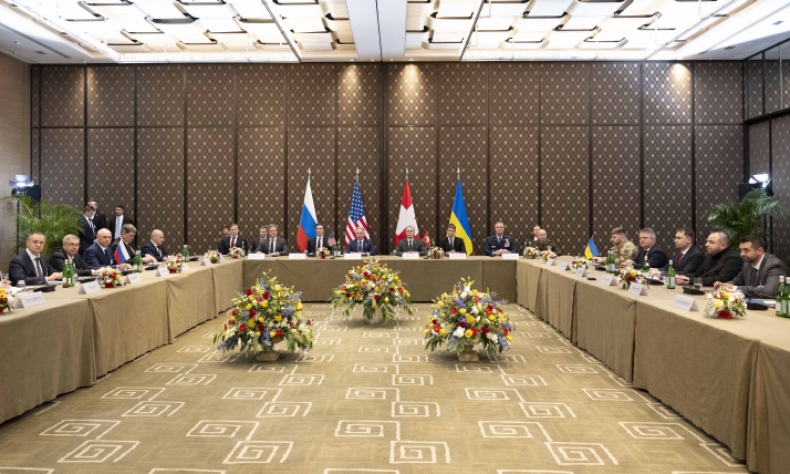
The third round of talks between Russia, Ukraine and the U.S. ended in Geneva on February 18 after just two hours—down from six the previous day. Steve Witkoff, the U.S. President’s special envoy, made a brief statement upon the conclusion of the talks, disclosing no details of the negotiations whatsoever. The Kremlin also declined to comment on their substance. “The negotiations are at a stage that does not involve public discussion,” said Presidential Spokesman Dmitry Peskov. Ukraine’s lead negotiator, Rustem Umerov, was similarly reticent: “There is progress, but no details can be disclosed at this stage.”
There is little use speculating about the content of these meetings. If the battlefield is shrouded in a “fog of war,” so, too, is the terrain of diplomacy. “War,” as Prussian military strategist Carl von Clausewitz’ dictum reminds us, “is the continuation of politics by other means.” If war is a site of deception and obfuscation, so is the political field that sits at its root and seeks its resolution.
We might recall that Russian revolutionary Vladimir Lenin himself took to von Clausewitz’ famous phrase. For Marxists, Lenin wrote, it established “the theoretical foundation for their understanding of the meaning of every war.” The dialectical approach it implies demands seeking out the policies of which the war is an extension. “[F]or decades, for almost half a century, the governments [of Europe] pursued a policy of plundering colonies, of oppressing other nations, of suppressing the working-class movement,” Lenin wrote. World War I, he argued, was a continuation of “this, and only this policy.” The corollary to this, as Lenin wrote elsewhere, is that war is not a contained phenomenon—it is not simply a disturbance of the peace that carries on until the peace is restored. It exists, instead, on a continuum with the class politics that produced it.
Europe’s stance
Rather than seeking clarity in negotiations that are held strictly outside the public eye, we must look to the policies and interests that sit at the root of the war to understand the negotiations. Here, Europe’s role is illuminating. Europe remains on the sidelines of the diplomatic process. Officials from Germany, the United Kingdom, France and Italy were physically present in Geneva, but they had no seat at the trilateral table. “They were sitting somewhere in the waiting room, drinking coffee,” Russian Foreign Minister Sergey Lavrov said.
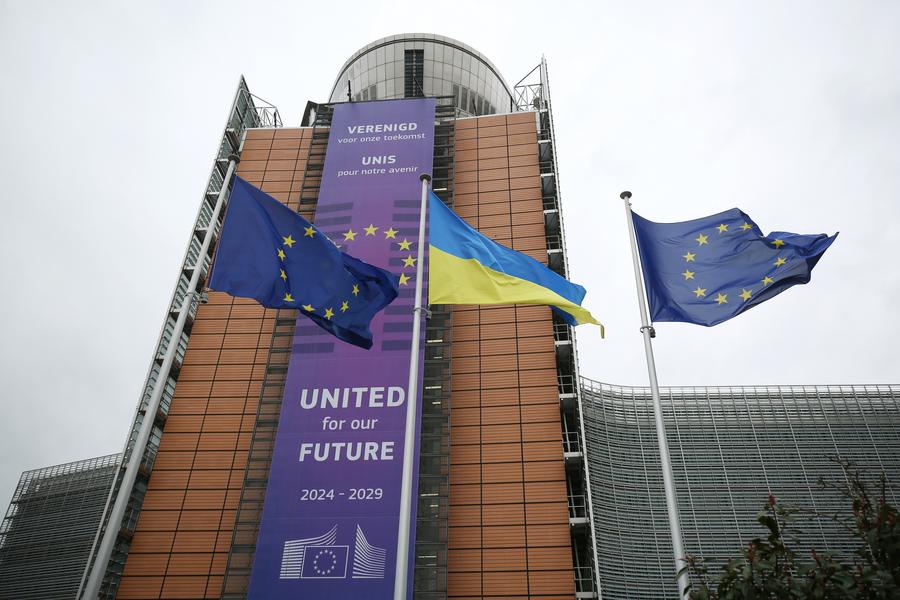
But while Europe sits in the corridor of the Intercontinental Hotel, it remains on the frontlines of the war. The Munich Security Conference, held days before the Geneva negotiations, was dominated by talk of rearmament and victory. French President Emmanuel Macron appealed to what he called Europe’s “Coalition of the Willing,” urging it to continue sending arms to Ukraine. Germany’s Friedrich Merz pledged to spend “hundreds of billions of euros” on rearmament and revealed that discussions on extending France’s nuclear umbrella to other parts of Europe were advancing. British Prime Minister Keir Starmer warned that a peace agreement in Ukraine would accelerate Russia’s rearmament—and its danger to Europe.
Leader after leader, the Europeans insisted on a ceasefire. But when seen against the increases in arms deliveries, pledges of troop deployments, rapid rearmament and repeated commitment to weakening Russia, it is difficult to see these calls as anything other than a ploy to buy time. Indeed, we even have a timeline: According to numerous statements by European officials made over the past year, the bloc has until 2030 or 2035 to prepare for a Russian attack. Danish Prime Minister Mette Frederiksen warned that 2035 is “too late.”
Europe has too much staked on this war. It has drawn itself into ever-greater dependence on the U.S. economically, politically, culturally and militarily—a relationship rooted in the shared logic of an imperialist bloc united under the umbrella of U.S. hegemony. That logic is one that Marco Rubio himself articulated at the Munich Security Conference, held in Munich, Germany on February 13-15: a logic of shameless Western supremacy that does not consider itself subject to the fetters of international law. In his speech, which received a standing ovation, Rubio boasted how the U.S. bombing of Iran and kidnapping of Venezuela’s sovereign leader displaced a United Nations that “has no answers and has played virtually no role.”
Washington’s war strategy
What do we make of the U.S. posture? On the surface, President Donald Trump’s administration calls for peace. Trump’s special envoy, real estate developer Steve Witkoff, speaks of stopping “the killing in this terrible conflict.” But it is difficult to accept Trump’s self-designation as “Peace President.” In the first year of his second term, he oversaw over 600 air and drone strikes across seven countries—more than Joe Biden launched across his entire term. In January, Trump ordered the assault on Venezuela. Not long after, he imposed a total energy siege on Cuba, seeking to starve its people into submission. And now, having bombed it once, Trump has amassed one of the largest armadas in modern history around Iran, threatening it with war once again.
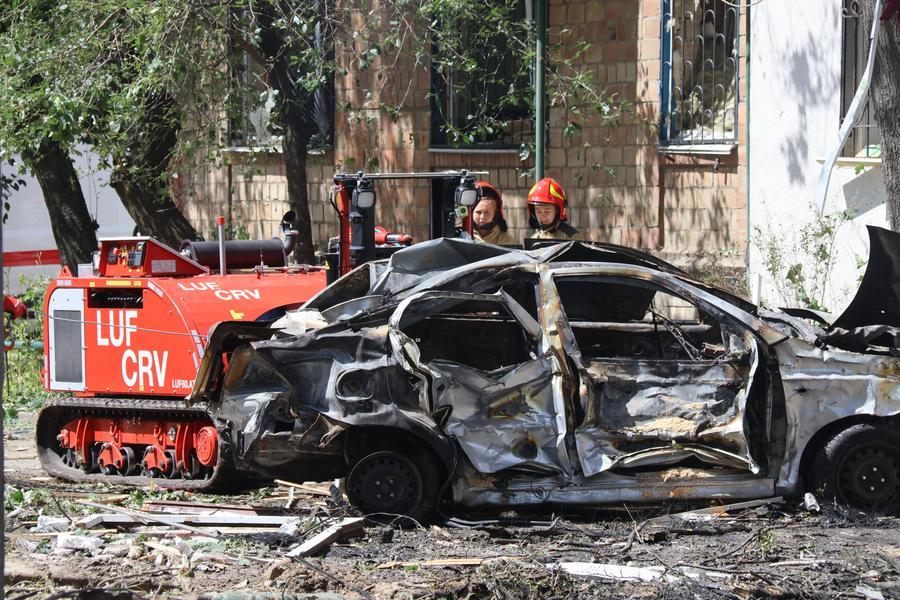
Rather than pursuing peace, Trump appears to be pivoting toward a new strategy of war. The contours of that strategy can be found in the reports of The Marathon Initiative—a Washington think tank co-founded by Elbridge Colby, now Trump’s Under Secretary of Defense for Policy. In 2020, the initiative first outlined a theory of “strategic sequencing.” The U.S., it argued, could not afford to fight simultaneous conflicts against multiple great-power adversaries. Instead, it needed to stagger its confrontations. One by one, the threats to U.S. unipolar hegemony would be dismantled—in the process, renovating the withered U.S. military-industrial complex—without risking a perilous multi-front confrontation.
Seen in this light, Europe remains structurally aligned with Washington. For Trump, the goal of the negotiations is not peace. It is the managed transition of the European theater from Washington to Brussels—binding Europe to war against Russia while freeing the U.S. for confrontation with anti-hegemonic forces in West Asia, the Caribbean and ultimately the Pacific. The talk of peace is the lubricant for this transition.
Root causes of the war
Russia has insisted that peace cannot be achieved unless the “root causes” of the war are eliminated—including NATO expansion. If we take seriously the Clausewitzian dictum that war is an extension of the political terrain, then those root causes become evident. Since the collapse of the Soviet Union, the U.S. has sought explicitly to prevent a new peer-rival from emerging. That is the unchanging, structural imperative of the imperialist system. From Iraq to Libya, from Ukraine to Iran, the wars of the post-Soviet period have served this aim: to weaken peripheral centers of sovereignty and reintegrate them into the system of imperialist accumulation on which the West feeds. That is the political terrain from which the wars of our time erupt. And it would be the height of idealism to suggest that, with Trump, empire had a change of heart.
Reading von Clausewitz, Lenin paused at a passage. “A conqueror is always a lover of peace,” the passage read, “he would like to make his entry into our state unopposed.” Lenin marked the margin with delight: “Ah!” It is difficult to think of a better description of Donald Trump—our generation’s conqueror. But, like Napoleon, to whom von Clausewitz referred, Trump cannot succeed. The West is militarily overextended, politically exhausted, industrially weakened and ideologically spent. Once a distant threat, the multipolar world is fast becoming a reality that can no longer be contained conventionally. That is why the West now returns to war, with the “Peace President” as whip-master. This is a profoundly dangerous moment. And real peace may come not through negotiations, but when empire finally understands that the cost of this war will be far too great for it to bear.
The author is a Polish researcher, writer and organizer. He serves as political coordinator at Progressive International.