Why 2026 Could Be a Defining Year for China’s Quality Growth
 Facebook
 Twitter
 Linkedin
 Google +
China’s significant focus on advancing high-quality growth through multisector engagement, new growth drivers and foundational industries gives its 4.5 to 5 percent growth target considerable value this year.
As China’s “Two Sessions” officially opened, it became clear that the country was off to a strong start on under-girding resilient economic growth. China targets an economic growth of 4.5 percent to 5 percent this year and will strive for better in practice, according to a government work report.
The meetings also provided an important pulse of China’s economic and political decision-making, headlined by the 15th Five-Year Plan, which looks to build on the momentum of the past plan. With China’s total economic output already totaling nearly $20 trillion in 2025, and a rapid surge in new quality productive forces, it is clear that the country is well-positioned to advance high-quality growth this year. Key priorities for China’s economic growth make the optimism abundantly clear.
First, China is on course to advance green industrial technologies and streamline rapid advances in next-generation telecommunication networks. These priorities reflect a conscious effort to drive up consumer traffic as China transforms its internet landscape to an industrial scale, aiding the country’s service sector and unlocking new opportunities to benefit from nearly $190 billion in additional mobile revenues. This is important because rapid upgrades to these next-generation industrial offerings reflect China’s push to promote new economic growth drivers under the 15th Five-Year Plan. What lends these drivers renewed optimism is China’s underlying national development trajectory. The thinking behind this national development strategy – part of which informs China’s preparations for the 15th Five-Year Plan – has been calibrated over several years to form the basis for Beijing’s resilient economic growth through 2030.
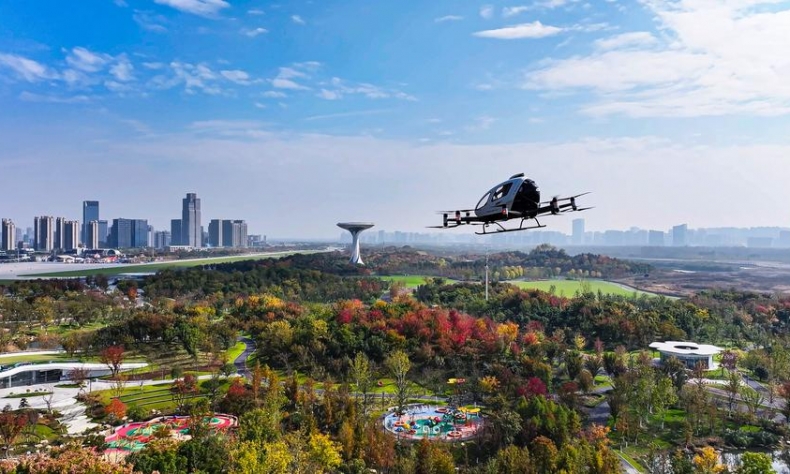
Second, as China’s “Two Sessions” make abundantly clear, government emphasis on cultivating emerging, foundational industries is also a step towards high quality economic growth this year. Look no further than China’s bid to further develop its aviation and aerospace industries alongside a sprawling low-altitude economy. These two distinct levers now enjoy renewed significance under the 15th Five-Year Plan, with major international offerings from the China Aerospace Science and Technology Corporation scoring deep-seated, multi-model aviation sector demand at home. Substantial technological breakthroughs with Electric Vertical Take-Off and Landing (eVTOL) aircraft also underline the extent of China’s innovation-led growth support. The coming together of these distinct growth levers under the 15th Five-Year Plan suggests that more novel industrial offerings such as eVTOL can advance significant market traction both within China and beyond.
Beijing’s trackrecord of acquiring significant foreign investments, and its fast-growing, low-altitude economy, further suggest that it has what it takes to undergird robust domestic and multisector strengths. All to the benefit of its agreed-upon growth rate this year. Consider the fact that China’s low-altitude economy is expected to grow to over $500 billion by 2035. Moreover, the economic sector has seen international procurement partners collaborate with Chinese manufacturers across expos. China in recent years has also expanded access for exporters that are part of its low-altitude economy, underlining a composite of sector upgrades that continue to shape its transition towards the 15th Five-Year Plan. Prospects show in nearly $44 billion worth of state-backed investments into banks, with China focusing on directing more investment into the innovation and technology sectors. The fact that China commands record-setting research and development (R&D) investments, and has been able to cultivate new quality productive forces to complement industries spanning new energy vehicles and robotics, the space for growth is vast. Moreover, the country’s multipronged economic growth contributions carry considerable promise. With a 4.5 to 5 percent economic growth target now set for the year, and more foreign business access on the policy agenda, a balance between incoming investment and organic growth deserves wide recognition.
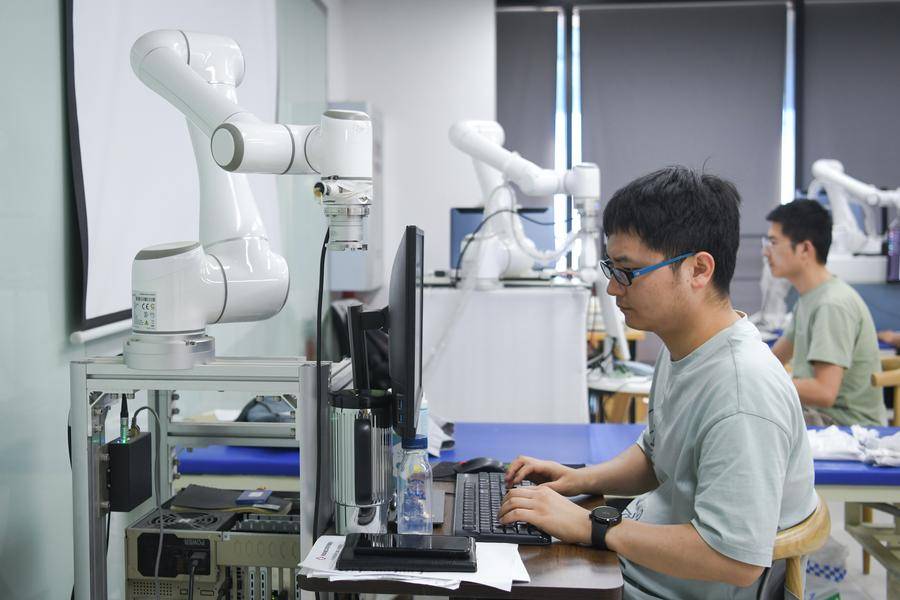
Expanding growth across digital and green economy sectors could also serve as a major economic force this year. First, these sectors bring welcome growth momentum on the back of recent performance gains. Second, policy support remains pronounced: Beijing has vowed to advance high-quality BRI development opportunities under its 15th Five-Year Plan, and is likely to scale up two-way investments with optimistic growth options for digital and green energy sectors. There is evidence to suggest that these sectors have benefited considerably in the recent past. Green energy alone saw investments across wind, solar and associated projects soar past $9.5 billion in the first half of 2025.
By leveraging the comparative strengths of China’s trade partners, and using foreign investment as an instrument of multipronged economic growth, China reinforces the value of its 15th Five-Year policy thinking, reinforcing it as risk-diverse and highly globalized. “China will continue to expand institutional opening up, safeguard the multilateral trading system, broaden two-way investment cooperation and pursue high-quality Belt and Road cooperation, share opportunities and create a shared future with all nations,” affirmed Lou Qinjian, spokesperson for the fourth session of the 14th NPC recently.
As scores of China’s partner countries – from Europe to the Asia Pacific – align with China on shared concerns across trade pressures and geopolitical uncertainty, China’s vast markets, new economic growth contributors, and tech self-reliance offer multipronged opportunities for progress. Together, they represent a valuable ecosystem that bolsters BRI-led economic growth from 2026 to 2030.
Lending further optimism is the nature of key policy interventions. The achievements from the 14th Five-Year Plan are a proof point: China’s economy grew by an average annual GDP growth rate of 5.4 percent, outperforming international standards and laying the groundwork for meaningful momentum this year. Beijing has also set its yearly growth rates at a time when domestic and international dynamics merit collective focus. The latter includes geopolitical fissures, conflicts in the Middle East, and global energy turbulences. Add to it the rising optimism among exporters as far as ASEAN to acquire deeper market access in China, and we understand that China’s future economic trajectory is not just a win for its sustainable and resilient pivot to realize long-term growth. It also serves as a major growth advantage to partners such as ASEAN, of which China is a top investment and trade partner.
Ultimately, China’s significant focus on advancing high-quality growth through multisector engagement, new growth drivers and foundational industries gives its 4.5 to 5 percent growth target considerable value this year. What adds to its success are the regional and international merits accompanying quality growth.
Hannan R. Hussain is co-founder and senior expert at Initiate Futures, an Islamabad-based policy think tank.
The article reflects the author’s opinions, and not necessarily the views of China Focus.