Why Global Investors Keep Doubling Down on the Chinese Market
 Facebook
 Twitter
 Linkedin
 Google +
Engaging with China is not just about accessing its market today, but about securing a stake in the future of innovation and growth.
In recent months, Beijing has witnessed a steady stream of high-profile diplomatic visits. Leaders from the United Kingdom, Canada, Germany, Finland, and Ireland have made their way to China, with economic cooperation consistently topping the agenda. This “wave of visits,” as noted by international observers, is far from coincidental. It underscores a profound global sentiment: amidst a turbulent international landscape marked by geopolitical tensions and economic uncertainty, China stands out as a crucial anchor of stability and growth.
For many countries, particularly middle powers seeking reliable partners, engagement with China is a pragmatic choice driven by tangible economic interests and long-term strategic calculus. As China’s Commerce Minister Wang Wentao aptly stated, “Many foreign-funded enterprises now view the Chinese market as a gym and a testing ground,” a testament to the country’s supersized market and diverse application scenarios that serve as an unparalleled location for innovation and R&D.
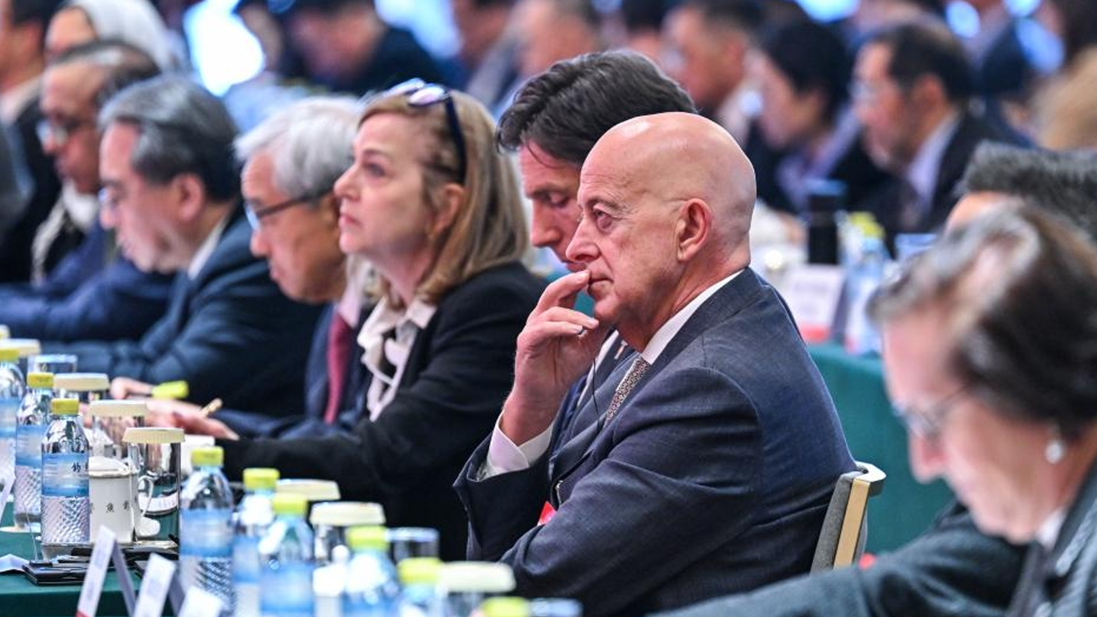
This confidence was palpable during a high-level meeting in Beijing on March 21. Chinese Vice Premier He Lifeng assured senior representatives from multinational corporations including HSBC, Siemens Healthineers, Schneider Electric, and Rio Tinto that during the 15th Five-Year Plan period (2026-2030) China would offer wider market opportunities for them. In response, the corporate leaders expressed strong confidence in China’s economy and readiness to further explore and invest in its market. This dialogue reflects a mutual recognition: China needs global expertise and capital for its modernization drive, while multinationals need China’s vast market and innovation ecosystem to thrive.
The rhetoric promise is backed by concrete action and substantial financial commitments from the corporate world. French pharmaceutical giant Sanofi exemplified this commitment in March 2026, when it launched its first China Innovation and Operation Center in Chengdu. This move, along with its connected global network spanning from India to Spain, builds on Sanofi’s four-decade presence in China and follows a €1 billion insulin manufacturing base investment in Beijing in 2025. In the automotive sector, Audi’s CEO Gernot Döllner highlighted China as not just a large market but also a place where technology adoption and mobility trends evolve faster than anywhere else. He stressed the company’s goal to “combine German automotive DNA with the pace and creativity of the Chinese ecosystem.” Similarly, German optics leader Zeiss, which considers China its largest global market, is investing RMB 1.2 billion to build its Greater China headquarters campus in Shanghai.
These investments are not acts of faith but calculated decisions based on China’s multifaceted and evolving appeal. The attraction for foreign capital today is underpinned by three interconnected pillars: a continuously improving business environment, leadership in technological transformation, and clear, supportive policy frameworks.
In terms of an improving business environment, Shanghai, a frontline Chinese city in opening-up, is leading this charge. At its 2026 Global Investment Promotion Conference, the city unveiled 31 new “quality drivers,” launched 11 public service platforms, and spotlighted 10 pilot-scale testing platforms aimed at overcoming the obstacles in commercializing innovations. It also rolled out 10 benchmark application scenarios in areas like embodied AI and autonomous driving. This proactive, service-oriented governance is yielding results. In 2025, Shanghai’s industrial investment grew by 20 percent year on year, with manufacturing investment surging 22.8 percent. Nationwide, a 2025 business environment report by the China Council for the Promotion of International Trade (CCPIT) found that nearly 90 percent of surveyed foreign enterprises rated China’s business environment as “satisfactory” or higher.
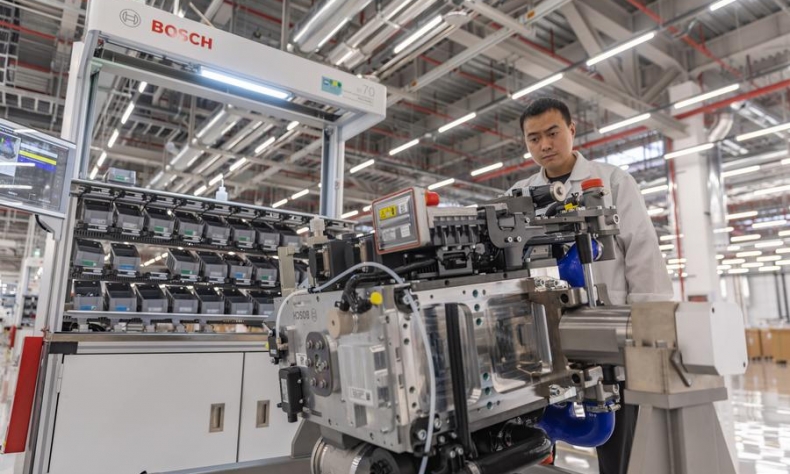
China is no longer just the “world’s factory;” it is rapidly becoming the “world’s smart factory” and “innovation hub.” The national drive for industrial modernization, a top strategic assignment in the country’s 15th Five-Year Plan, is creating immense opportunities in intelligent and green development. The government is proactively pushing the “AI+” initiative, accelerating the application of AI in areas across the board, with a specific focus on manufacturing. In Zhejiang, a manufacturing powerhouse, companies are harnessing AI for transformative gains. At Zhongce Rubber Group, the AI-powered intelligent agent can run 300 durability tests per second, slashing tire development cycles from six months to a few days, according to a report of Xinhua. The AI wave is also creating new consumer hardware frontiers. China’s AI glasses market is booming, with domestic brands expected to capture 45 percent of the global market in 2026. This deep integration of technological and industrial innovation is what Mercedes-Benz’s Chairman Ola Källenius called “an inevitable trend” while noting the remarkable development of electrification and intelligent transformation in China’s auto market.
Despite global headwinds, China’s economic fundamentals and policy direction provide a stable and predictable landscape for investors. Official data from China’s Ministry of Commerce shows that 70,392 foreign-invested enterprises were established nationwide in 2025, up 19.1 percent year on year. Most significantly, foreign investment in high-tech industries surged 175.1 percent in the first month of 2026 compared with a year earlier. This signals a decisive shift from low-cost manufacturing to high-value innovation. Geographically, investment from Canada skyrocketed by 210 percent, with those from Switzerland and France also posting strong growth in the first two months of 2026.
Complementing these market trends is active government facilitation. In March 2026, China’s National Development and Reform Commission unveiled a new batch of 13 major foreign-funded projects, with a planned investment of US $13.4 billion. These projects, the ninth such batch, focus on advanced manufacturing sectors like electronics, chemicals, and automobiles, and for the first time, include logistics projects, signaling a push for deeper integration between modern services and advanced manufacturing.
The 2026 government work report emphasizes expanding market access, especially in the service sector, and implementing the newly effective Catalogue of Encouraged Industries for Foreign Investment (2025), which guides foreign capital towards advanced manufacturing, modern services, and green technologies.
The convergence of a vast and upgrading consumer market, a relentless push toward technological innovation – particularly in AI and smart manufacturing – and a consistent policy of high-level opening-up creates a compelling value proposition for global investors. As Standard Chartered’s Group Chief Executive Bill Winters observed, in a world full of uncertainty, China’s economy remains “stable, predictable, dynamic and forward-looking.”
The foreign leaders visiting Beijing and the corporate executives expanding their collective footprints in the country understand one fundamental truth: engaging with China is not just about accessing its market today, but about securing a stake in the future of innovation and growth. To invest in China, therefore, is to invest in that future.