How “Ping-Pong Diplomacy” Helped Change the U.S.-China Relationship
 Facebook
 Twitter
 Linkedin
 Google +
This sense among the population that we are not so different from each other can go a long way in influencing the political process.
The year of 2026 marks the 55th anniversary of the famous “Ping-Pong Diplomacy,” which began to break the hiatus that had existed between the United States and China since the founding of the People’s Republic of China in 1949. A chance meeting between a pair of individuals from each country’s ping-pong teams helped reduce the tensions between the two nations, both of which were beginning to understand that the “wall of separation” between the two was having negative implications for both. While the new Republican government of Richard Nixon was intent on rebuilding the U.S. relationship with China, the environment of “Cold War hysteria” was still a powerful obstacle to bringing all the parties on board such a radical change.
It was a chance encounter between two individuals that provided an opportunity for the two nations to begin to come together. In 1971, the world championship games in ping pong were held in Nagoya, Japan. Both American and Chinese ping-pong teams were participating. It is unclear why a young American player, Glenn Cowan, the youngest member of his team, got on the Chinese bus, whether by mistake or if he didn’t get to his own bus before it left. Whatever the case may be, he hitched a ride on the bus with the Chinese players, who were probably as surprised as he was, in his being there. While some of them were no doubt hesitant to talk with him, Zhuang Zedong, a ping-pong master and the leader of the Chinese team, came up and shook Glenn’s hand. He had also felt it appropriate to give this unexpected visitor a present, and he fished out from his bag a piece of silk cloth depicting the Huangshan Mountain, which he presented to Glenn. This immediately created a certain rapport between the two players.
When they exited the bus, there were photographers taking pictures, and to their surprise, both Glenn, an American, and Zhuang exited the bus together. These pictures were then broadcast throughout the world. Two days later, the U.S. team received a totally unexpected invitation to visit China and to play exhibition games with the Chinese team. The invitation was accepted, and the State Department quickly went to work to sort out the details as American passports at the time specifically forbade Americans from traveling to China. President Nixon, who was privately in favor of this opening, allowed the team to travel to China.
While tensions can often occur between nations as diverse as China and the United States, it is of the utmost importance that the “people-to-people” relationships are continually maintained and nourished. Sometimes, as was the case of the “Ping-Pong Diplomacy,” they can create the basis for fundamental change the relationship between the two nations. The people-to-people exchanges provide the basis for mutual understanding beyond the political or ideological differences that may dominate the particular moment.
Today when the ideological elements still come to the fore in U.S.-China relations, there is added, with the advance of China as a major force of technological prowess and therefore something of a major competitor with the United States, further elements of “rivalry.” And the desire of the Trump Administration to attempt to return to a period in which the United States was the dominant military and technological power has created what might seem like an unbridgeable gap between our two countries.
This is, of course, counter-balanced by the genuine need of maintaining stable trade and investment relations between the two major nations in order for them both to prosper. The attempt by the Trump Administration to relax some of the punitive measures it had previously placed on Chinese goods indicates that there is also an understanding of the necessity of cooperation if the U.S. economy is to flourish.
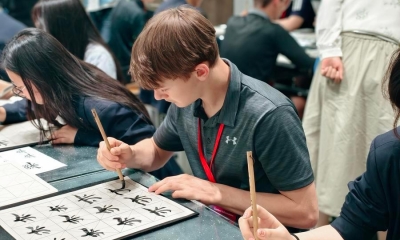
But given the recent years’ containing and restrictive actions against China by the United States, it may take some time to create the necessary climate where this “rivalry” can be transformed into “cooperation”. The key to accomplishing this lies on a completely different plane than that of the commercial and political dialogue, and that is on the plane of the “people-to-people” relations. Lifting the restrictions on Chinese students coming to America to study and encouraging American students to learn Chinese and to study in China would be a step in the right direction. The ban against the Confucius Institutes should be lifted.
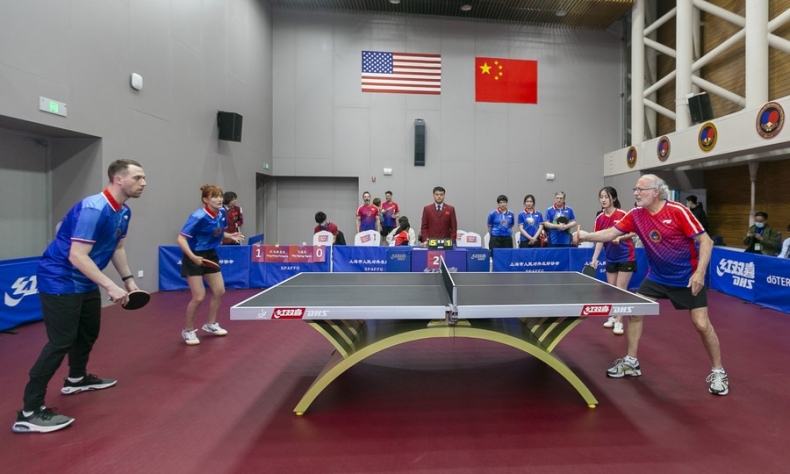
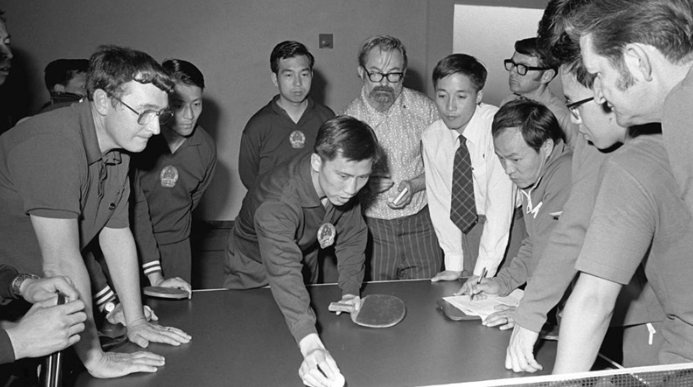
This should also be the case with regard to cultural exchanges between the two nations. Orchestras and choral groups should be encouraged – and supported – to travel to each other’s countries. And, like the ping-pong diplomacy, the realm of sports can also become a major venue for profitable and beneficial exchanges. Encouraging tourism is also a very useful tool in this respect. This permits the type of cultural “osmosis” among the largest number of citizens to experience the other country. The governments of both countries could take measures to ease the procedure for getting visas, for operating and facilitating tour groups back and forth. Because of the long separation of the Cold War, the return visit of the Chinese ping-pong team to the United States in 1972 helped to create a solid feeling of friendship among those Americans who were able to attend the various tournaments or to socialize with the Chinese players while they were here.
This sense among the population that we are not so different from each other can go a long way in influencing the political process. Sentiment among constituents on a given issue can influence the attitudes of members of Congress and, in turn, their political decisions. We note this particularly today in some agricultural states of the Midwest, where politicians at the local and even national levels tend to hold a more benign view of China and the Chinese, who are more than willing to buy their grain, wheat, and sorghum.
While things may not change overnight, even with a positive outcome from this year’s planned heads-of-state summit, such measures over time can create the basis for dramatic changes in the U.S.-China relationship, given that the underlying economic relationship can provide benefit to both nations, if the element of “cooperation” triumphs over the element of “rivalry.”
The article reflects the author’s opinions, and not necessarily the views of China Focus.