Could Trump-Xi Summit Be a Major Relationship Thaw?
 Facebook
 Twitter
 Linkedin
 Google +
Joint efforts in fields such as medicine, biotechnology, and new energy technologies — including thermonuclear fusion — could bring substantial benefits to both societies. These are areas that carry profound implications for the future of humanity, and cooperation could accelerate progress in ways that competition alone cannot achieve.
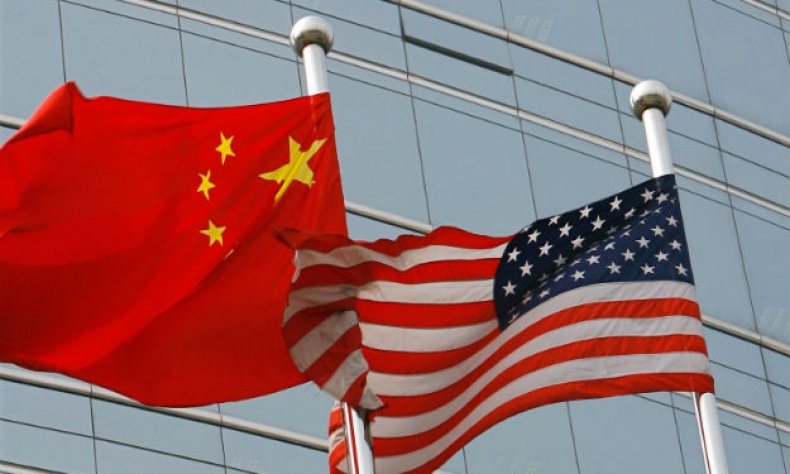
The world is awaiting with great expectation the summit between U.S. President Donald Trump and Chinese President Xi Jinping. The actions of the somewhat mercurial U.S. president are often hard to predict. He can change positions on many issues at the spur of the moment. But his respect and admiration for President Xi has remained remarkably consistent through the ebbs and flows of the U.S.-China relationship generally. While this admiration is not always shared by the people around him, it nonetheless represents a positive factor in what has frequently been a turbulent relationship.
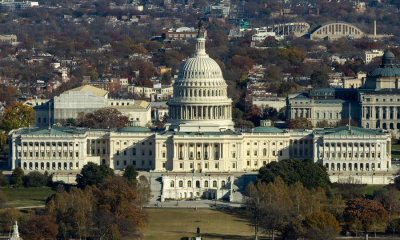
China and the United States remain divided on many of the major issues facing the world today. These include the ongoing tensions surrounding Iran, where the United States and Israel have taken an increasingly confrontational stance, as well as Washington’s often dismissive approach toward international institutions such as the United Nations and the World Trade Organization. The Trump administration has also shown a tendency to sidestep multilateral frameworks such as the UN Charter, preferring unilateral action in pursuit of its policy objectives.
President Trump has indicated that energy and Iran will be key topics during his discussions with President Xi. More broadly speaking, the core issues of trade and investment, which provide the real nexus of the U.S.-China relationship will surely be front and center at the meeting. There has even been some discussion on the part of the White House of creating a joint board of trade or board of investment to coordinate the economic relationship between the two countries. China, like the United States, has repeatedly emphasized that trade should be conducted on the basis of fairness and mutual benefit.
China’s 15th five-year plan includes expanded openings for foreign investment, and many American entrepreneurs are eager to deepen their engagement with the Chinese market. Seventeen prominent business leaders are reportedly accompanying President Trump on the trip. For such opportunities to fully materialize, however, the United States would likely need to ease some of the sanctions and tariff restrictions it has imposed on China in recent years. China, like the U.S., has repeatedly emphasized that trade should be conducted on the basis of fairness and mutual benefit.
Washington has also expressed interest in securing greater access to China’s rare earth minerals — resources that are essential to many high-tech industries. China has recently tightened export controls on these materials in response to U.S. trade restrictions. Should Washington relax some of its own measures, it is possible that these resources could again become more readily available to American companies.
There have also been speculation circulating in the media about plans for greater Chinese investment in the U.S. Such investment would indeed be a boon to the American economy, which itself is suffering from the economic consequences of Trump’s Iran policies. China would probably be more than happy to invest in the U.S., but the restrictive nature of U.S. policies on such investment has reversed some of the initiatives that China had already taken in that area, and the overall mood among U.S. political elites to Chinese investment in the U.S. creates some doubt over the feasibility of such investment.
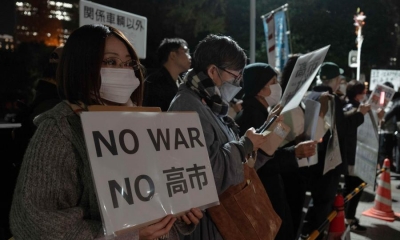
More complicated perhaps will be the discussion around the situation in Iran. China has consistently opposed the U.S.-Israeli military offensive against Iran, as has a majority of the world’s nations. Beijing has also supported diplomatic efforts aimed at bringing the parties back to the negotiating table. With Washington recently rejecting Iran’s latest proposal for negotiations and renewing threats of further military action, the issue has once again become a major source of global concern.
It is unlikely that the United States would initiate new military operations while the president is visiting China. Given the growing discontent among the American populace to Trump’s policy, such a measure would not benefit the President politically. China has itself put forward a program for peace with Iran, which may contain elements that might provide President Trump a way out of this dilemma.
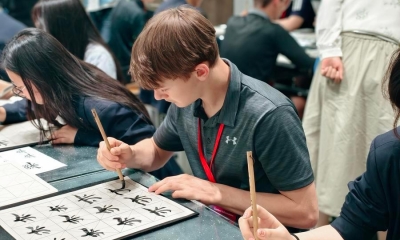
Beyond geopolitics and trade, the summit could also produce meaningful steps to revive people-to-people exchanges between the two countries. These exchanges are essential not only in commerce but also in education, tourism, and professional collaboration. In recent years, growing political tensions and suspicion have led to a decline in academic and scientific cooperation, as well as the departure of many Chinese scholars and students from American universities. This trend has had negative consequences for research and innovation in the United States itself.
People-to-people exchanges remain one of the most powerful tools for building mutual understanding. Greater interaction in areas such as sports, culture, education, and tourism could help counteract the climate of distrust that has developed in recent years. The closure of many Confucius Institutes in the United States, for example, represented a loss for cultural exchange and language education. It is worth recalling that one of America’s own founding figures, Benjamin Franklin, introduced the ideas of Confucius to American readers as early as 1737 in the pages of the Pennsylvania Gazette.
Scientific and technological cooperation also offers promising opportunities for renewed collaboration. Joint efforts in fields such as medicine, biotechnology, and new energy technologies — including thermonuclear fusion — could bring substantial benefits to both societies. These are areas that carry profound implications for the future of humanity, and cooperation could accelerate progress in ways that competition alone cannot achieve.
Space exploration provides another compelling example. The recent Artemis II mission around the Moon has generated tremendous excitement in the United States, while China’s Tiangong space station and its plans for an International Lunar Research Station have inspired similar enthusiasm in China. Both nations are major spacefaring powers with ambitions for sending humans to the Moon.
What could be more fitting than for the two countries to explore forms of cooperation in human space exploration, an area currently restricted by U.S. congressional legislation? Space exploration is in fact one of the “common interests of mankind.” Even in the Cold War, the U.S. and the Soviet Union found a way to cooperate in the ground-breaking Apollo-Soyuz mission, laying the groundwork for decades of collaboration in space. In the unforgiving environment of outer space, having partners – rather than rivals – is always the wiser course.