Chasing ‘China Speed’: How Global Automakers Are Learning to Innovate in China
 Facebook
 Twitter
 Linkedin
 Google +
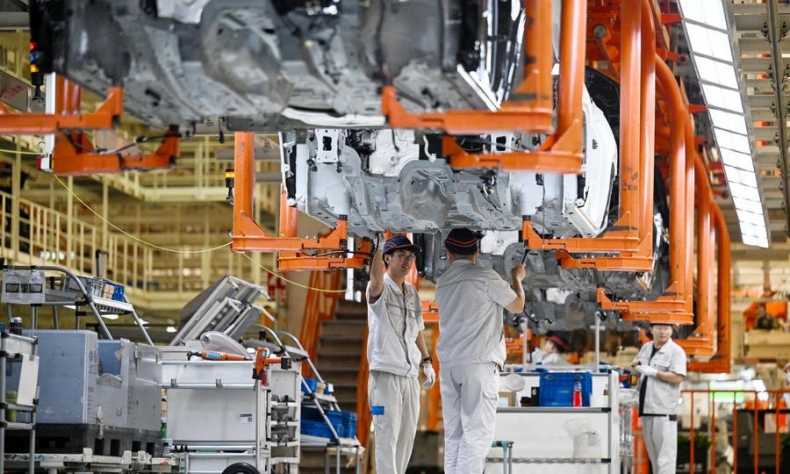
China has become one of the most dynamic automotive markets globally, leading innovation in electrification and intelligent mobility.
Inside a 100,000-square-meter research complex in China’s central city of Hefei in Anhui province, engineers at Volkswagen are racing against the clock.
Software teams work alongside battery labs and full-vehicle testing facilities under one roof — a structure designed to cut development time by nearly one-third. The goal, executives say, is to catch up with what the industry calls “China Speed.”
“Today, VCTC is Volkswagen Group’s largest R&D center outside Germany, with direct product decision-making and approval authority,” said Thomas Ulbrich, chief technology officer of Volkswagen Group China and CEO of Volkswagen China Technology Company (VCTC) in Hefei.
“This setup enables faster decision-making, closer alignment with local customer needs, and much shorter development cycles,” Ulbrich said. “We have built the capability to manage the full lifecycle of software-defined vehicles locally in China.”
Volkswagen says its localized development model has shortened vehicle development cycles by about 30% and reduced costs by roughly 40%.
The shift in Hefei reflects a broader transformation underway among multinational automakers as they strive to regain competitiveness in the world’s largest and fastest-evolving car market.
‘China Speed’
For decades, the global automotive industry followed a largely predictable path: The blueprints were drawn in the quiet research corridors of places like Wolfsburg, Stuttgart, or Toyota City and then exported to China for production and assembly. That trajectory is now reversing.
China’s new energy vehicle (NEV) market illustrates the scale of this change. In 2025, NEV sales reached 16.49 million units — nearly 48% of all new vehicle sales in the country — extending China’s global leadership for the 11th straight year.
Intelligent driving features are spreading just as quickly. In 2025, more than 60% of new passenger vehicles sold in China were equipped with combined driver-assistance systems. In December, two L3-level autonomous driving models received conditional approval for market access, marking a pivotal step from testing toward mass production.
“If you rely on headquarters-centric R&D and governance, that will slow down the rate at which you’re able to introduce these new technologies,” said Bill Russo, founder of Shanghai-based advisory firm Automobility Ltd.
“China has become a technology reference, a technology benchmark,” Russo said. “It’s no longer just a localization market. It’s an innovation super-scaler.”
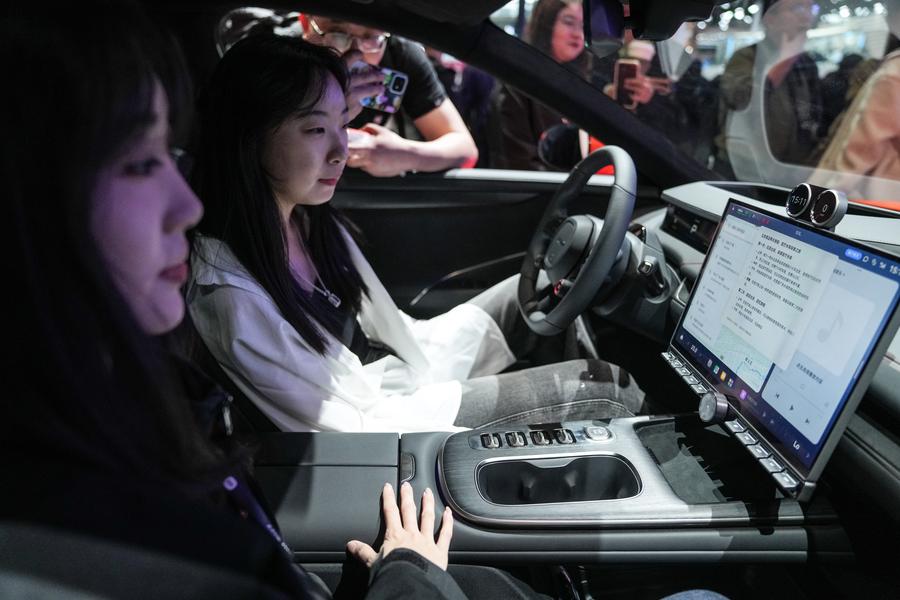
He pointed to rapid advances in software-defined vehicles, intelligent cockpits, advanced driver-assistance systems, and battery supply chains as examples of how innovation cycles in China have accelerated.
Russo attributes this acceleration in part to the convergence of automotive manufacturing and digital ecosystems in China. Local players are integrating Internet-of-Things capabilities and software-defined vehicle architectures faster than many legacy Original Equipment Manufacturers (OEMs) are accustomed to.
“As soon as you have (tech) companies like Xiaomi, Huawei, Tencent, and Alibaba entering this space, Chinese OEMs don’t dismiss them,” Russo said. “They embrace the disruption because it’s happening in their backyard.”
In China, for China
For multinational automakers that once dominated China’s passenger car market like Volkswagen, the rise of the country’s domestic competition has been swift. In 2025, Chinese-brand passenger vehicle sales reached 20.94 million units, with market share rising to 69.5%, up by over 30 percentage points compared to 2020.
Toyota Motor Corp., long seen as cautious in its electrification strategy, has also accelerated its changes in China.
In January last year, Toyota Motor (China) Investment Co. appointed two Chinese executives as vice chairman and general manager respectively, marking the first time locals held the two top leadership posts at the company’s China unit. Toyota said the move was aimed at ensuring those with deep China market insight could make final decisions.
In April, Toyota revealed its China Chief Engineer system, placing China-based engineers in charge of developing key models such as the bZ3X, FAW Toyota’s bZ5, GAC Toyota’s bZ7, and a next-generation Corolla.
“The Chinese market transitioned earlier,” said Liu Wenbin, chief engineer for Toyota’s bZ3X. “After years of market education, consumers have developed some uniquely Chinese preferences. Chinese engineers understand these demands, and product design is closer to the market.”
In April, Toyota invested US$2 billion in a wholly owned EV plant in Shanghai — becoming the second foreign automaker after Tesla to establish a fully owned car manufacturing facility in China. The plant will focus on EV and battery R&D and production, with output targeted for 2027 and an initial annual capacity of about 100,000 units. Executives said they look forward to collaborating with more local suppliers to showcase the strengths of China’s NEV supply chain globally, and help bring Chinese technologies to international markets.
Volkswagen’s urgency is driven by fierce competition from local EV rivals. Toyota, meanwhile, sees the rise of Chinese competitors as a threat to its global market share, particularly in emerging markets.
“These companies aren’t doing this voluntarily,” Russo said. “Engineering-led cultures, born in the mechanically engineered car era, now face a world where software integration is a core capability. To compete in the 21st century automotive industry, they have to embrace China’s rapid problem-solving ecosystem.”
Partnering with Chinese technology firms
Beyond internal restructuring, multinational OEMs are expanding cooperation with Chinese technology companies, particularly in intelligent driving.
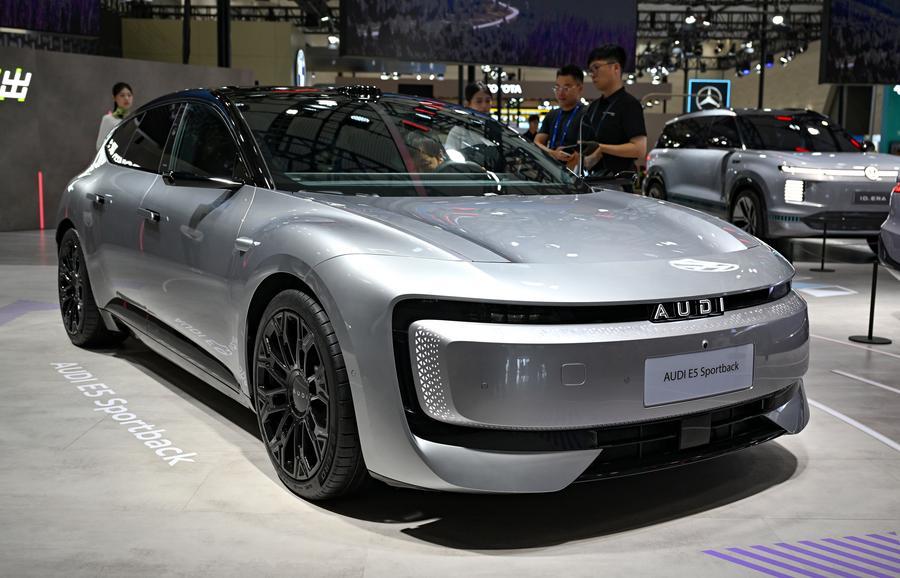
Volkswagen has partnered with Chinese firms including Horizon Robotics to co-develop advanced driver-assistance systems. Other automakers have also deepened ties with local suppliers. Audi has adopted Huawei’s intelligent driving system for China-market models, while Honda and SAIC-GM have selected Momenta for assisted driving solutions.
“Our cooperation with Chinese technology companies aims to combine our long-standing engineering excellence and Volkswagen DNA of safety, quality, and reliability with the strong innovation capability and development speed of China’s technology leaders,” Ulbrich said.
Russo said such partnerships are increasingly essential.
“The only way for the multinational companies to stay in the game is if they form Sino-foreign partnerships for their international businesses,” he said. “China’s automotive supply chain now overlaps closely with the broader digital ecosystem. We’ve reconfigured the car into a smart device on wheels. It’s part of the Internet of Mobility.”
Back-feeding global platforms
Executives and analysts say China’s role is expanding beyond a single national market.
“Companies are concluding now that they have to leverage China as a testbed to access speed,” Russo said. “And then allow the Chinese supply chain to back-feed global platforms.”
Through partnerships with Chinese companies, multinational automakers are gaining access not only to advanced technologies, but also to companies capable of scaling those innovations overseas. “It’s becoming less about ‘in China, for China,’ and more about ‘in China, for the world,'” Russo said.
He sees this approach as essential for global competitiveness. “As China expands internationally, it needs overseas partners to facilitate its movements. For legacy automakers like Volkswagen and Toyota, openness to collaboration is becoming critical. Partnerships are no longer optional — they are the only way to stay in the game.”
China has become one of the most dynamic automotive markets globally, leading innovation in electrification and intelligent mobility, said Ulbrich. “Volkswagen Group is continuously reassessing and strengthening China’s role within its global system, not only to serve local demand, but also to explore how capabilities developed in China can support other regions.”