Will China Withstand the Middle East Oil Shock?
 Facebook
 Twitter
 Linkedin
 Google +
The world oil supply and price shock also provide a historic opportunity for China’s growth powered by new quality productive forces.
The U.S.-Israel military aggression on Iran and the subsequent blockade of the Strait of Hormuz by Iran have triggered a wave of world oil supply chain disruption and surge in oil price. The benchmark Brent Oil futures once bounced to $110 per barrel, 50 percent up from the pre-war level, only retreated temporarily to $99.36 on April 14 after the U.S. and Iran reached a fragile temporary truce for two weeks and concluded the first round of talks.
After a heated but marathon talk for 21 hours, the U.S. and Iranian delegations failed to hit an agreement, only leaving to further talks later. It shows that both sides do want peace on the one hand, and their positions are far apart on the other, hence leaving a high risk of further conflicts.
The world oil supply chain has been disrupted due to war damage to oil fields and facilities in Iran and other Gulf countries, and more importantly, Iran’s blockade of the Strait of Hormuz, the lifeline of world oil transport. Approximately 138 ships, or 20 million barrels of oil, 20 percent of the world oil supply, passed the Strait of Hormuz per day before the Iran war. The war brought the pass through to zero, and it has only recovered to 15 since April 8 when the truce was announced. According to an IMO report, there are 3,200 ships, including 800 cargo ships and oil containers, stalled within the Persian Gulf.
The world oil price will depend predominantly on the situation of the Strait of Hormuz. According to Kristalina Georgieva, IMD President, there has been a serious lack of oil for 24 oil refineries in Asia, including 11 in the Middle East, six in China, three in Japan, one each in South Korea, India, Singapore and Indonesia.

An extensive economic impact
As a result, world diesel price rose from $600 per ton in January to over $1,000 in April, and that of aviation fuel rose from $670 to $1,400 and that of fertilizer from $380 to over $700 during the same period.
The disruption of oil supply and surge in oil price have also aggravated threat to food security, adding 45 million people suffering from hunger. Also, the oil supply chain disruption has hit the supply chain of oil products, including sulfur, helium (for chip making), naphtha and ethylene for plastics and more industries.
Oil supply disruptions and soaring prices lift inflation in most countries of the world. IMF has estimated a 3.5 percent CPI in America and Europe. The U.S. dollar is strengthening and the premium of the emerging economies’ bond market tends to widen. Goldman & Sachs has estimated that every 10-dollar oil price rise will cut world GDP growth by 0.1 percentage point. IMF has scaled down its world GDP growth rate by 0.2 percent for 2026.
The immediate prospect is full of uncertainties. Much will depend on the developments of the U.S.-Iran talks. An ultimate peace agreement, even if a fragile, temporary peace, or a talk breakup with a new military operation following up. Even if an agreement is reached, the navigation condition of the Strait of Hormuz, fully free passing, fee-based passing, or controlled passing, will decide the world oil supply chain and the oil price.
What about the impact on China?
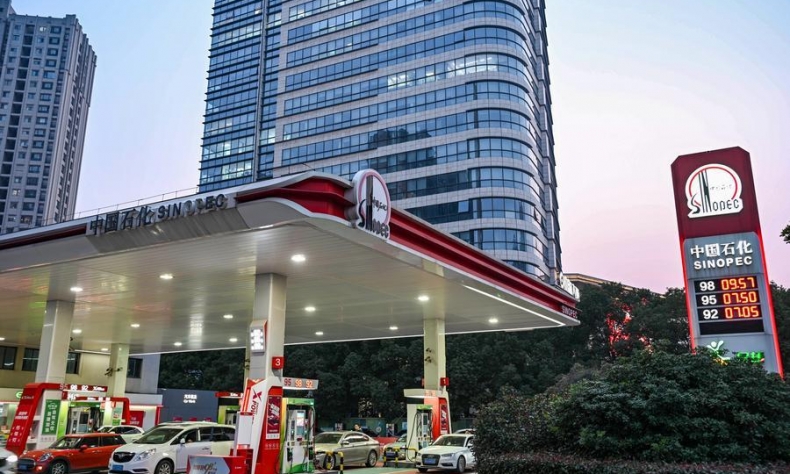
China is also suffering from the regional conflict, as it is the world’s largest oil importer by far. In 2025, China imported 578 million tons of oil, with oil import dependency rate at 72 percent. Out of the total, 237 million tons, or 41 percent were from five Gulf countries: Saudi Arabia, Iraq, UAE, Oman and Kuwait. The soaring world oil price has passed on to China’s automobile oil and aviation fuel with two rounds of price hikes already announced. It’s true that China has become the world’s largest producer of electric vehicles, with 30 million car registrations of EVs by the end of 2025.
Nonetheless, it accounts for less than 10 percent of total automobile registrations of 366 million. Also, the wide spectrum of oil chemical products ranging from naphtha, ethylene, polyethylene, and so on are indispensable in chemical, pharmaceutical, textiles, plastics, machinery, electronics industries, transportation and shipping, etc. Hence, the oil supply security and oil price are essential for Chinese economy and people’s daily life.
Both CPI and PPI showed a clear rebound in March 2026. CPI rose by 1.0 percent y-o-y. Out of the total rise, industrial consumer goods price rise accounted for 0.67 percentage point, gasoline price rise accounted for 0.11 percentage point. March PPI was up 0.5 percent y-o-y, the first y-o-y rise in 41 months, and up 1.0 percent m-o-m. Oil and gas extraction price was up 15.8 percent m-o-m, oil and coal processing price up 5.8 percent, and chemical materials processing price up 3.6 percent. With world oil prices rise continues to pass on to China’s production and consumer cost, both CPI and PPI look likely to rise further in coming months.
The negative effects, however, are limited. First, China is in a much stronger position in oil supply, with its total national strategic oil stockpile at 1.2-1.4 billion barrels, enough for 110 days’ supply, with a capacity of 2.0 billion barrels. Second, China has diversified its oil supply over the years and oil imports from five non-Gulf countries (Russia, Malaysia, Brazil, Angola and Canada) reached 258.57 million tons, 44.7 percent of total imports, a higher share than that from five Gulf countries with Strait of Hormuz as shipping route. Thirdly, China has been well prepared for energy transition by far as the world’s largest solar and wind power producer with the largest lithium battery and electric vehicles production capacity.
As China’s CPI and PPI have fallen for many years, the current rise y-o-y was on a low base, only pulling both to the positive area. Due to the general prospect of gradual reopening of the Strait of Hormuz, the further CPI and PPI rises look moderate. So China will not suffer an apparent inflation.
Goldman & Sachs has estimated that every 10-dollar oil price rise will lead to 0.1 percentage point fall in world GDP 2026, but to only 0.04 percentage point GDP fall in China.
The world oil supply and price shock also provide a historic opportunity for China’s growth powered by new quality productive forces. China’s new energy industry will get a strong push and enormous international market opportunities. The emerging and future industries, less fossil energy dependent and powered by AI, big data, quantum computing, etc. will grow even faster. China suffers on the one hand and gains tremendous new opportunities on the other hand. Judging from the current factors, the 15th Five-Year Plan for development, starting 2026, will keep its pace without much tangible influence by the regional instability.
The article reflects the author’s opinions, and not necessarily the views of China Focus.