Four Years on, China’s Global Security Initiative Builds Momentum
 Facebook
 Twitter
 Linkedin
 Google +

China’s Global Security Initiative has steadily built momentum since its 2022 launch, winning recognition across the Global South as a cooperative alternative to traditional security frameworks.
On April 21, 2022, at the Boao Forum for Asia Annual Conference, Chinese President Xi Jinping introduced the Global Security Initiative (GSI), presenting a forward-looking vision to address the world’s growing security challenges through cooperation, dialogue and shared responsibility. Four years on, the GSI has steadily gained recognition as a constructive contribution to global governance, reflecting China’s deepening role in promoting peace, stability and development in an increasingly complex international landscape.
The initiative was launched at a moment of profound global transformation. The aftereffects of the COVID-19 pandemic, intensifying geopolitical tensions and the outbreak of the Russia-Ukraine conflict underscored the fragility of existing security frameworks. At the same time, a range of security threats — from cyber risks, terrorism, climate change, and public health crises — were becoming increasingly intertwined and consequential. In this context, the GSI articulated a timely vision centered on “common, comprehensive, cooperative and sustainable security,” reaffirming the importance of collective responses in an interdependent world.
At its core, the GSI advances six key commitments: respecting sovereignty and territorial integrity; upholding the purposes and principles of the United Nations Charter; taking into account the legitimate security concerns of all countries; resolving disputes through dialogue and consultation; safeguarding both traditional and non-traditional security; and strengthening global security governance. These principles reflect widely shared international norms while offering renewed emphasis on inclusivity, fairness and mutual respect.
A defining feature of the GSI is its holistic understanding of security. Rather than focusing narrowly on military alliances or deterrence, the initiative highlights the deep interconnections between security, development and stability. It recognizes that lasting peace is closely tied to economic opportunity, social resilience and effective governance. This perspective aligns with China’s broader international engagement, including the Belt and Road Initiative, the Global Development Initiative, the Global Civilization Initiative, and the Global Governance Initiative, which together form a comprehensive approach to addressing both the symptoms and root causes of instability.
This broader vision has resonated strongly across the Global South. For many developing countries, security challenges are inseparable from issues such as poverty, food insecurity, energy access and vulnerability to external shocks. By addressing these dimensions, the GSI provides a framework that speaks directly to their priorities, fostering a more inclusive dialogue on global security and helping narrow the gap between traditional security concerns and the development needs of much of the world’s population.
Importantly, the GSI is not limited to conceptual proposals but is increasingly reflected in practical diplomatic efforts. China has actively promoted dialogue and peaceful resolution of disputes, supporting political solutions in various regional contexts. A widely recognized example is China’s role in facilitating the rapprochement between Saudi Arabia and Iran in 2023, demonstrating how sustained dialogue and mutual respect can help bridge long-standing divides and contribute to regional stability. China has also expanded its participation in U.N. peacekeeping operations and supported regional security cooperation initiatives in Africa, the Middle East and Asia.
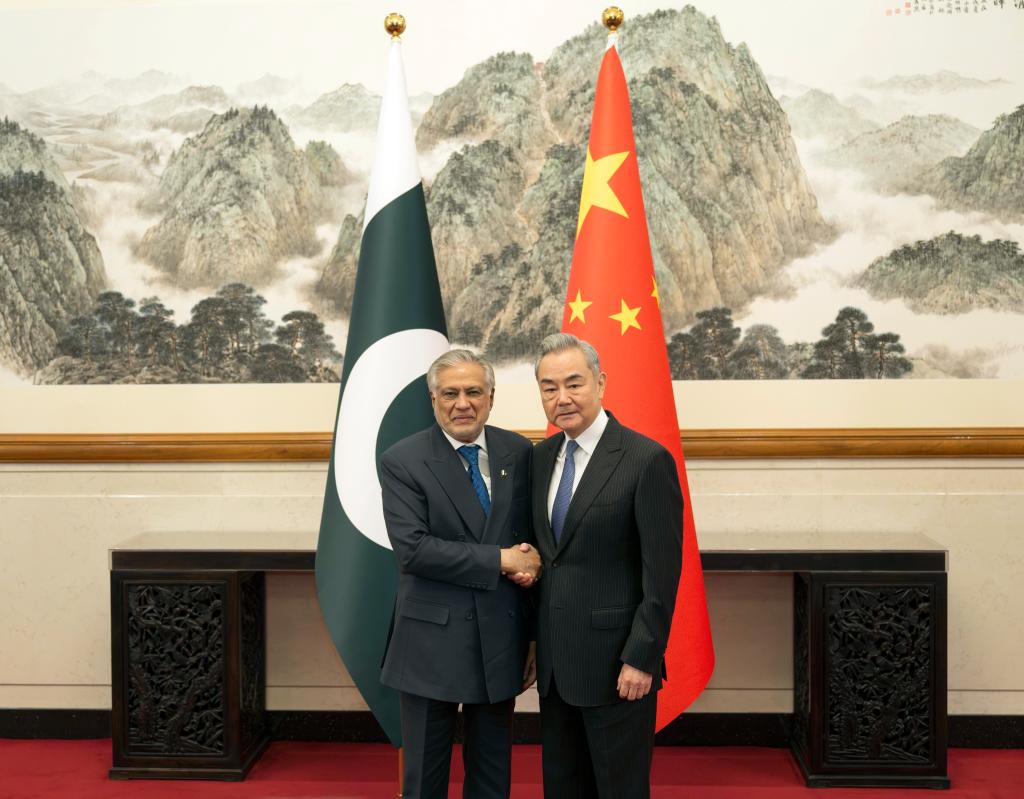
Over the past weeks and months, in the spirit of the GSI, China has worked with Pakistan and several other countries to push for a ceasefire and ease tensions in the Middle East in the wake of the U.S.-Israeli military strikes against Iran. A solution to the crisis can be found if the principles of the GSI, such as respecting sovereignty and territorial integrity and taking seriously the legitimate security concerns of all countries, are reflected in the talks between the U.S. and Iran.
The GSI also plays an important role in reinforcing multilateralism at a time when global governance faces mounting challenges. By advocating for an open, inclusive and cooperative security architecture, it offers a constructive complement to existing frameworks. Unlike exclusive arrangements such as NATO or smaller strategic groupings, the GSI emphasizes participation by all countries regardless of size or alignment, an approach that resonates with nations seeking a more balanced international order in an emerging multipolar world.
The initiative also reflects China’s evolving role as a provider of global public goods. As its economic and diplomatic engagement has expanded, China is increasingly contributing to shaping global discussions not only on development but also on security. The GSI signals a willingness to assume greater responsibility in promoting peace and stability, offering ideas that respond to the realities of the 21st century.
While the initiative continues to evolve, its progress over the past four years highlights its growing relevance. Increasing international attention to the GSI suggests its principles resonate across diverse regions and political systems, while ongoing dialogue under its framework provides opportunities to translate shared ideas into practical outcomes.
The continued development of the GSI will benefit from deeper engagement with international partners. As global challenges grow more complex, effective responses will require sustained dialogue, mutual trust and coordinated action, and the GSI offers a flexible platform adaptable to different regional contexts while maintaining its core emphasis on cooperation and inclusivity.
Comparisons with existing frameworks highlight the complementary role the GSI can play. The post-World War II system, anchored by the U.N. and supported by regional mechanisms, has contributed significantly to international stability. The GSI does not seek to replace this architecture but to enrich it by introducing perspectives that emphasize dialogue, development and shared security, contributing to the ongoing evolution of global governance.
For regions such as Europe, the GSI presents opportunities for constructive engagement. Its focus on multilateralism, conflict prevention and sustainable security aligns with widely shared principles, offering a basis for cooperation that can complement existing partnerships and address strategic priorities.
Four years after its launch, the GSI stands as a meaningful contribution to international discourse. It reflects a growing recognition that in an interconnected world, security cannot be achieved through isolation or confrontation but must be built on dialogue, cooperation and mutual respect. By promoting these principles, the GSI provides a pathway toward a more stable and harmonious international environment.
With sustained commitment, practical cooperation and broad international participation, the GSI has the potential to play an increasingly important role in addressing global challenges and fostering a shared future of peace, stability and development.
Matteo Giovannini is a finance professional at the Industrial and Commercial Bank of China, a non-resident associate fellow at the Center for China and Globalization, and a member of the Global Young Leaders Dialogue.