Why China’s Climate Leadership Makes Sense
 Facebook
 Twitter
 Linkedin
 Google +
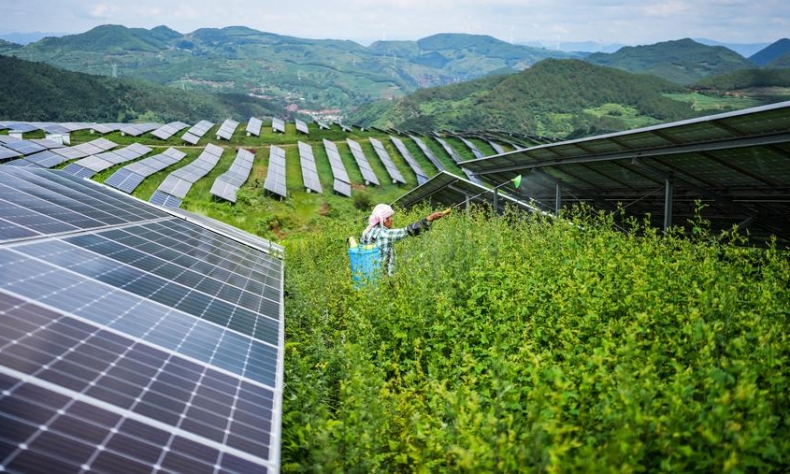
China’s rapid clean energy transition, long-term policy framework, and structural decoupling of growth from carbon intensity position it as an emerging global climate leader.
This spring, China adopted its first-ever Ecological and Environment Code, institutionalizing the rule of law in ecological conservation and marking a major step forward for global ecological governance.
Yet in Western discourse and media reports, China is still routinely labeled as the world’s largest greenhouse gas emitter – a portrayal that seems at odds with its growing role as a leader in global climate action. How can these two images coexist?
The answer becomes clear once we look beyond static snapshots of emissions and examine China’s policy direction and development trajectory.
Climate outcomes are shaped not by a single year’s emission, but by how economies evolve, how energy systems transform, and whether growth can be decoupled from carbon intensity. On these measures, China’s record is not only credible, but transformative.
First, historical context matters. Climate change is a cumulative problem, built on decades of emissions. Western economies, having industrialized earlier, bear greater historical responsibility. China’s rise in emissions has occurred recently during a compressed and unprecedented process of national development – a fact essential to any fair assessment.
Regarding energy consumption, the United States, with roughly one quarter of China’s population, still consumes more oil per day: approximately 19 million barrels, compared to China’s 14 million. This is not my claim, but data from the U.S. Energy Information Administration (EIA) for 2025. Over the past decade, China’s oil consumption has risen by approximately 42 percent, reflecting industrialization and a rapidly expanding middle class, not indifference to climate concerns. The same process Western nations underwent over more than a century, has now been compressed into a single generation.
The crucial question has never been whether emissions rise during industrialization. They almost inevitably do. Rather, it is how quickly a country pivots to cleaner energy once it reaches a certain development stage. And here, China’s actions speak loudly.
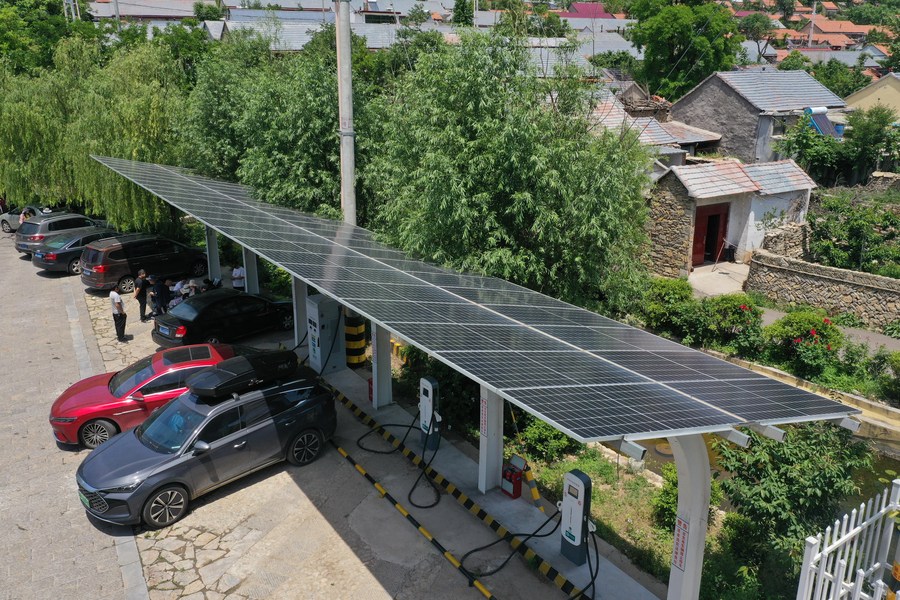
In 2025 alone, China’s energy consumption per RMB 10,000 of GDP (excluding raw materials and non-fossil energy) fell by 5.1 percent year on year. The share of non-fossil energy in total consumption reached 21.7 percent. China has built the world’s fastest-growing renewable energy system, while simultaneously investing heavily in electric vehicles, energy storage, and grid infrastructure. These are not symbolic gestures. They represent a structural transformation of the economy’s energy base.
China’s latest policy directives reaffirm steady reductions in energy and carbon intensity, alongside aggressive clean energy expansion. China has also set a target to reduce carbon intensity by around 3.8 percent in a single year – gains that compound over time. Its five-year planning framework enables coordinated action across industries, finance, and infrastructure, turning national climate targets into local implementation and corporate innovation.
There is also an important economic reframing at work. In many Western economies, environmental regulation has historically been presented as a growth constraint, and a cost to be managed. In China, green development is framed as an engine of new growth. Efficiency, innovation, and sustainability are now central metrics of what Chinese policymakers call “high-quality development.” This alignment between economic ambition and climate goals makes the transition self-reinforcing.
Energy security adds further impetus. Heavy reliance on imported fossil fuels creates a strategic incentive to expand domestic renewables – bolstering both climate resilience and geopolitical stability. This dual motivation, both environmental and geopolitical, helps explain the scale and speed of China’s clean energy investments.
It is also important to contextualize China’s emissions profile within its level of economic development. GDP per capita in the United States exceeds US $86,000. In China, it stands at around US $13,000. China is still lifting hundreds of millions of people to middle-income status. Expecting an economy, at this stage of development, to match the emissions profile as a post-industrial society is neither realistic nor fair. What matters is whether its policies are consistent with a credible transition toward lower emissions over time. Evidence suggests they are.
China’s scale also amplifies the global significance of its choices. Even modest percentage gains in energy efficiency or renewable deployment yield large absolute effects when applied across the world’s most populous country and second-largest economy. When China advances clean technology, global supply chains respond, costs fall, and adoption accelerates worldwide. China’s climate effort is, in this sense, a global public good.
As such, the apparent contradiction dissolves upon closer examination. The so-called large emitter and the driving force of the global energy transition are two sides of the same development story. A country compressing a century of industrialization into a few decades, while simultaneously constructing the world’s largest clean energy system, is not a climate laggard. Its role in shaping the world’s climate future is not merely understandable. It is indispensable.
Thomas Karlsson is a researcher with the Belt & Road Institute in Sweden.