Powering Industrial Growth
 Facebook
 Twitter
 Linkedin
 Google +
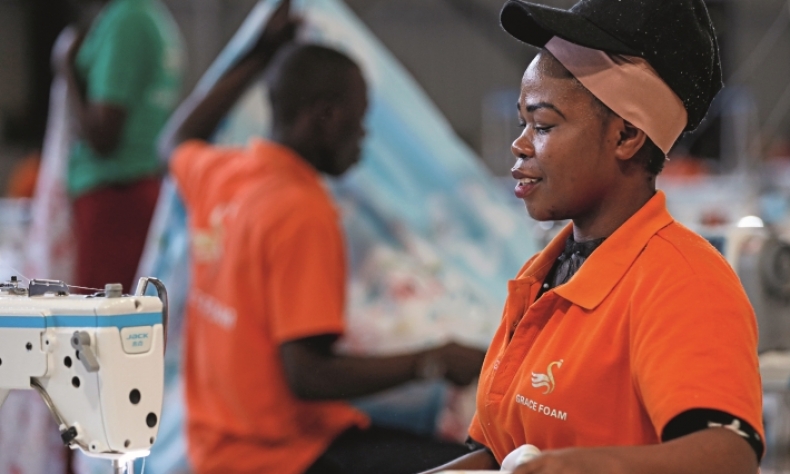
Public-private partnerships and strategic investments are transforming the economy and creating opportunities for youth in Uganda.
Latif Masata, 37, and Priscilla Mutenyo, 29, both work at the Sino-Uganda Mbale Industrial Park, a 250-hectare facility located in Mbale, east Uganda. Mbale is the third-largest city in the country.
Masata’s work involves assembling circuit boards and installing electrical components into metre casings in one of the park’s electronics assembly workshops. In contrast, Mutenyo is employed in the garment production sector, where she operates industrial sewing machines to make clothes from pre-cut fabric.
“Before joining the park in 2022, I was like many other young people in Mbale – without stable employment,” Masata explained. “I am now able to support myself and my small family of three with the money I earn.”
Mutenyo, who joined the park in 2023, recounted a similar story, describing the park’s opening as a turning point in her life.
“Before it opened in 2018, I struggled to find work as a seamstress. Its establishment changed everything. I was invited for a job interview within days of submitting my application. The work is meaningful, and I have greatly enhanced my skills,” she explained.
Masata and Mutenyo are far from the only young people working at the park. It is estimated that over 12,000 young people are directly employed, while thousands more – around 70 percent of them women – benefit indirectly through increased income opportunities, skills training and improved market access.
Manufacturing hubs
In mid-last year, during the commissioning of four additional factories at the park, Paul Zhang, chairman of the Tian Tang Group, a private Chinese conglomerate managing park operations, pointed out that the park’s 75 factories had already created thousands of jobs and would produce up to 20,000 additional jobs once fully operational. The park, which started off with an initial investment of $600 million, is expected to have between 100 and 150 factories when expanded.
“The early stages of China’s special economic zones and export processing zones focused on labour intensive industries and primarily targeted job creation and export-led growth and production. That is the model that this park seeks to replicate. In many ways, the Sino-Uganda Mbale Industrial Park is playing a key role in Uganda’s rise as a major manufacturing hub in East and Central Africa,” said Zhang, whose group recently expressed interest in purchasing an additional 202 hectares of land to expand the park.
For Uganda, which aims to increase per-capita foreign direct investment through the development of foreign-invested and export-oriented industrial enterprises, industrial parks like the Sino-Uganda Mbale Industrial Park, along with eight other publicly owned parks, are expected to accelerate economic growth. The parks are supported by policy frameworks such as the National Industrial Policy, the African Continental Free Trade Agreement and the National Development Plan.
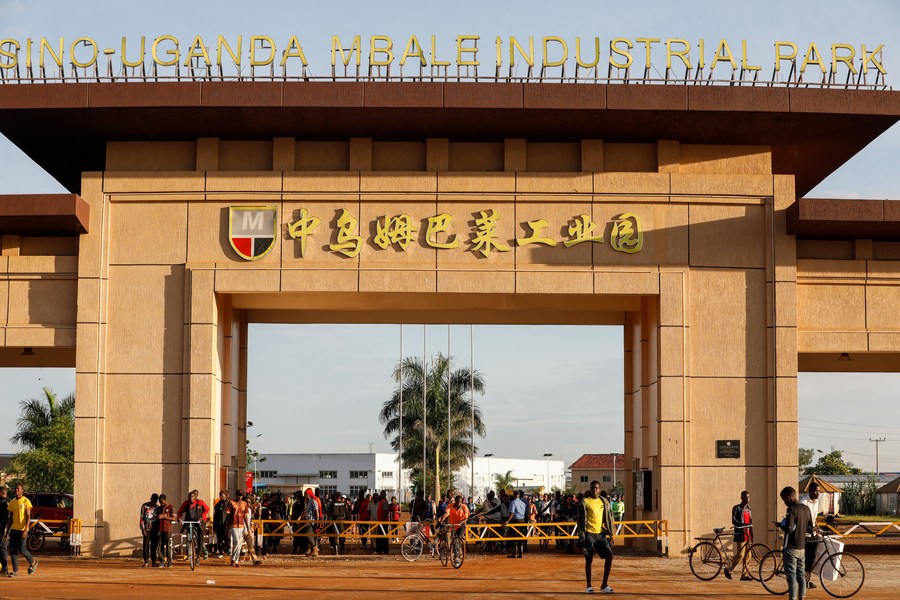
Evelyn Anite, Uganda’s state minister for investment and privatisation, said that industrial parks serve as a strategic avenue for Uganda to increase competitiveness and integrate into global value chains.
“There is broad recognition that successful industrial policies will improve Uganda’s standing in the global economy. Accelerating industrialisation is crucial for African nations, including Uganda, to realise the aspirations of the African Union’s Agenda 2063. Uganda, working in partnership with countries such as China, is dedicated to the long-term growth of its industrial parks,” she said.
The Sino-Uganda Mbale Industrial Park, established through a public-private partnership primarily between the Ugandan government and Tian Tang Group, seeks to implement the Buy Uganda Build Uganda Policy. This Ugandan government initiative promotes local production, consumption and procurement of Ugandan-made goods and services.
The park produces a wide range of products that were previously imported, including aluminium rods, electric kettles, smart TVs, paper products, LED bulbs, detergents and more.
In a speech commemorating Uganda’s Independence Day in October last year, Ugandan President Yoweri Museveni, who proposed the industrial park development idea during a 2016 meeting with Chinese Foreign Minister Wang Yi in Kampala, underscored the importance of industrial parks in advancing Uganda’s Vision 2040 strategy.
Vital for economy
“The development of industrial parks is one of the major policy tools towards Uganda’s industrialisation. They are one of the major instruments used to significantly boost Uganda’s attractiveness for foreign direct investment and socioeconomic development. With support from important partners like China and private sector players like Tian Tang Group, these parks are significantly boosting Uganda’s manufacturing capacity and industrial output,” Museveni noted.
He noted that the parks are supporting export-oriented production, contributing to the country’s balance of trade and strengthening the concept of public-private partnerships. “They are helping with knowledge transfer, innovation and the country’s drive to achieve middle-income status while reducing dependency on imported commodities.”
Uganda’s Vision 2040 strategy aims to raise the manufacturing sector’s share of GDP to at least 30 percent by 2030.
Several African economic analysts note that Uganda and other African countries must strengthen their technical and vocational education and training institutions to cultivate skilled labourers and ensure that industrial facilities like the Sino-Uganda Mbale Industrial Park provide fair and competitive remuneration for young workers such as Masata and Mutenyo.