After Venezuela, Is Cuba Next?
 Facebook
 Twitter
 Linkedin
 Google +
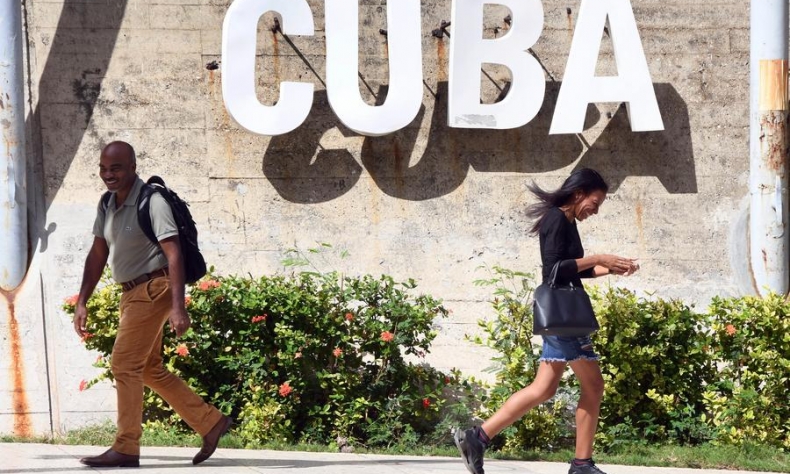
The indictment of Castro serves as part of a broader effort to revive aspects of the Monroe Doctrine and increase leverage over both Cuba and the wider Latin American region.
On May 20, the U.S. Department of Justice indicted 94-year-old Cuban revolutionary leader and former President Raúl Castro on charges including conspiracy to kill U.S. nationals, destruction of aircraft and murder. The move immediately fueled speculation that, following its pressure campaigns against Venezuela and Iran, Washington may once again be setting its sights on Cuba.
Among the allegations cited in the indictment is Castro’s alleged role in the February 24, 1996 shootdown of two unarmed U.S. aircraft operated by Brothers to the Rescue, a Miami-based group formed by Cuban exiles. Cuba has maintained that the planes violated its airspace, describing the shootdown as a legitimate act of self-defense. Following a logic similar to that used in the indictment of Venezuelan President Nicolás Maduro, Washington’s so-called judicial prosecutions can be seen as little more than legally framed warrants for pursuit. In practice, they create a domestic legal justification for the U.S. Government to seek the capture, or even the killing, of foreign leaders.
If the U.S. were to take action against Cuba, how might events unfold?
Cuba is unlikely to “surrender” even if Castro were captured or killed. Cuba’s political system remains intact, with functioning leadership succession mechanisms. Castro stepped down from all party, government and military positions in 2021, transferring leadership responsibilities to President Miguel Díaz-Canel. Today, Castro is more of a symbolic figure from Cuba’s revolutionary era in the 1960s. His removal would not paralyze the state’s governing apparatus. On the contrary, it could provoke a nationalist backlash within Cuba and generate broader regional opposition across Latin America.
In addition, the notion that the U.S. military could quickly occupy Cuba, seize Castro and withdraw without substantial costs is far more difficult to realize than some assume.
Cuba presents a fundamentally different challenge. Geographically, the island possesses considerable strategic depth. Over decades, extensive defensive infrastructure has been developed across its territory. More importantly, Cuba has maintained unusually strong grassroots mobilization and social organization mechanisms.
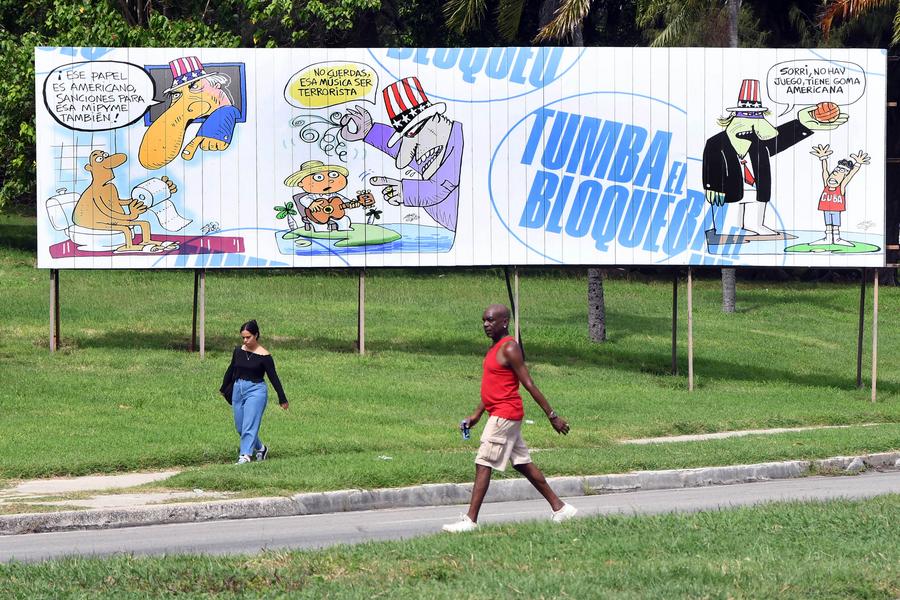
Beginning in the 1980s, Cuba adopted a “War of All the People” defense strategy, which integrates regular military forces with community-based militias. This institutionalized fusion of civilian and military preparedness enhances the country’s capacity for local resistance. Regular strategic exercises, such as the Bastión series (first held in 1980), train leadership bodies, armed forces and the general population in territorial defense.
Any military operation against Cuba would carry substantial risks of devolving into prolonged urban warfare and guerrilla conflict. A full-scale occupation of the island could require the deployment of well over 100,000 elite ground troops and months of sustained combat operations. Although Cuba possesses natural resources such as nickel that might theoretically offset some wartime costs, the military expenditures and political risks involved would be enormous—and difficult for contemporary America to justify.
The U.S. can ill afford even a limited failure in Cuba. Any military setback on America’s doorstep would completely shatter its military myth. U.S. military dominance is the most critical pillar of its hegemony. A failure comparable to the 1961 Bay of Pigs invasion or the 1993 Black Hawk Down episode in Somalia, or even a prolonged stalemate on Cuban soil, would accelerate international reassessments of American military capabilities and undermine a key pillar of U.S. hegemony.
Viewed in this light, the indictment of Castro appears less a judicial proceeding than another instrument of political pressure. It serves as part of a broader effort to revive aspects of the Monroe Doctrine and increase leverage over both Cuba and the wider Latin American region. (The Monroe Doctrine is a 19th-century U.S. foreign policy that declared the Western Hemisphere off-limits to European colonization or interference, while asserting U.S. dominance over the region—Ed.)
U.S. sanctions have contributed greatly to Cuba’s humanitarian hardships, drawing criticism from much of the international community. The U.S. should urgently rethink and adjust its Cuba policy of, for example, unilateral measures and Cuba’s continued presence on the U.S. list of state sponsors of terrorism, rather than compounding its mistakes. While any U.S. military action against Cuba would entail extraordinary risks, it would also be unwise to underestimate Washington’s willingness to pursue increasingly aggressive options.
The international community should not remain indifferent to the suffering of ordinary Cubans under illegal sanctions. Greater humanitarian assistance is needed, particularly through relevant United Nations agencies and coordinated efforts by Latin American countries to provide food and energy support.
The author is deputy director of the Country Studies Department at the Chongyang Institute for Financial Studies, Renmin University of China.