A Historic Opportunity for Africa
 Facebook
 Twitter
 Linkedin
 Google +
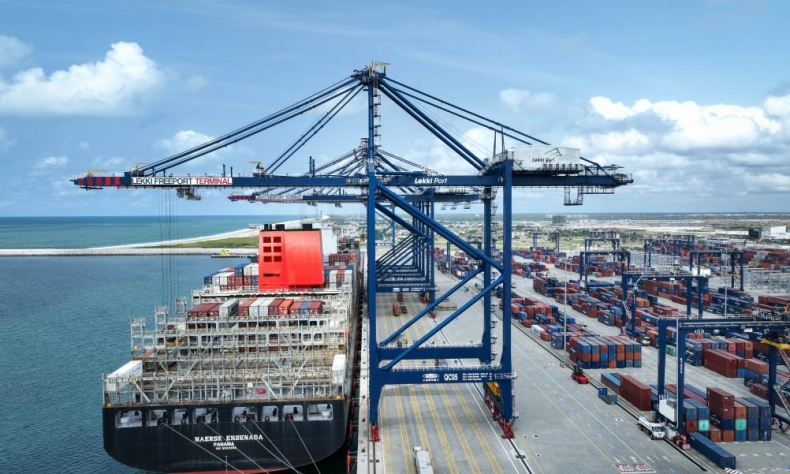
China’s proposals for reforming global governance underscore the continent’s rising influence and its growing role in shaping a fairer international order.
The international system is undergoing a profound transformation. Shifting economic balances, the rise of the Global South, climate change, technological advances and mounting security challenges are testing the ability of institutions established in the aftermath of the Second World War to address the realities of the 21st century.
Published on 17 June, China’s white paper More Just and Equitable Global Governance: China’s Principles, Proposals and Actions outlines a vision for reforming global governance through stronger multilateralism, fairer representation for developing countries and shared development. For Africa, the proposals set out in the white paper could open up significant strategic opportunities in a changing global order.
A fragile global balance
Global governance has never been static. From the Congress of Vienna in 1815 to the establishment of the UN in 1945, every major transformation of the international order has been driven by shifts in the balance of power, economic realities and the aspirations of peoples. Today, the world is once again undergoing a historic transition that calls for a reassessment of how global governance should evolve.
Multilateral institutions have played a vital role in preserving peace, promoting international cooperation and supporting economic development. Yet they were created in a geopolitical landscape very different from today’s. In 1945, most African countries remained under colonial rule, the global economy was dominated by a handful of industrial powers and modern globalisation had yet to emerge.
Eight decades later, the global balance of power has shifted significantly. According to the UN, developing countries now account for nearly 85 percent of the world’s population, while Africa’s population is projected to reach about 2.5 billion by 2050, representing nearly one quarter of humanity. Meanwhile, emerging economies are generating an ever-larger share of global output, trade and technological innovation. These changes are reshaping the global distribution of power and strengthening calls for a more representative system of global governance.
At the same time, the challenges confronting the international community far exceed the capacity of any single country to address on its own. Climate change, pandemics, food security, the governance of artificial intelligence, cybersecurity and the resilience of global supply chains all demand coordinated international action.
Against this backdrop, reforming global governance has become a central issue in international debate. Calls to modernise multilateral institutions are growing across the world, driven by the need to make them more representative, effective and responsive to the realities of the 21st century. The objective is not to overturn the principles on which they were founded, but to strengthen their legitimacy and better equip them to meet today’s global challenges.
China’s contribution
China has become an increasingly influential participant in this debate. Over the past two decades, it has emerged as a major actor in global governance. The publication of its white paper reflects this growing role, outlining a vision for reform based on stronger multilateralism, shared development, respect for state sovereignty and greater representation of developing countries in international decision-making.
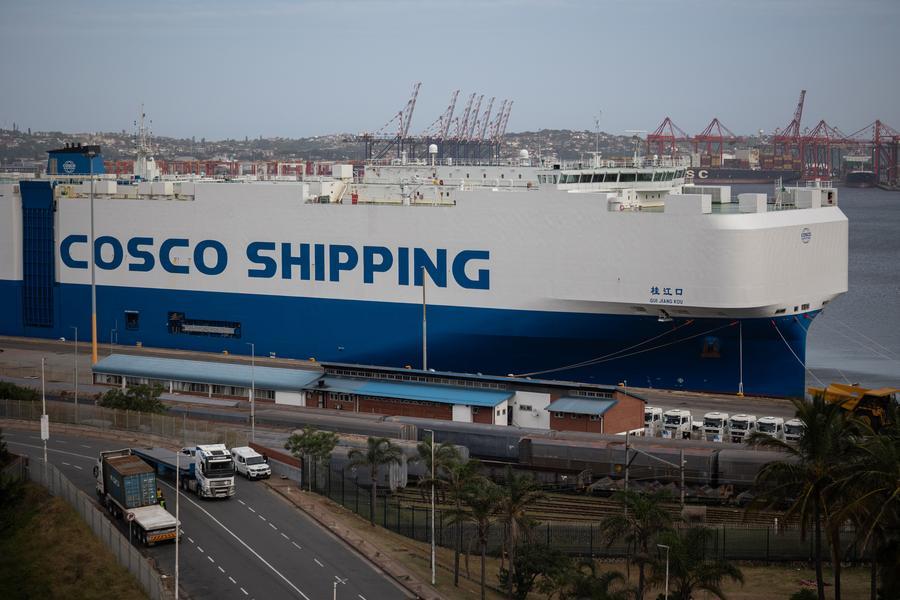
For Africa, these issues are of particular significance. They coincide with the continent’s growing influence in world affairs, driven by rapid demographic growth, the implementation of the African Continental Free Trade Area (AfCFTA), the African Union’s accession to the G20 and the emergence of a new generation of economic and diplomatic actors. The question is therefore no longer whether Africa will play a greater role in global governance, but how it can shape a more balanced, inclusive and representative international order.
Rather than simply identifying the shortcomings of the current system, the Chinese white paper sets out a series of principles and proposals to strengthen international cooperation in an increasingly interconnected world. Its vision rests on four pillars: stronger multilateralism, respect for the sovereign equality of states, shared development and fairer representation of developing countries in international institutions. In this framework, lasting stability is seen as the product of broadly shared prosperity rather than geopolitical confrontation.
Broader China-Africa cooperation
These principles are also reflected in the evolution of China-Africa relations. Since its establishment in 2000, the Forum on China-Africa Cooperation (FOCAC) has developed into one of the world’s most comprehensive mechanisms for cooperation between a country and a continent. Trade between China and Africa reached a record $348 billion in 2024, making China Africa’s largest trading partner for the 17th consecutive year.
However, the partnership now extends well beyond trade. The priorities adopted at the 2024 Beijing FOCAC Summit place greater emphasis on industrialisation, local value addition, scientific and technological cooperation, the digital economy, skills development, modern agriculture and green transition. Together, these priorities reflect a shared commitment to accelerating the structural transformation of African economies.
China’s support for the African Union’s membership in the G20 further illustrates this approach. The Chinese white paper envisions Africa not merely as a beneficiary of international decisions but as an active participant in shaping global governance. This vision is particularly significant at a time when the continent’s demographic and economic rise is giving it greater weight in international affairs.
The AfCFTA is one of the world’s most ambitious economic integration projects. According to the World Bank, its full implementation could raise the continent’s real income by almost 7 percent by 2035 and lift around 30 million people out of extreme poverty. By fostering industrialisation, encouraging local value addition and strengthening regional value chains, the AfCFTA has the potential to enhance Africa’s global competitiveness.
These priorities closely align with the areas in which China-Africa cooperation can make its greatest contribution. China’s development experience demonstrates the importance of sustained investment in infrastructure, manufacturing, human capital, technological innovation and long-term strategic planning. While not intended as a universal model, this experience offers valuable lessons for African countries pursuing their own development paths.
Ultimately, the Chinese white paper argues that reforming global governance will not succeed without Africa’s full and effective participation. In this sense, China-Africa cooperation represents not only a partnership for development but also a platform for strengthening Africa’s voice in building a more inclusive, balanced and representative international order.
The author is President of China-Francophone Africa Observatory.