From Trade to Transformation
 Facebook
 Twitter
 Linkedin
 Google +

The visit consequently points towards a China-Africa relationship increasingly shaped by the interaction of trade, production, technology, finance and security.
The most important outcome of President Xi Jinping’s latest visit to Egypt may not be found in any single agreement signed in Cairo. Rather, it lies in what the visit reveals about the future direction of China-Africa cooperation. After decades in which roads, railways, ports and power plants defined the relationship, one question is moving to the centre of the agenda: Can connectivity now be converted into production, technological capability, competitive African industries and higher-value participation in the global economy? Egypt may be one of the places where the question is answered.
Since the two countries established a comprehensive strategic partnership in 2014, cooperation has expanded across infrastructure, manufacturing, energy, finance and technology. The latest agreements point towards a relationship increasingly centred not simply on building infrastructure, but on converting connectivity into industrial capacity, technological capability, green development and deeper economic integration.
But why Egypt? The country’s significance lies in an unusual convergence of geography, industrial potential, market size and diplomacy. It is simultaneously African, Arab and Mediterranean; sits along the Suez Canal, connecting Asian production networks with African and European markets; has a population exceeding 110 million; belongs to BRICS; and participates actively in African and Arab diplomacy. Few African countries combine these advantages. Egypt is therefore not simply a large African economy within China’s partnership network; it is a potential hinge between Chinese production capabilities and Africa’s ambition to industrialise.
The Suez Canal reinforces that importance. Recent Red Sea disruptions have demonstrated how quickly insecurity along strategic maritime corridors can affect international supply chains. For China and Africa alike, supply-chain resilience, secure shipping routes, diversified production locations and strategically positioned industrial hubs have therefore become development issues as much as commercial ones.
Egypt consequently offers more than another destination for Chinese capital. Its location, market size and industrial base create an opportunity to connect Chinese manufacturing and investment with African production networks, the African Continental Free Trade Area, and markets in Europe and the Middle East. In this sense, Egypt illustrates how China-Africa cooperation could increasingly move beyond trade and infrastructure towards the development of production capacity, technology and regional value chains.
Driving industrialisation
The central challenge facing China-Africa trade is no longer simply how to make it larger; it is how to make its structure more developmentally transformative. Zero tariffs can open a door, but industrial capability determines who can walk through it.
That question extends across the continent. Chinese customs data show that China-Africa trade reached a record $348 billion in 2025, comprising approximately $225 billion in Chinese exports to Africa and $123 billion in imports. The scale is impressive, but composition matters more for development. Can African economies move from predominantly exporting commodities and importing manufactured goods towards processing resources locally, producing higher-value goods and participating more deeply in regional and global value chains?
The clearest economic message emerging from Cairo is that the next phase of China-Africa cooperation will increasingly be judged by whether infrastructure enables countries to produce, rather than simply by what infrastructure is built.
The most consequential Chinese investment in Africa over the coming decade may not be another railway, highway or port in isolation. It may instead be investment that connects infrastructure directly to production: factories to ports, renewable energy to industrial parks, digital infrastructure to enterprises, and African producers to continental and global markets.
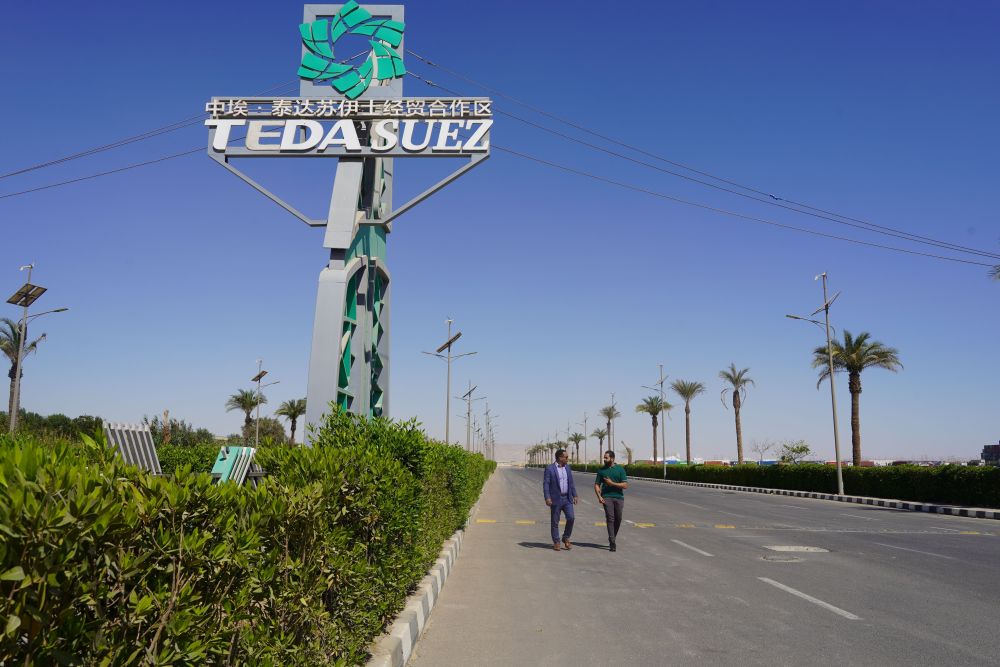
Africa’s challenge is therefore not simply to attract capital but to convert investment into structural transformation. According to UNCTAD, the continent attracted about $70 billion in foreign direct investment in 2025, with Egypt remaining Africa’s largest recipient with around $15 billion. But investment remained concentrated in strategic industries and a small number of economies, limiting its contribution to broad-based industrialisation.
This should be central to Africa’s engagement with the next generation of Chinese investment. As global investment increasingly shifts towards AI infrastructure, semiconductors, critical minerals and energy-transition technologies, Africa’s challenge is not merely to attract capital, but to gain the learning, supplier development, technology and employment that accompany it.
A Chinese-supported factory in Egypt matters, but its developmental effect becomes considerably greater when Egyptian and African businesses enter its supply chains, workers acquire transferable skills, technologies diffuse into domestic enterprises and manufactured products gain access to wider African markets.
The communiqué identifies AI, cloud computing, data centres, semiconductors, cybersecurity, remote sensing, space applications and critical-mineral value chains as areas for expanded cooperation. This extends the relationship beyond the conventional focus on railways, roads, ports and power stations.
But imported technology alone is insufficient. Africa needs engineers capable of maintaining sophisticated equipment, firms able to enter supplier networks, researchers capable of adapting technologies to local conditions and institutions able to govern AI and data effectively. Without those capabilities, technological cooperation could reproduce dependence rather than overcome it.
An evolving relationship
The visit consequently points towards a China-Africa relationship increasingly shaped by the interaction of trade, production, technology, finance and security. But the wider impact of President Xi’s visit will ultimately depend on what follows from the commitments made in Cairo. China-Africa cooperation cannot be judged primarily by projects announced, kilometres of railway built or financing committed. The more demanding benchmark is conversion: whether infrastructure creates industrial capacity, investment generates local suppliers and employment, technology cooperation develops African skills and innovation, market access produces higher-value exports, and green investment accelerates industrialisation.
That conversion will not happen automatically. African governments themselves must connect foreign investment to industrial policy, skills development, local supplier programmes, research institutions, trade facilitation and regional integration. China’s contribution can create opportunities, but African institutions will largely determine how much value is retained locally. Partnership can expand the opportunity set, but domestic capability determines the development dividend.
For Egypt, the challenge is therefore to turn strategic geography into productive capability through deeper local sourcing, technology transfer, skills development, competitive enterprises and export diversification. For China, the opportunity is to demonstrate that its evolving cooperation model can support African countries not merely in building infrastructure, but in producing goods, processing resources locally, developing technological capabilities and competing in higher-value markets.
Seventy years after Egypt became the first African country to establish diplomatic relations with the People’s Republic of China, President Xi’s visit to Cairo carried both historical symbolism and forward-looking significance. The pyramids and the Great Wall may symbolise two ancient civilisations, but the more consequential story concerns the industries of the future: renewable energy, electric mobility, digital infrastructure, artificial intelligence, advanced manufacturing and globally connected African production.
If the commitments reached in Cairo translate into factories, technologies, skills, competitive exports, African suppliers and deeper continental value chains, Egypt could become a strategic junction in the next phase of China-Africa cooperation. The significance of that shift would extend beyond Egypt: it would offer a test of whether China-Africa cooperation can move from building connectivity to building productive capacity.
The author is Executive Director, Centre for Nigeria Studies, Institute of African Studies, Zhejiang Normal University.