Joint Development, Shared Human Rights
 Facebook
 Twitter
 Linkedin
 Google +
Rather than addressing isolated policy areas, the four initiatives reinforce one another and advocate an integrated approach to development, governance, and international cooperation.
In today’s era, joint global development is an undisputed fact, since no region or country can exist in isolation. Despite this reality, this process is not built on an understanding of “commonality” or “togetherness.” On the contrary, we are witnessing a growing divergence in development trajectories, where competition and segmentation are re-emerging in increasingly prominent forms. The United States, in particular, is pursuing policies that are economically and politically self-harmful.
Two models of development: “West” and “East”
In today’s world, we see two models: the “West” model and the “East” model.
The “West,” dominated economically, politically, and militarily, by the U.S. and supported by institutionalized Europe, champions “Western values,” such as representative democracy, the separation of powers, and individual responsibility. However, this model faces severe real-world challenges. With the rise of multinational corporations, their influence is growing; corporations now act as “policymakers” directly, while representative institutions are losing ground. Legal rights are being transformed into interests determined by private organizations. Although constitutional courts are increasingly important, decision-making is driven more by power than by substantive content. Besides, short-termism and a lack of strategic direction in political decision-making have fueled public discontent, leading to populism and violent tendencies.
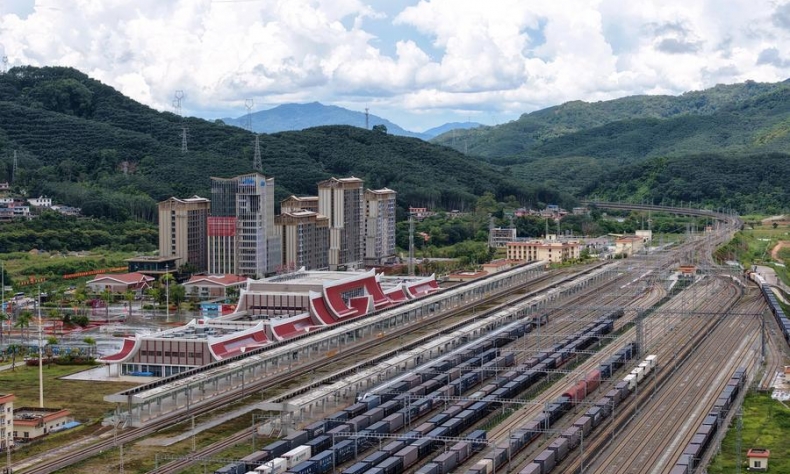
The “East” model, exemplified by China, focuses on economic growth, channeling it into technology-led growth, modern public infrastructure and poverty alleviation to enhance benefits of all the people, and cultivate a middle class. This model runs on two tracks at once: exporting goods to global markets while steadily building up domestic consumption as a second engine of growth. As the boundaries of the global order blur, the “developing countries” are becoming increasingly vital participants. It has now become evident that the “global polity” was not much more than a scaffold for maintaining the “Western model.”
Shared human rights
The concept of shared human rights is inherently ambiguous. On the one hand, “shared” emphasizes commonality, underscoring a shared understanding of human rights and the pursuit of common goals. On the other hand, it denotes distribution, highlighting the allocation of responsibilities and resources, including accountability for resource extraction, utilization, and compensation. Understanding this dual meaning is essential for framing discussions on global justice.
Globalization today means more than trade and cultural exchange. It has produced a genuinely interconnected global system, one where countries are bound by deep interdependence. That system is shaped by a few forces at once. Nations compete over costs and benefits. Transnational problems, climate change, pandemics, and financial crises require cooperation and trust that no single country can build alone. Local or short-term solutions no longer match the scale of the challenges. And the networks connecting these problems have grown too complex for any one actor to manage unilaterally. Taken together, these conditions make shared responsibility and collective action essential to realizing human rights.
The Global Governance Initiative
China has proposed the Global Governance Initiative (GGI), which should be understood as the culmination of a broader framework, comprising the Global Development Initiative (GDI), Global Security Initiative (GSI), and Global Civilization Initiative (GCI). Rather than representing separate agendas, these four initiatives are mutually reinforcing, reflecting the view that development, security, civilization, and governance are inseparable foundations of sustainable global progress.
This integrated framework also provides a new perspective on human rights. The Universal Declaration of Human Rights defines human rights as universal, inalienable, indivisible, interdependent, and interrelated. However, it was written in a specific historical moment shaped by the dominant powers of that era. Subsequently, the international human rights instruments that followed largely preserved that same order rather than challenging it. They let existing powers avoid real scrutiny, entrenched their dominance, and never built an effective system to enforce the rights they proclaimed. Developed countries reached higher standards of human rights protection partly because they themselves wrote those standards. However, it also came at a cost few acknowledge: their development was built on colonialism, cheap labor, and unequal trade terms that extracted wealth from the countries now being held to those same standards.
The GGI serves as the culmination of the previous three initiatives and the foundation for future global cooperation. By uniting development, security, and civilization into a coherent governance framework, it establishes a broader institutional platform for addressing global challenges. This approach shifts away from the traditional state-centered model that has often defined the existing international system.
More fundamentally, this framework marks a shift from viewing development primarily as economic growth to recognizing it as a multidimensional process. China’s experience illustrates this change. Although the country has sustained economic growth, this is seen as a means to broader ends, not an end in itself. Development is pursued through strategies that seek to counter existing power structures, recognize the growing role of the Global South, promote a broader understanding of democracy and the rule of law beyond periodic elections. Crucially national development is closely linked with practical improvements in people’s daily economic, social, and cultural lives. Economic growth remains essential, but its true value is in advancing collective and individual well-being; even when these goals may sometimes be in tension.
Moving from multilateralism toward transcendentalism
Against the backdrop of the preceding discussion, the Global Governance Initiative (GGI) should be understood as requiring a conceptual shift beyond traditional multilateralism. Although a more appropriate term may eventually be found, the concept is useful for capturing the need to transcend existing political, geographical, and conceptual boundaries to address global challenges. This does not imply abandoning local realities. On the contrary, any meaningful discussion of human rights must begin with the concrete conditions of life at the national, local, and individual levels, where rights are both experienced and realized. At the same time, globalization demands that governance move beyond the “Not In My Backyard” (NIMBY) mentality. Global problems require globally shared goals and, equally importantly, globally shared responsibilities, ensuring that costs and burdens are not externalized onto others.
This integrated understanding of global governance is deeply rooted in traditional Chinese philosophy. In particular, the Confucian ideal of the Great Unity and the principle of the unity of heaven and humanity emphasize harmony, interconnectedness, and the common good. These philosophical foundations provide intellectual support for the four global initiatives, which together constitute a holistic framework for promoting a shared future for humanity. Rather than addressing isolated policy areas, the four initiatives reinforce one another and advocate an integrated approach to development, governance, and international cooperation.
Peter Herrmann is a senior research fellow at the Human Rights Centre, Law School, Central South University. He is also a member of the European Academy of Sciences and Arts, and a member of the European academic community.
The article reflects the author’s opinions, and not necessarily the views of China Focus.