Foundations of Global Governance Frameworks
 Facebook
 Twitter
 Linkedin
 Google +

China’s Global Governance Initiative and push toward true multilateralism, multipolarity and a shared future for humankind premised on win-win relations is the framework the world as a whole will benefit the most from.
How a state outlines its political projects and programs says a lot about the worldview it operates with. Behind politics is always a series of assumptions, some explicitly recognized by political actors, others so deeply entrenched and unquestioned they function as “unknown knowns,” as the things taken for granted in making judgments about the world.
A worldview—rooted always in the material premises and history of the society—comes to filter how the world is understood, and hence, comes to shape how one acts in it.
What happens when we apply this operation to compare China’s Global Governance Initiative with its American counterpart, the Project for a New American Century?
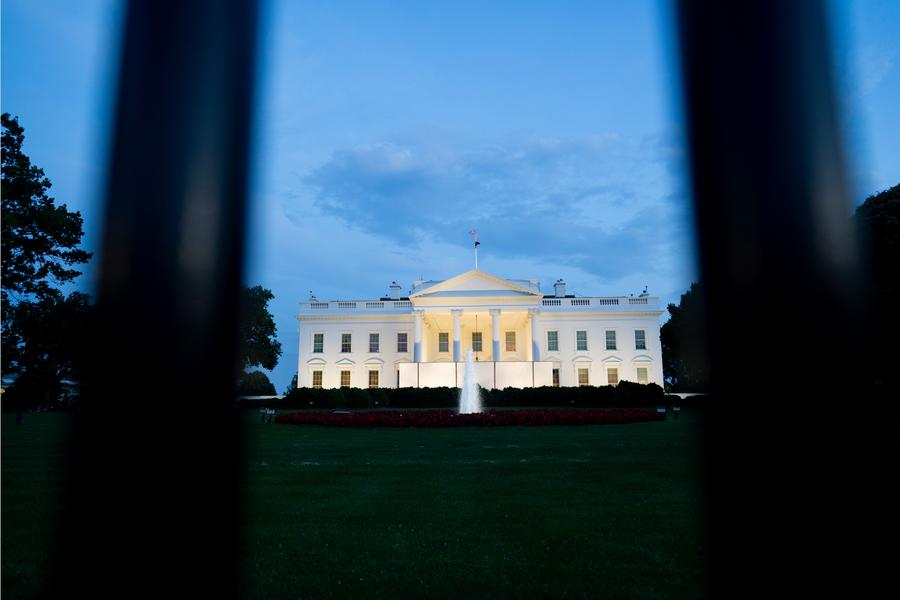
The Project for a New American Century, first outlined at the tail end of the 20th century, seeks to defend and further entrench the unipolar world order, a global arrangement of U.S. hegemonism.
It is a global arrangement of win-lose, where the U.S. ruling elite win at the expense of the world and its own population.
This political project is rooted in the Western civilizations conception of the individual. For the West, the individual reigns supreme. Like Robinson Crusoe, the protagonist in Daniel Defoe’s famous novel by the same name, the West holds a conception of the individual as a self-sufficient entity—a being in no need of others.
From the standpoint of the dominant metaphysic in the West, the Other is not someone whom my being depends on, and who therefore requires respect, consideration and care. The Other, instead, is reduced to something that serves the individual. The Other is interacted with only insofar as it can be exploited, that is, have its life and capacities drained to enrich myself.
This worldview goes hand in hand with the development of capitalism, a system that elevates to its ultimate principle capital accumulation. It is the logic upon which is premised the Project for a New American Century.
To defend unipolarity and American hegemonism is to operate under the influence of a metaphysics which holds that one can benefit only at the expense of the Other, an ontology of life as a zero-sum game.
This is why American statesmen and policymakers feel threatened by China’s rise—their philosophy is one in which the possibility of winning together doesn’t exist, they can only win if it is at the expense of someone else, and if someone else is winning (China’s rise, for example), it can only be at my own expense.
The logic behind China’s Global Governance Initiative is completely contrary to this Western logos of ruthless individualism. China approaches the world promoting a framework of multipolarity, rooted in true multilateralism, win-win relations between states and a commitment to a shared future for humankind.
Operative in the background of this initiative is a philosophy that understands the interconnection and unity of everything, from the cosmos to the human moral order.
The thought of considering a person a radically separate and independent individual is ludicrous for Chinese philosophy. Implied in the personhood of an individual is the social, the community of people (from one’s family all the way up to one’s state) that have helped to make them who they are.
The individual obtains their dignity and recognition only through the community of others, the ensemble of relations which made us who we are. The Other is not a piece of equipment for me to use up, exploit and dispense with. The Other’s fate and my own are intertwined.
It is this social and holistic philosophy that is at the foundation of China’s Global Governance Initiative. The Communist Party of China understands that humanity does share a common fate, and that the only way anyone could actually win is if we all collectively win.
The zero-sum logic the U.S. ruling class operates with is not only detrimental for the losers, but also for the winners, who under such predicament could very well find themselves as losers tomorrow.
China’s Global Governance Initiative and push toward true multilateralism, multipolarity and a shared future for humankind premised on win-win relations is the framework the world as a whole will benefit the most from.
It is a framework rooted in a correct philosophical appreciation for the collective existence of humanity, which can never be amputated to the metaphysics of the lonesome individual, as the worst of Western philosophy has been, to the benefit only of the mammon of capital.
The author is an adjunct professor of philosophy at Southern Illinois University, the U.S.