Global Governance Initiative Marks Successful First Year
 Facebook
 Twitter
 Linkedin
 Google +
One year after China unveiled the Global Governance Initiative, a more dangerous and fractured world has made its case for multilateralism harder to dismiss.
The world is less safe than it was a year ago. Reckless military actions by certain aggressive nations have further damaged their international reputation, but far more importantly, their decisions have led to the deaths of innocent people and the destruction of sovereign countries. Other unwise policy decisions have raised tensions in volatile places across the globe. Meanwhile, protectionist economic policies has inflated consumer prices and disrupted the intricate and delicate network of supply chains.
Let’s also not forget that a corrosive form of nationalism remains evident, most notably in Western countries, and such an ideology runs counter to the reality of the 21st century.
The list could go on, but the point is clear: Responsible actors on the global stage are urgently needed as the summer of 2026 winds down. One year on, the Global Governance Initiative (GGI) stands as a testament to China’s role as a rational stakeholder.
Announced by Chinese President Xi Jinping in September 2025, the GGI focuses on firm support for the international rule of law while ensuring the world’s more than 8 billion people benefit from global decisions. Viewed another way, factionalism should give way to universality.
The GGI also argues that the success of any international effort should be measured by whether it delivers real results on global challenges. It calls for unceasing respect for world peace and for continued global development.
Let’s consider those three ideas for a moment. How has China translated these principles into action?
How has China sought to deliver real results for global problems? Let’s look at climate change. The World Economic Forum said China spent more than twice as much as any other country on its green transition in 2023, an investment that has made it a global powerhouse in clean energy production. The nation’s commitment to electric vehicles and photovoltaics is often in the news, and with good reason: They reduce reliance on fossil fuels, which benefits the entire world.
Turning to world peace, recall that it was China that brought together 14 Palestinian factions and facilitated the signing of the Beijing Declaration on Ending Division and Strengthening Palestinian Unity. One political analyst lauded China for “doing the unimaginable” and for preparing for the day hostilities end.
On global development, the China-proposed Belt and Road Initiative has been a game changer for development throughout the Global South, according to “China and the Global Economic Order” published online by Cambridge University Press. In addition, China played a pivotal role in establishing agencies such as the Asian Infrastructure Investment Bank, which the study said were vital because multiple Western organizations had shown a “limited ability to respond” to climate change, sovereign debt distress, global economic inequities and pandemic preparedness, and had left the majority of their membership in the Global South without voice and representation.
These examples illustrate tangible progress in the key areas.
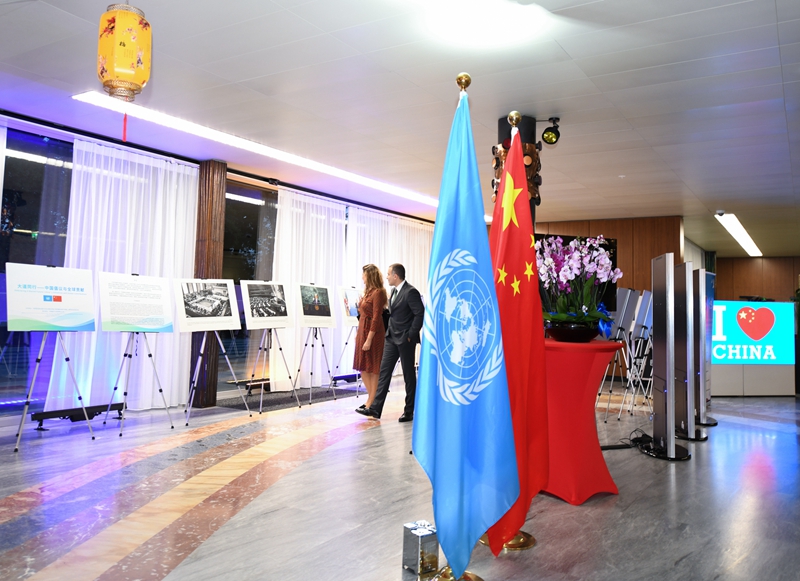
Returning to the GGI, analysts note that it also affirms that global turbulence is unlikely to ease unless the United Nations remains respected and at the core of international decision-making. In January, Chinese foreign ministry spokesperson Mao Ning praised the U.N., saying the international system it anchors has upheld global peace and stability, promoted socioeconomic development and safeguarded the equal rights and interests of all countries over the past 80 years and more.
China offered additional support a couple of months ago when it released a white paper titled “More Just and Equitable Global Governance: China’s Principles, Proposals and Actions.” The paper made clear that the U.N. is the “most comprehensive, representative and authoritative international organization” and described it as irreplaceable in promoting good governance.
China’s powerful endorsements of the U.N. are not mere lip service; a long list of examples could be provided here to validate how China backs U.N. efforts related to humanitarianism, global health and more. That support is especially critical in 2026, as some nations unfairly challenge the organization’s actions while arrogantly distancing themselves from critical worldwide efforts associated with education, global health, the environment and more.
Predicting where the GGI will matter most in 2027 and beyond requires caution, but it may prove most effective in artificial intelligence (AI) development and governance.
Global fears about AI crippling employment prospects, being used for nefarious military purposes or creating and then amplifying disinformation are legitimate. Yes, AI has incredible potential to help humanity make wiser decisions, but all nations must demonstrate a resolute commitment to using it for peaceful purposes. China has already drawn praise for resisting the temptation to put profits above people, in stark contrast to what is unfolding in the U.S., where powerful corporations retain control of AI’s development.
What is urgently needed in the coming months is a clear global consensus on AI, and one line from the GGI is worth keeping front of mind as those conversations take place: “the goal is to make the existing international system and international institutions better at taking actions, working effectively, adapting to changes, responding promptly and effectively to various global challenges, and serving the interests of all countries, particularly developing ones.”
Put simply, China advocates multilateralism while some other nations stubbornly cling to a unilateralism connected to periods of world history that hopefully are never repeated.
Is the GGI ambitious? Yes. Achievable? Yes, but only if the ever-present anti-China narrative, relentlessly touted by certain nations, is tempered. The world is a better and safer place when all nations, regardless of size and presumed influence, unite and acknowledge that selfishness and anger are not in the best interests of the international community.
The Global South, in particular, is watching.