Eating Properly Beats Anything Else
 Facebook
 Twitter
 Linkedin
 Google +
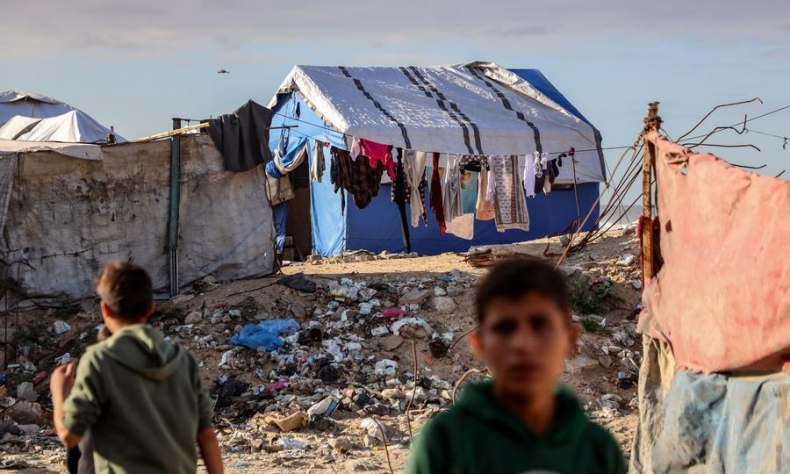
Against the grand narratives of geopolitical rivalry and ideological confrontation, the ability of ordinary people to put food on the table and realize their potential may be the simplest and most fundamental aspiration of all.
Recently, U.S. media reported that, having been deployed for more than 260 days and with no end to the U.S.-Iran conflict in sight, the aircraft carrier USS Abraham Lincoln is facing a lack of food, leaving its roughly 5,000 sailors with only a limited selection of meals to choose from and with daily portions being strictly rationed.
Many Chinese readers will find it easy to empathize with the plight of those 5,000 service members. In Chinese cultural perception, being able to have good food ranks among top priorities. This holds especially true for the military, as an ancient Chinese saying goes, “Even an emperor cannot command troops to enter battle on empty stomachs.”
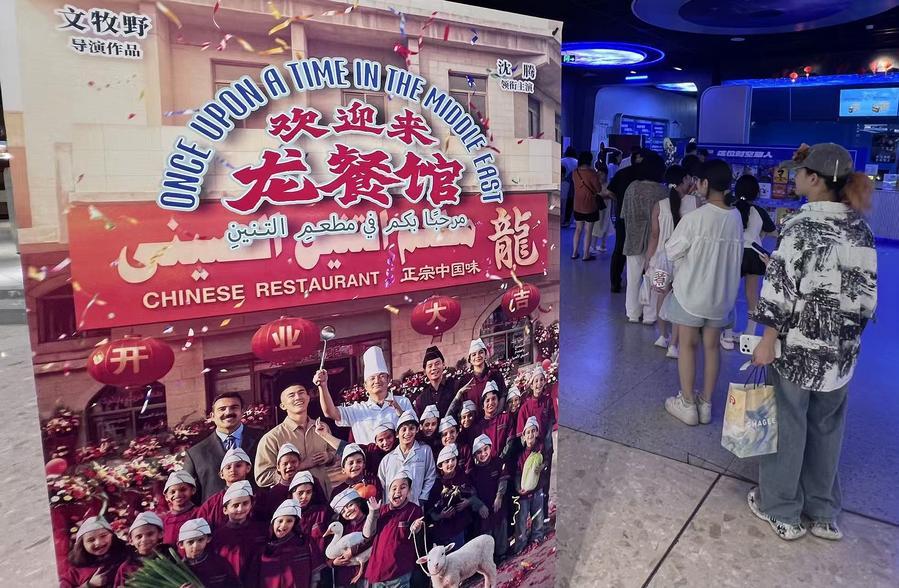
Another reason this story gained so much attention in China was its timing: Just as the reports were emerging, an anti-war film was hitting theaters. Its English title is Once Upon a Time in the Middle East, but its Chinese title is much more direct: Huanying Lai Long Canguan (Welcome to Dragon Restaurant). Set against the backdrop of the 2003 Iraq War, the film centers on a protagonist partly inspired by a Chinese national who opened a restaurant called Zhongguo Long (Chinese Dragon), reportedly the first Chinese restaurant to open inside Baghdad’s U.S.-controlled Green Zone after the invasion. At the time, U.S. soldiers, weary from war and longing for the comforts of home, flocked to the restaurant for Chinese food. The film recreates many these scenes, portraying the restaurant as something of a gathering place for American soldiers, where a good meal offers a small measure of comfort far from home.
What truly moves audiences is the film’s distinctive perspective on the war. Through the eyes of its Chinese chef protagonist, Iraqi civilians, American soldiers and even those drawn into extremist groups after losing their families are portrayed first and foremost as human beings, people who need food to survive. The film neither dwells on the horrors of war nor becomes mired in ideological conflict. Instead, it asks a more fundamental question: What happens to people when they do not have enough to eat, lack access to medical care, cannot protect their families and are denied even the most basic conditions necessary for survival and the chance to live with dignity?
Another important character in the film is the Iraqi co-owner of the restaurant. Formerly a high-ranking government official accustomed to status and comfort, he watches his life unravel after war breaks out. When his daughter is diagnosed with cancer, he buys chemotherapy drugs from corrupt U.S. military officials at exorbitant prices, until successive price hikes place the medication beyond his reach. Later, sectarian violence erupts, claiming the lives of both his wife and daughter. After losing his family, he joins an extremist force and helps train children to carry out suicide attacks.
Terrorism and extremism deserve no sympathy under any circumstances. However, it is precisely this chain of cause and effect that is often overlooked in Western discourse: When people go hungry, are unable to protect their families and see no hope for the future, despair can create conditions in which extremist ideologies take root and spread. The dominant logic of the Western “war on terror” has centered on one question: How can terrorists be defeated? The film turns that question around: How do ordinary people come to embrace extremism in the first place?
Behind this contrast lie two very different conceptions of what matters most, one Chinese and one Western. Throughout Chinese history, many periods of dynastic upheaval were brought about by the same underlying crisis: Ordinary people could no longer secure the basic necessities of life. One lesson deeply embedded in Chinese political thinking is that the ability to survive and improve one’s material conditions forms the foundation on which other human rights depend.
Judgments about the quality of governance therefore cannot rest solely on what political system a country adopts or how many elections it holds; they must also consider whether people have enough to eat, whether their basic needs are met and whether ordinary families can count on stable and secure lives. This helps explain the high levels of public support often reported for China’s system of governance: Over the past several decades, hundreds of millions of people have risen out of poverty, living standards have improved dramatically, infrastructure has expanded on an extraordinary scale and everyday life for much of the population has changed profoundly.
Political discourse in the West has long amplified the “China threat” narrative, warning that Beijing seeks to export its ideology. But beyond such grand narratives, the hopes of many ordinary Chinese people are far more straightforward: that people everywhere can eat well, have a decent place to be home, send their children to school, receive medical care when they fall ill and live without fear of bombs overhead or gunfire in the streets. Many Chinese people are also genuinely willing to help others build better lives—not out of a savior complex, but out of a recognition that China, as the “world’s factory,” cannot sustain its own development without global peace and prosperity.
To this day, Chinese people often greet one another by asking, “Have you eaten?” The belief runs deep that little else can truly matter until people have enough to eat. Against the grand narratives of geopolitical rivalry and ideological confrontation, the ability of ordinary people to put food on the table and realize their potential may be the simplest and most fundamental aspiration of all.
The film distills that belief into a line it returns to again and again: “Eating properly beats anything else.”