The Benefits of Cross-Cultural Exchange
 Facebook
 Twitter
 Linkedin
 Google +
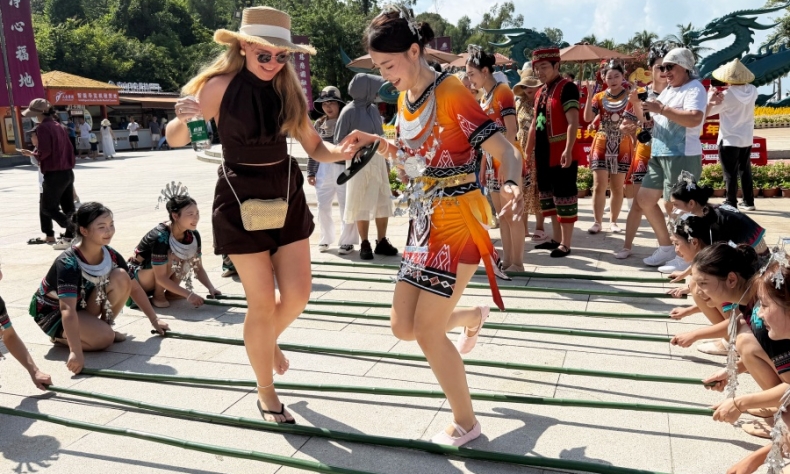
There is no better way to learn about a place than to engage with it.
We live in a world of misinformation, a world where it’s hard to know what’s true without seeing it for ourselves, without experiencing what it is that informs us. Certainly, watching social media and engaging with people from different places can help, but nothing informs us better than personal experience.
During the seven-day National Day holiday, China’s inbound tourism is gaining strong momentum. Foreign nationals accounted for 682,000 inbound trips, an increase of 5.4 percent from the same period last year, according to the National Immigration Administration. Of these, 505,000 entered China under visa-free policies, up 9.2 percent year-on-year.
But the bigger change may be in how international visitors are experiencing China. Rather than simply checking off famous landmarks, more overseas tourists are venturing into local communities, exploring Chinese culture and embracing everyday experiences.
Tourism is only one form of people-to-people exchange. Education can take that experience much further. China has now announced a new plan to invite 100,000 young Americans for exchanges and study in China over the next five years. What this offer will do is to expose students to real life, everyday life in China, and give them the chance to meet Chinese people in their own communities. They will, of course, be taken to see some interesting but often stage-managed events, as well as some incredible places they will remember for the rest of their lives. It works both ways; Chinese students in the USA will be exposed to very much the same kinds of things.
Despite political tensions, there are many Chinese people who sincerely believe the U.S. is a great place and the people there are kind, generous and open-hearted. There are many Americans who believe Chinese people are wonderful people, most of whom, of course, are. People-to-people exchanges confirm these opinions by transcending political tensions. They override economic arguments and dwarf trade disputes, simply give us the opportunity to become friends with someone from another country and learn more about what their country is like.
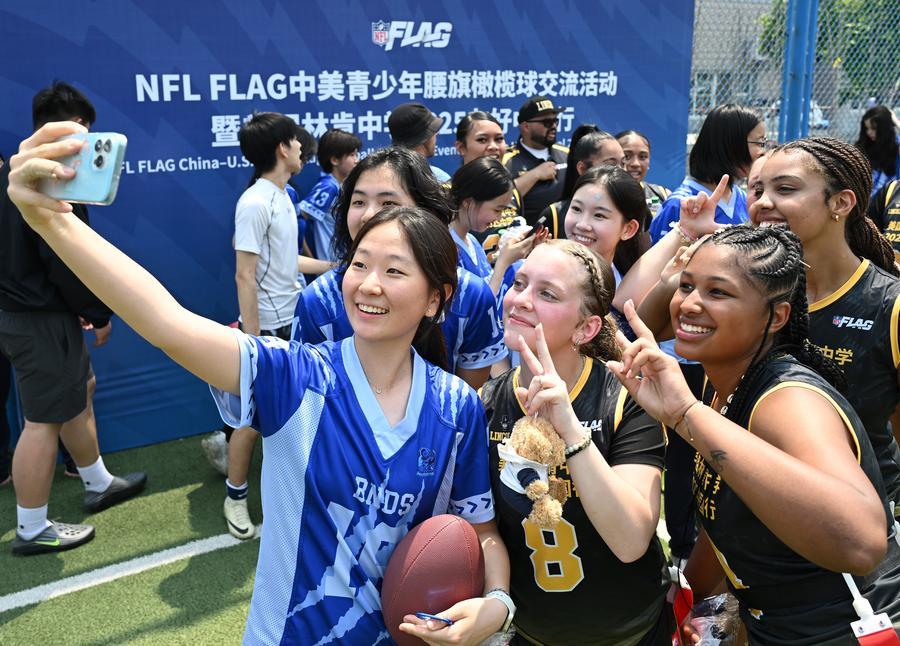
I’ve spent much of my 22 years living here in China preparing students for overseas education. Many of them do indeed enjoy the time they spend in their host country and choose to stay there. But for the most part, they eventually come home, and both the students and the countries have received some benefit from the exchange. Sure, that’s a good thing.
These trips increase knowledge, expand horizons and improve relations between the two countries. There is no better way to learn about a place than to engage with it. This needs time: time to engage with local people; time to learn from local people; time to understand their lives; time to make friends; and, when the time comes to return home, time to foster those positive relationships and tell their family and friends about how they were received, what they learned and how beneficial the experience has been.
There is a small but vocal group of people, some in media and some in politics, who hold a negative view. We can read fear-mongering reports and be influenced by them into a belief that one country or another is an unwelcoming place. This is both dangerous and unwarranted. Intelligent, well-educated youngsters, when given the opportunity to see for themselves, will form their own opinions and will report back truthfully on what they found.
Making friends can never be dangerous, and learning the truth about anything at all can never be dangerous. As for online concerns that China’s student exchange programs are intended to exert political influence, a confident country need not fear for its youth. Besides, China didn’t say to the U.S., “Send us 100,000 of your best and brightest so we can change them.” It said, “Let’s exchange students so we can learn from each other, foster better relations and deepen cross-cultural understandings.”
Some remarkable careers come from these exchanges and momentous events sometimes happen around them. This has been so since the days of the very first student exchanges, from which one of the United States’ most eminent Sinologists, Derk Bodde, emerged. Bodde, who spent six years studying in China, returned to Beijing in 1948 as the country’s first-ever recipient of a Fulbright Scholarship.
A more recent example is one that took place just two months ago at the No. 23 Public School in Urumqi, capital of the Xinjiang Uygur Autonomous Region. It was a soccer match where a team of U.S. schoolkids from Pico Rivera in California faced off against the Chinese youth team. The event went mostly unnoticed in the Western media, but it offered a fantastic example of cooperation through sports. Not one of those kids will go home in either country with ill feelings towards the other. And who knows? One day, one of those kids might become an important figure in China or the United States, with their first and most lasting memory of the other country being a friendly soccer match. If that’s not a great example of how people-to-people exchanges work well, then nothing is.
The article reflects the author’s opinions, and not necessarily the views of China Focus.