The Columbus–China Syndrome: Why Western Policy Keeps Misreading China
 Facebook
 Twitter
 Linkedin
 Google +
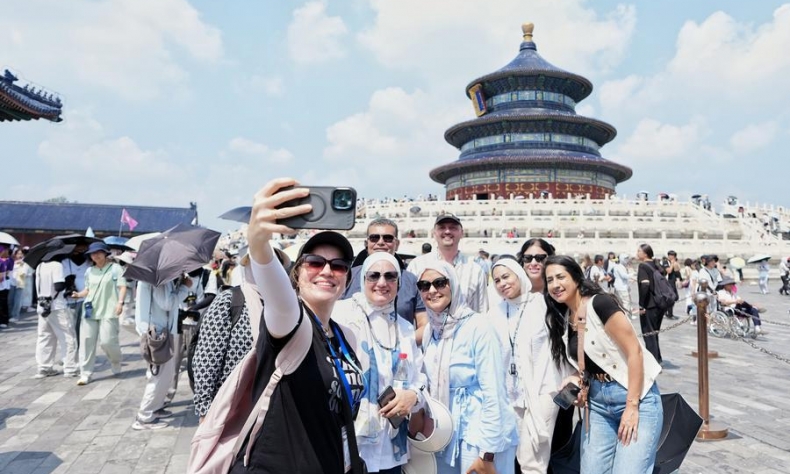
The West reads China through its own expectations rather than on China’s own terms, a habit that produces unstable policy and constant swings between admiration and fear.
The West’s difficulty in responding to China’s rise is often explained in terms of strategic competition, ideological differences or a changing balance of power. Yet these explanations overlook a deeper problem: the difficulty of seeing and accepting China on its own terms.
In my view, two concepts help illuminate different dimensions of this cognitive problem — the “Columbus syndrome” and the “China syndrome.” The first concerns how the West constructs knowledge about China. Here, “China syndrome” is used not in its conventional nuclear or cinematic sense, but to describe how that knowledge, once filtered through psychological and political assumptions, shapes Western policy. Taken together, they suggest the problem is not simply that the West has misjudged China’s rise. It is that the West has repeatedly tried to understand and shape China through a framework in which the West itself remains the reference point.
The “Columbus syndrome” refers to the tendency to “discover” something that already exists and then interpret it through a preconceived model. Christopher Columbus is historically credited with reaching the Americas in 1492, although Indigenous societies had lived there for millennia. The irony is that he arrived with his own expectations about what he would find and tended to pay more attention to what confirmed them than to what did not. In this sense, the syndrome reflects a much deeper habit of seeing the world through a Western lens.
Applied to China, it describes a recurring Western tendency to interpret China not as it is, but as it appears within Western expectations. China becomes a problem to be solved, an ancient civilization to be romanticized, a market to be opened, a political system to be transformed, a strategic challenger to be contained or a systemic rival to be resisted. These images may appear contradictory, but they share one important characteristic: China is interpreted through categories established within frameworks the West already knows.
This helps explain the volatile fluctuations in Western perceptions of China. Western scholarship and journalism have moved repeatedly between fascination and irritation, admiration and condemnation, optimism and pessimism. At one moment, China appears as an ancient civilization possessing extraordinary cultural sophistication and an increasingly dynamic economy. At another, it is portrayed as an “authoritarian threat” whose economic and political system is supposedly on the verge of inevitable collapse. China itself remains broadly the same object of analysis while the Western interpretation changes dramatically.
This is where the “China syndrome” becomes relevant. If the “Columbus syndrome” is about how the West looks at China, the “China syndrome” is about what happens when that lens encounters a China that does not fit Western expectations. It appears as growing anxiety, fear and, at times, outright demonization. The result is not simply a mistaken prediction about China, but a recurring pattern of confusion that can shape Western policy directly.
The two syndromes are therefore related, but they are not synonyms. The “Columbus syndrome” concerns how China is understood. The “China syndrome” concerns the psychological reactions and policy responses that follow. The first is rooted in a historically established Western way of viewing the world. The second is a contemporary manifestation of that thinking in an era of growing Chinese power.
This explains why Western China policy has been so unstable. For much of the post-Cold War period, a central assumption of U.S. policy was that engagement could eventually produce fundamental change in China’s political system, economy and foreign policy. The expectation was not simply that China would become richer. It was that economic integration would gradually encourage China to converge with Western political and economic norms. In retrospect, that assumption was a particularly powerful form of “Columbus syndrome”: China was measured against a Western developmental trajectory and assessed by how closely it approached it.
The failure of this expectation contributed directly to today’s “China syndrome.” As China became more economically powerful without undergoing the political transformation many Western observers anticipated, confidence gave way to anxiety. Engagement gave way to competition, and competition was framed as systemic rivalry. The inability to transform China was followed by a search for explanations that increasingly placed the problem within China itself.

Jake Sullivan, then-U.S. national security adviser, acknowledged that one of the errors in previous U.S. policy toward China was the assumption that Washington could bring about fundamental change in China’s political system, economy and foreign policy. Speaking at an event hosted by the Council on Foreign Relations, he said, “We realize that efforts — implied or explicit — to shape or change the PRC over several decades did not succeed. We expect that the PRC will be a major player on the world stage for the foreseeable future. That means that even as we compete, we have to find ways to live alongside one another.”
This admission marks an important intellectual shift. It implicitly recognizes the limits of a Columbus-syndrome approach to China: China cannot simply be made to conform to the Western model through which it has been interpreted and assessed. China has demonstrated considerable institutional resilience and adaptability, selectively incorporating Western ideas and technologies while resisting changes it considers incompatible with its sovereignty, political system or cultural identity.
Yet the persistence of the “China syndrome” suggests the deeper cognitive problem has not disappeared. Once China is no longer expected to become “like us,” the question becomes whether the West can accept it as a major country with its own historical experience, institutional logic, developmental priorities and conception of international order.
The relationship between the two syndromes can be represented as a sequence: preconception produces selective recognition, selective recognition produces misperception, misperception produces psychological fluctuation and fluctuation produces unstable policy. The “Columbus syndrome” lies at the beginning of this chain. The “China syndrome” emerges as its most visible consequence.
This also explains why the best response to the “China syndrome” cannot simply be a more aggressive policy. If the underlying problem is how China is understood, rather than how it is handled strategically, then changing policy without changing perception may reproduce the same cycle. Containment may replace engagement, de-risking may replace globalization and strategic competition may replace cooperation, but the fundamental question remains unanswered: is the West trying to understand and accept China as it is, or is it still trying to shape China according to what it expects China to become?
The deeper challenge, therefore, is not simply to develop a better China policy but a better way of understanding China. Overcoming the “Columbus syndrome” requires recognizing that China is not a newly discovered object to be classified according to Western categories. Overcoming the “China syndrome” requires accepting that China’s rise cannot be understood through alternating narratives of admiration and fear, triumph and collapse.
Both syndromes ultimately point to the same lesson. The West’s China problem may lie less in insufficient information about China than in interpreting China through inherited assumptions about what it ought to be. The “Columbus syndrome” explains the persistence of those assumptions. The “China syndrome” reveals their consequences in an era of renewed Chinese global influence. Moving beyond both requires a shift in the question: from how China fits the Western model to how China’s own cultural and historical identity, institutions, interests and practices can help us understand the transformation of the international order itself.
From a broader theoretical perspective, this cognitive misalignment is not merely psychological but deeply structural. The West’s inherited framework is ultimately rooted in a capitalist logic that inherently demands universal expansion and ideological conformity to sustain its own systemic dominance. China’s alternative yet successful path has challenged this fundamental premise, triggering an anxiety that frequently manifests as “strategic rivalry.” Thus, truly overcoming these syndromes requires transcending this hegemonic lens and recognizing the legitimacy of diverse paths to modernization.
Li Xing is a Yunshan Leading Scholar and director of the European Research Center at the Guangdong Institute for International Strategies, Guangdong University of Foreign Studies. He is also an adjunct professor of international relations at Aalborg University in Denmark.