Who Governs AI? Reflections From the 2026 World AI Conference
 Facebook
 Twitter
 Linkedin
 Google +
The future of AI governance will depend on whether major technological powers can move beyond zero-sum rivalries and establish frameworks capable of ensuring that AI serves broader global interests rather than becoming another source of geopolitical division.
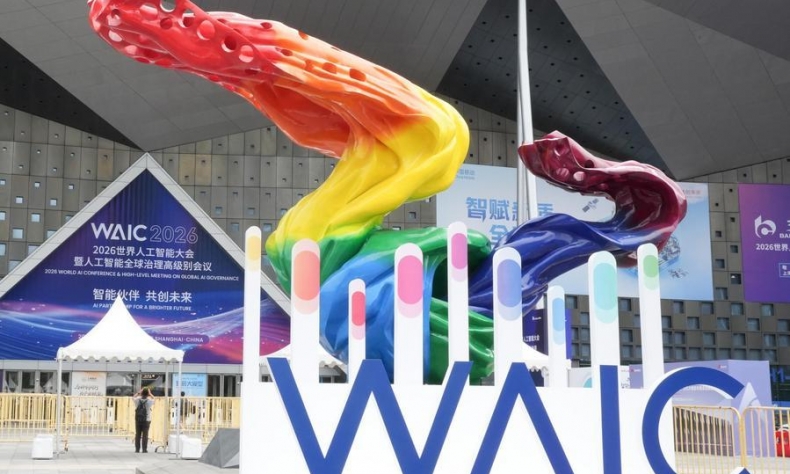
The 2026 World AI Conference (WAIC) and High-Level Meeting on Global AI Governance in Shanghai mark a significant moment in the global debate over the future of artificial intelligence. Chinese President Xi Jinping’s attendance and opening keynote address elevated the event, transforming it into a platform for discussing the geopolitical and institutional future of AI governance.
This shift reflects a broader transformation in the global technology landscape. While Western governments and leading technology companies have increasingly shaped AI discussions through frameworks developed in Silicon Valley, Washington, and European institutions, Beijing is using WAIC to promote a different vision, one centered on multilateral participation, state coordination, and a more inclusive international AI order.
At the core of this debate lies a fundamental question: Who should govern artificial intelligence? Should the future rules of AI be determined primarily by sovereign states through international cooperation, or by a small number of private technology companies whose influence increasingly extends beyond traditional economic boundaries?
The threat of corporate sovereignty and the multi-layered AI stack
The international system has been structured around the Westphalian principle of state sovereignty, where governments remain the primary actors responsible for establishing rules and managing global affairs. Today, however, a handful of private Silicon Valley monopolies dominate the global AI value chain, from hardware and cloud computing to foundational models and application layers.
Operating under a form of “digital extraterritoriality,” these corporate giants unilaterally dictate access, safety standards, and information flows worldwide. This concentration of technological influence has created new challenges for traditional governance structures. When a private company can restrict access to an AI model, determine the availability of open-source systems, or influence the information environment experienced by millions of users, government regulatory mechanisms often struggle to respond at the same speed as technological development.
Western governance paradigm, reflected in recent public statements by CEOs like Dario Amodei (Anthropic) and Demis Hassabis (Google DeepMind) fails to address this fundamental power imbalance. Instead of democratizing AI, Western frameworks propose self-regulatory schemes, such as industry-led oversight bodies modeled after financial industry self-regulators. This public-private collusion under Washington’s oversight merely entrenches the dominance of a small group of Western firms over technologies with global implications.
Moreover, under the semblance of national security, the U.S. and its allies have enforced aggressive technological blockades, such as export controls on advanced semiconductors, to deny the Global South and emerging economies the tools needed for their own development. This is not merely a debate over competing regulatory techniques, it’s a fundamental choice between corporate oligarchy and true global fairness.
This raises a deeper geopolitical question: If the companies controlling frontier AI infrastructure remain primarily concentrated in a small number of Western technology ecosystems, could a governance model based on private-sector participation unintentionally reinforce existing technological inequalities? While industry-led regulation may improve technical oversight, critics argue that it could also preserve the influence of a limited group of corporations over technologies with global implications.
China’s AI ecosystem
In contrast to Western exclusion, China’s AI development has followed a distinct path shaped not only by state planning, industrial application, domestic technology development, and large-scale investment in digital infrastructure, but also by sovereign integrity and public welfare.
A major milestone in this strategy was the release of the New Generation Artificial Intelligence Development Plan by China’s State Council in 2017. The plan identified AI as a strategic technology capable of transforming economic development, industrial competitiveness, and national innovation capacity. It established a long-term roadmap focused on strengthening AI research, improving domestic technological capabilities, promoting AI adoption across industries, and positioning China as a global AI innovation center by 2030.
China’s AI ambitions have been shaped in part by increasing restrictions on access to advanced semiconductor technologies. U.S. export controls targeting high-performance computing chips and advanced AI processors have created additional pressure on Chinese companies to strengthen domestic capabilities across the AI supply chain. Rather than reducing China’s investment in AI, these restrictions have accelerated efforts to develop domestic semiconductor alternatives, expand cloud computing capacity and build more complete AI infrastructure ecosystems.
At the foundation model level, China has witnessed the rapid emergence of several AI companies developing large language models, including Zhipu AI, MiniMax, Moonshot AI and 01.AI, alongside established technology companies such as Baidu, Alibaba, Tencent and Huawei. It has become a global powerhouse in open-source AI, with DeepSeek and Kimi K3 leading the charge by delivering world-class, cost-efficient models that rival top-tier U.S. systems and redefine the global AI landscape.
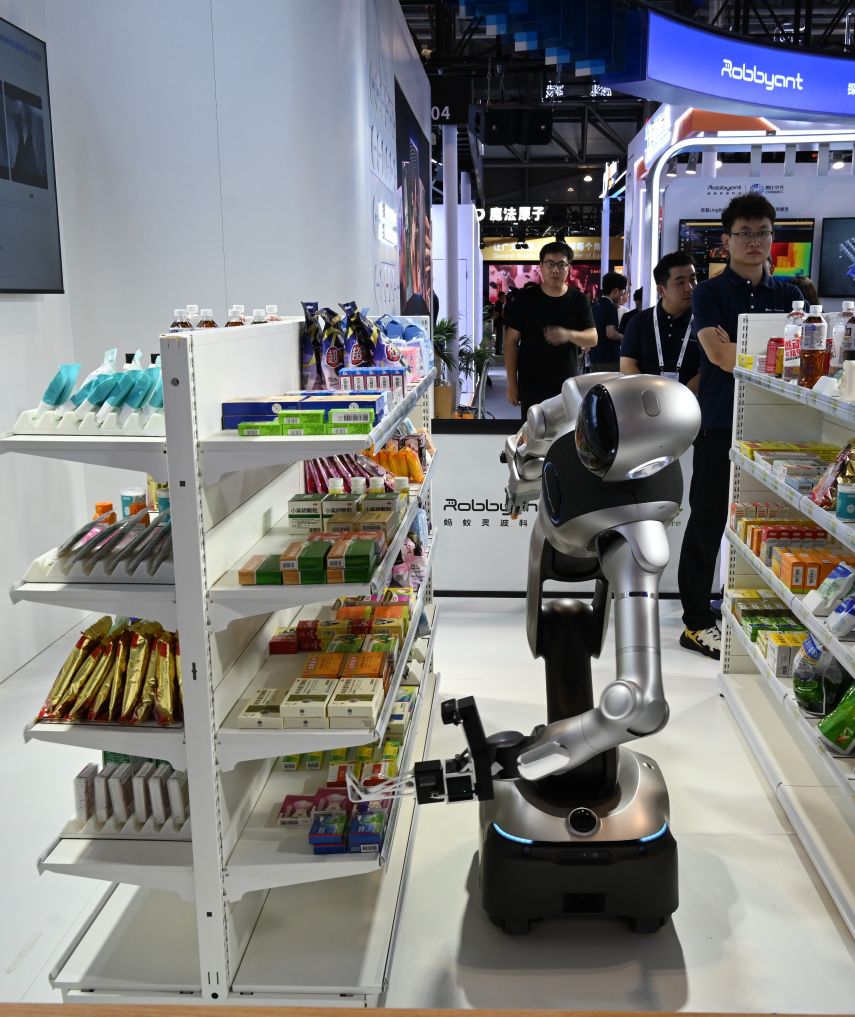
China has also focused on building a complete AI infrastructure ecosystem covering computing capacity, cloud services, algorithms, data platforms, and industrial applications. Companies such as Huawei, Alibaba Cloud, Tencent Cloud, and Baidu AI Cloud have invested heavily in AI computing platforms designed to support enterprise, research, and government applications.
The Interim Measures for the Management of Generative Artificial Intelligence Services, introduced in 2023 by China’s Cyberspace Administration and other government agencies, established regulatory requirements for generative AI providers, including obligations related to data security, responsible algorithm development, and compliance with national regulations.
This reflects Beijing’s broader understanding of AI as more than a commercial technology. In China’s policy framework, AI represents a strategic capability connected to industrial upgrading, economic modernization, national competitiveness and participation in future global technological competition, underpinned by a commitment to international cooperation that ensures AI benefits all of humanity.
President Xi Jinping’s vision and the establishment of WAICO
It is within this broader environment of technological competition that President Xi Jinping’s appearance at WAIC in Shanghai takes on wider significance. China has increasingly sought to present itself as a major participant in shaping global AI rules, particularly by emphasizing openness, accessibility, and greater participation from developing economies. This approach comes at a time when restrictions on advanced computing technologies and growing competition between major countries have raised concerns about fragmentation within the global technology ecosystem.
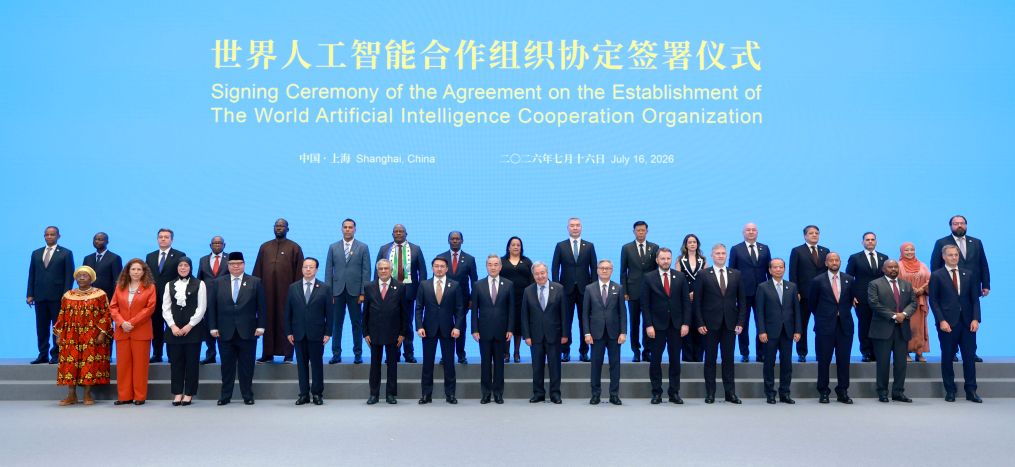
In his address, President Xi emphasized the concept of “AI for Good and for All,” presenting AI as a shared opportunity rather than a technology that should be concentrated among a limited number of countries or corporations. Xi highlighted concerns that unequal access to AI infrastructure, computing resources, advanced models and technical knowledge could deepen existing global inequalities. While many Western governments and technology companies have focused heavily on AI safety, security risks and governance mechanisms for frontier models, China has increasingly framed accessibility and international cooperation as central elements of responsible AI development. Translating these principles into concrete action, the conference followed the establishment of the World Artificial Intelligence Cooperation Organization (WAICO). Bringing together representatives from 29 founding nations, WAICO represents a groundbreaking institution dedicated to fair, safe, and equitable AI development. Grounded in the U.N. Charter, WAICO breaks new ground by providing the Global South with a sovereign-led platform to actively participate in shaping the rules of the future digital economy.
This approach builds upon China’s previous engagement at the United Nations. In 2024, the U.N. General Assembly adopted a China-proposed resolution on strengthening international cooperation on AI capacity building, which received broad international support and emphasized the importance of assisting developing countries in accessing AI technologies and expertise. Through WAIC 2026 and the establishment of WAICO, China is striving to transform this diplomatic narrative into a more structured international mechanism.
A call for global alignment
Today, in global AI alignment, one model is represented by the Western approach, where frontier AI development is largely driven by powerful private technology giants. While promoting regulatory frameworks focused on safety and accountability, it is inherently guided by market-driven motives, often leading to the monopolization of critical AI infrastructure and the imposition of unilateral digital standards. Another model is represented by China’s approach, which prioritizes state coordination, domestic technological capacity, and industrial deployment, coupled with a commitment to international cooperation aimed at bridging the AI divide and ensuring equitable access for all nations.
However, the future of AI governance will depend on whether major technological powers can move beyond zero-sum rivalries and establish frameworks capable of ensuring that AI serves broader global interests rather than becoming another source of geopolitical division.
The path forward is clear: we must replace this strategic competition with global solidarity. Only through inclusive cooperation can we ensure that AI becomes a beacon of shared progress, illuminating a brighter future for all of humanity.
Yasiru Ranaraja is a researcher on maritime affairs and an expert on Belt and Road Initiative development. He is also the founding director of the Belt & Road Initiative Sri Lanka, an international development organization and think tank in Sri Lanka.