From Technology Challenger to Rule Maker
 Facebook
 Twitter
 Linkedin
 Google +
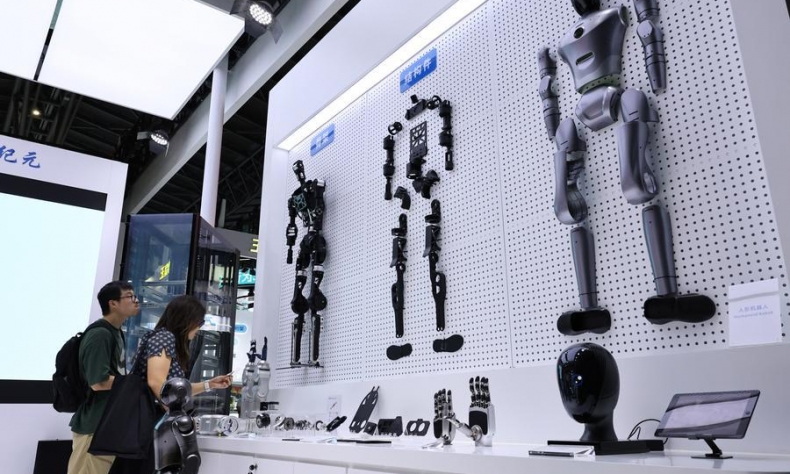
Unlike past industrial revolutions led mainly by Western countries, China advocates for a more inclusive approach centered on open technological collaboration.
The development of AI is no longer simply a technological competition. It has become a contest over economic power, industrial standards, geopolitical influence and ultimately the rules governing the next phase of globalization. The United States once appeared destined to dominate this field through companies such as OpenAI, Anthropic, Google and Meta.
Today, however, a different picture is emerging. China is no longer content with narrowing the technological gap. It is seeking a greater role in defining the global AI ecosystem.
This shift was especially evident at the World AI Conference (WAIC) held in Shanghai on July 17-20, where Chinese President Xi Jinping delivered arguably the most explicit outline yet of China’s long-term AI strategy. His speech aligned with a series of technological breakthroughs by Chinese firms, highlighting that technological and diplomatic progress are advancing in tandem.
Technological competitiveness
The timing was hardly accidental.
Only one day earlier, the World AI Cooperation Organization (WAICO) officially began its work with 29 founding countries. Xi described the organization as “an important milestone in the history of AI development.” Developing nations must become active participants rather than passive consumers of the technology. China presented the WAICO not merely as another international institution but as a platform through which countries in the Global South can participate in shaping AI governance.
Xi described AI as a technological revolution on par with the invention of the steam engine and electricity. However, unlike past industrial revolutions led mainly by Western countries, China advocates for a more inclusive approach centered on open technological collaboration.
The cornerstone of this strategy is open-source—or more precisely, open-weight—AI.
This vision gained substantial credibility with the unveiling of Chinese tech startup Moonshot AI’s Kimi K3 system. With 2.8 trillion parameters, the internal values that help an AI model learn and generate responses, Kimi K3 has become the largest Chinese AI model to date. According to benchmark data published by the company, the model outperformed OpenAI’s GPT-5.5 and Anthropic’s Claude Opus 4.8 across numerous evaluations of coding performance and AI agent capabilities.
While parameters do not determine model quality, they remain an important indicator of computational scale. Industry analysts estimate Anthropic’s flagship model contains between 1.5 trillion and 2 trillion parameters, suggesting that Chinese developers are competing at the very forefront of frontier-model engineering.
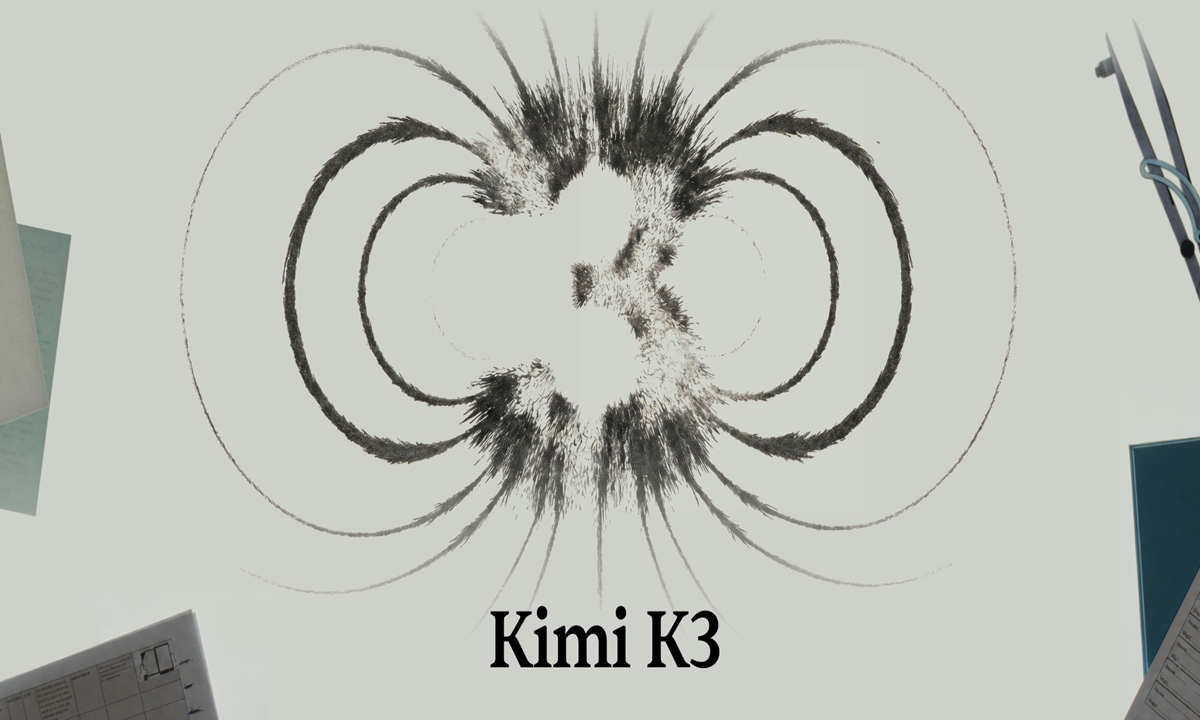
Equally significant is Kimi K3’s licensing model.
Unlike proprietary systems developed by leading American companies, Kimi K3 is released as an open-weight model, allowing enterprises, universities and developers worldwide to download, customize and deploy it locally. For many emerging economies this dramatically lowers the financial barrier to adopting advanced AI capabilities.
This represents a profound strategic contrast.
American AI leaders increasingly rely upon proprietary business models supported by massive investments in semiconductor infrastructure, hyperscale data centers and specialized computing capacity. These investments amount to hundreds of billions of dollars and require premium pricing to generate acceptable returns. Chinese developers have instead emphasized relatively inexpensive, open-weight systems capable of rapid international adoption.
Quite recent history demonstrates that leading in technology doesn’t guarantee market success. China’s leadership in solar panels, power batteries, telecommunications and electric vehicles highlights how manufacturing scale, cost reductions and quick commercialization can transform global industries.
AI may now be entering a similar phase.
Moonshot is not an isolated case. Earlier, DeepSeek, another Chinese AI startup, demonstrated that highly competitive large language models can be trained at significantly lower costs than previously believed. Z.ai’s GLM-5.2, released in June, similarly received praise from prominent Silicon Valley investor Marc Andreessen, who described it as the first Chinese model capable of matching—and frequently surpassing—publicly available American systems without meaningful compromises.
Together, these developments challenge one of the most persistent assumptions in global technology, that China trails the United States by eight to 12 months in frontier AI capabilities.
Call for shared rights
At the diplomatic level, Xi seeks to convert these technological achievements into institutional influence.
His proposal positions China as the leading advocate for developing countries aiming for greater involvement in AI governance. China has committed to AI training initiatives, technical aid and collaboration centers with BRICS (a group of emerging economies that cooperate to promote the interests of the Global South), the Association of Southeast Asian Nations, the Community of Latin American and Caribbean States and the African Union. Instead of restricting AI cooperation to commercial deals, China is increasingly framing technological capability as a global public good.
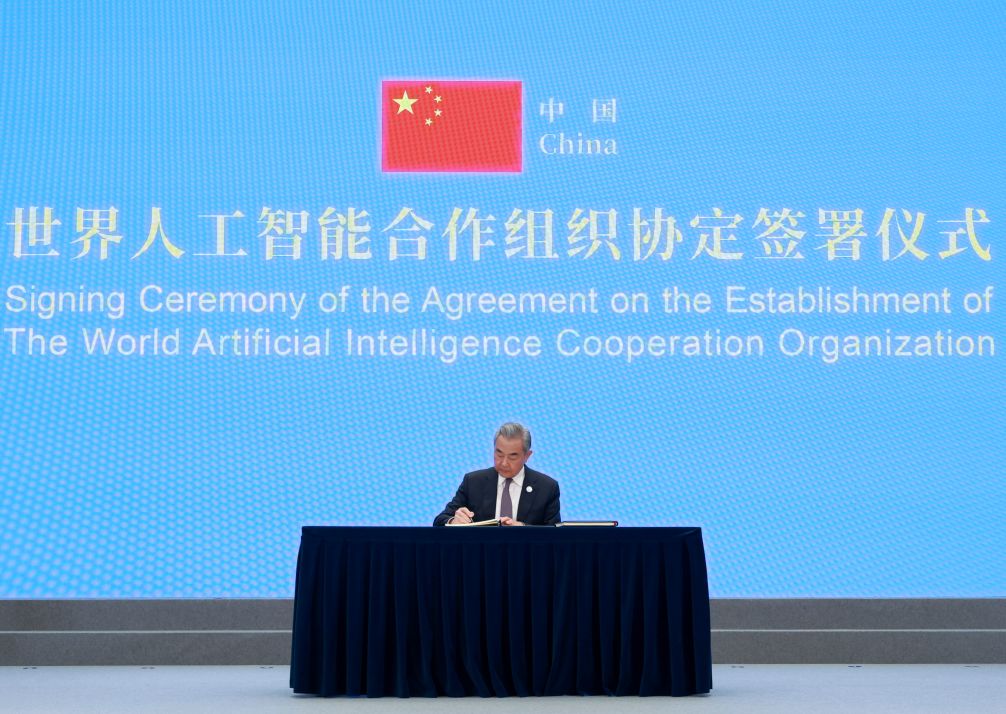
This approach contrasts sharply with Washington’s strategy.
The United States continues emphasizing trusted technology partnerships among advanced economies while tightening export controls on advanced semiconductors and frontier AI technologies. Chinese officials frequently characterize these restrictions as attempts to erect an “AI Iron Curtain” that limits access to technology for much of the developing world.
Xi’s speech conveyed a broader geopolitical message: China aims not just to compete within an American-led AI framework, but to help shape the rules governing AI itself.
Simultaneously, China has recognized the rising risks associated with more advanced AI systems. Xi emphasized the importance of human control over these systems and called for international early-warning and emergency-response mechanisms to address potential AI crises. His comments constitute China’s most explicit public stance on AI governance and safety to date.
The international environment reflects this growing competition.
During recent UN discussions on AI, the U.S. promoted a relatively light regulatory framework, said to be favorable to maximizing innovation. At the same time, China advocated open-source technologies to reduce global inequality in access to AI.
For much of the digital era, the United States largely determined both technological standards and governance principles. AI may become the first major technology in which that dominance is openly contested by another global power with comparable scientific capabilities, enormous industrial capacity and growing diplomatic influence.
It remains unclear whether China will become the leading power in global AI race. American firms continue to lead in key areas such as semiconductor design and foundational research. However, recent breakthroughs from Chinese developers and China’s bold diplomatic efforts suggest a significant shift in the overall discussion.
The question is no longer whether China can compete in the AI field. The more consequential question is whether the emerging global AI order will ultimately be shaped by a single technological superpower—or by competing ecosystems that offer different models of innovation, governance and international cooperation.
The author is former prime minister of Kyrgyzstan, a distinguished professor of the Belt and Road School at Beijing Normal University and author of the book Central Asia’s Economic Rebirth in the Shadow of the New Great Game.