One Year of the Global Governance Initiative: Is a New Philosophy of World Order Taking Shape?
 Facebook
 Twitter
 Linkedin
 Google +
With the GGI, China is presenting its answer: Power should contribute to governance.
On September 1, 2025, Chinese President Xi Jinping proposed the Global Governance Initiative (GGI) at the Shanghai Cooperation Organization Plus meeting in north China’s Tianjin. One year later, the anniversary offers an opportunity not simply to revisit another Chinese diplomatic initiative, but to ask a larger question: Is China gradually articulating a new philosophy of world order?
The GGI did not emerge in isolation. It is the fourth in a sequence of global initiatives proposed by China since 2021. The Global Development Initiative (GDI), launched in 2021, places development back at the center of international cooperation and seeks to accelerate implementation of the United Nations 2030 Agenda for Sustainable Development. The Global Security Initiative (GSI), proposed in 2022, emphasizes common, comprehensive, cooperative and sustainable security, privileging dialogue over confrontation and consultation over conflict. The Global Civilization Initiative (GCI), introduced in 2023, adds a cultural dimension, emphasizing respect for the diversity of civilizations, exchanges and mutual learning. Finally, the Global Governance Initiative, proposed in 2025, addresses the institutional framework within which development, security and civilizational dialogue must take place.
Together, the four initiatives form an increasingly coherent architecture: development, security, civilization and governance. They address four fundamental dimensions of international order, including prosperity, stability, coexistence, and the rules and institutions of the international community.
The GGI rests on five principles: sovereign equality, international rule of law, multilateralism, a people-centered approach, and an emphasis on taking real actions. Significantly, its official concept paper insists that reforming global governance does not mean dismantling the existing international order or constructing a parallel system. On the contrary, it explicitly identifies the United Nations as the central institution of global governance and calls for strengthening rather than weakening it. This point deserves particular attention.
We live in a paradoxical moment. Never has humanity been so interconnected, and rarely has the temptation of fragmentation been so strong.
Climate change cannot be addressed nationally. Artificial intelligence cannot ultimately be governed nationally. Financial instability, pandemics, cyberspace, migration, trade and nuclear proliferation are all cross borders. The need for international cooperation is increasing precisely when confidence in international institutions is weakening.
Against this background, China’s insistence on multilateralism has strategic significance.
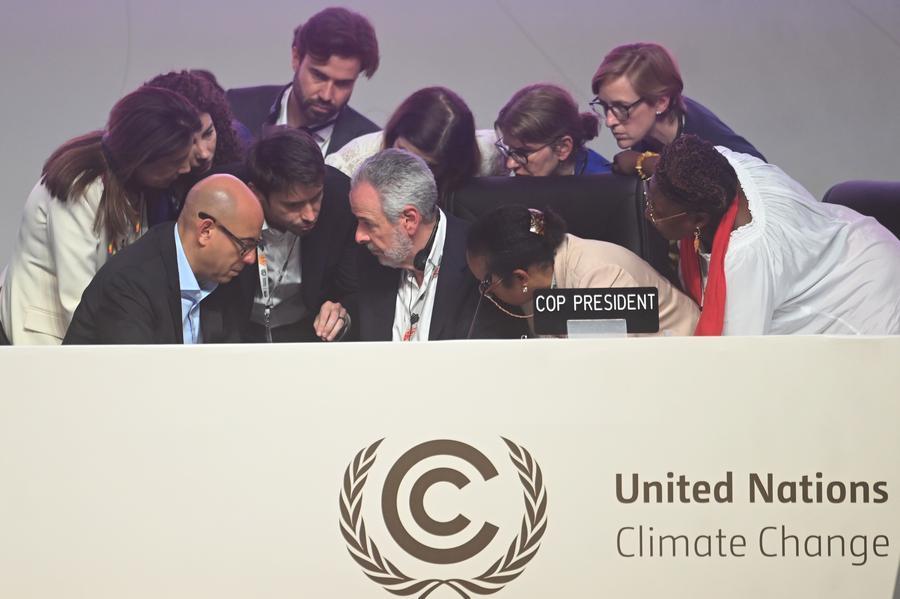
The GGI identifies three weaknesses in the present international system: insufficient representation of the Global South, erosion of the authority of international institutions, and inadequate effectiveness in responding to global problems. It therefore calls not for abandoning multilateral institutions but for strengthening and reforming them—particularly by increasing the voice of developing countries and making existing institutions more capable of producing results.
This is important because the emerging multipolar world will require more multilateralism, not less.
Multipolarity without multilateralism could simply produce competing centers of power. It could become a world of blocs, spheres of influence, economic fragmentation and permanent geopolitical rivalry. Multilateralism offers another possibility: a multipolar international system governed by common institutions, rules and mechanisms of consultation.
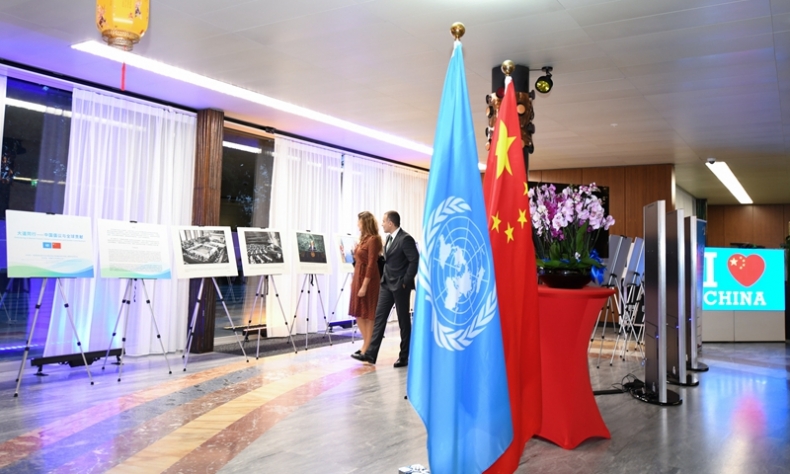
China is a major force in defending such a system. Indeed, there is an important continuity between China’s growing influence and its repeated affirmation of the centrality of the United Nations. The GGI explicitly supports an international system with the UN at its core and an international order underpinned by international law. It identifies global governance gaps in fields including artificial intelligence, cyberspace, climate change, international finance, trade and outer space—precisely the areas where no country, however powerful, can establish durable solutions alone.
The significance of this position should not be underestimated. A rising power always faces a fundamental choice: Will it primarily seek to maximize its freedom of action, or will it invest part of its growing power in institutions that organize cooperation among states?
With the GGI, China is presenting its answer: Power should contribute to governance.
There is, however, a second dimension to the initiative. If China succeeds in becoming one of the principal force defending and reforming multilateralism, this will not only contribute to international stability. It will also considerably increase China’s influence.
There is no contradiction here. The most durable forms of international influence do not come exclusively from economic size or military capabilities. They also come from the ability to formulate ideas that others find useful, create institutions in which others want to participate, and provide public goods from which others benefit.
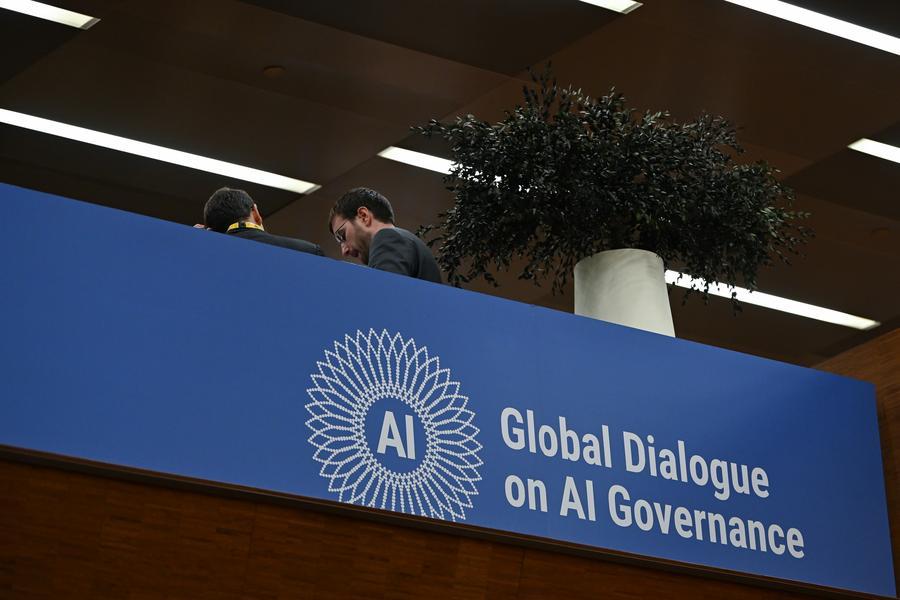
This is where the GGI could become particularly consequential. China’s influence will grow not simply because China becomes more powerful, but if other countries conclude that Chinese initiatives help them address real problems. A successful development project, an effective mediation mechanism, a useful framework for AI governance, stronger representation for developing countries in international financial institutions, or more effective climate cooperation can generate influence far beyond conventional diplomacy.
In this sense, usefulness becomes a multiplier of power. The emergence in late 2025 of a Group of Friends of Global Governance at the United Nations illustrates the potential trajectory. Chinese officials reported that more than 160 countries and international organizations had responded positively to the GGI. But the ultimate test will not be the number of endorsements. It will be whether the initiative generates mechanisms, compromises and solutions that other countries regard as valuable.
That distinction is crucial. The future of the GGI will therefore depend on China’s capacity to transform principles into practice. Sovereign equality must mean meaningful participation by smaller countries. International rule of law must imply consistency. Multilateralism must involve genuine consultation. A people-centered approach must translate into tangible benefits. And the commitment to taking real actions must produce results.
If this happens, an important evolution in China’s international role will become visible. China will increasingly be judged not only by what it achieves for itself, but by what it contributes to the functioning of the international system.
This may ultimately be the deeper significance of the four global initiatives. Together, they suggest a transition from China’s integration into an international order largely constructed before its rise toward a China increasingly involved in shaping, reforming and sustaining that order.
In a fragmented world, the defense of multilateralism is not an abstract diplomatic preference. It is a practical necessity. If China can use its growing weight to reinforce cooperation, increase the representation of the Global South, strengthen international institutions and produce solutions to problems that no nation can solve alone, the benefits will extend well beyond China.
And if it succeeds, something more profound may indeed be taking shape: not a Chinese world order, but a Chinese contribution to a renewed philosophy of world order in which multipolarity and multilateralism reinforce, rather than undermine, each other.
The article reflects the author’s opinions, and not necessarily the views of China Focus.