Constructive Strategic Stability: Toward a New Strategic Vocabulary for China-U.S. Relations
 Facebook
 Twitter
 Linkedin
 Google +
Yet even at this early stage, the notion deserves attention. It reflects an important intellectual shift in how China may now conceptualize its relationship with the United States.
For decades, the central question of China-U.S. relations was whether the two powers could avoid confrontation. Today, that question is no longer sufficient. The real issue is whether China and the United States can construct a durable framework for coexistence in an era defined simultaneously by strategic rivalry, technological competition, economic interdependence, and global fragmentation.
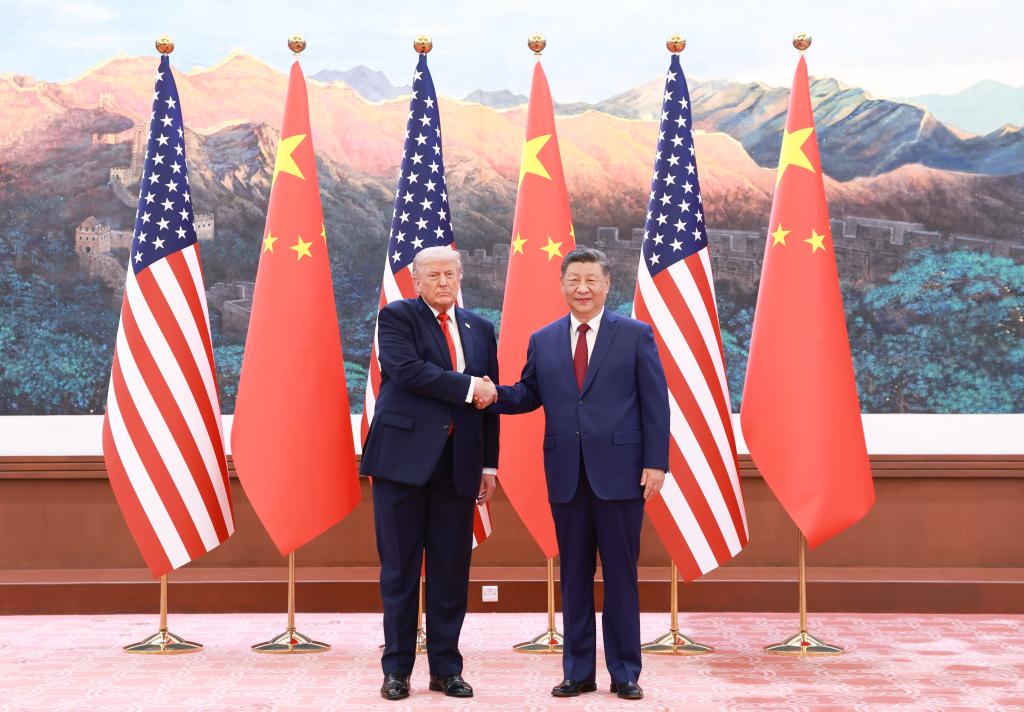
It is in this context that Chinese President Xi Jinping’s notion of “constructive strategic stability,” introduced during U.S. President Donald Trump’s 2026 visit to Beijing, takes on profound historical significance. At first glance, the phrase appears technical. In reality, it represents one of the most important conceptual evolutions in the language of China-U.S. relations in recent years.
Traditionally, “strategic stability” belongs to the vocabulary of the Cold War. It refers primarily to deterrence, military equilibrium, and the prevention of direct conflict between nuclear powers. Stability in that framework was essentially negative: the objective was not cooperation, but the avoidance of catastrophe. The addition of the word “constructive” fundamentally changes the meaning.
China proposes a broader understanding of stability — one that goes beyond military deterrence and seeks to organize coexistence between major powers across multiple domains: economics, technology, artificial intelligence, information systems, climate governance, scientific exchanges, and global public goods.
This matters because the old paradigms governing China-U.S. relations are exhausted. The assumption that economic integration would inevitably produce political convergence has collapsed in Washington. At the same time, the idea of complete decoupling has also revealed its limits. The world’s two largest economies remain deeply interconnected through trade, finance, supply chains, research ecosystems, and global markets.
Neither partnership nor Cold War adequately describes the emerging reality. “Constructive strategic stability” is therefore an attempt to define a third model: structured coexistence under conditions of enduring competition.
This is not a return to idealism. On the contrary, the concept is rooted in strategic realism. It implicitly recognizes that rivalry between China and the United States is structural and likely to be long-term. Yet it also suggests that competition does not have to lead inevitably to systemic breakdown or geopolitical rupture.
Such an approach reflects a growing recognition in both Beijing and Washington, as well as in many parts of the world, that unmanaged Sino-American confrontation would produce consequences far beyond bilateral tensions. Financial instability, technological fragmentation, disrupted scientific cooperation, weakened climate coordination, and heightened military risk would affect the entire international system.
The new phrasing is also significant because it speaks to several audiences simultaneously. To the United States, it signals that China accepts competition but seeks predictability and guardrails. To Europe and middle powers, it suggests that Beijing values international continuity and global stability. To the Global South, it reinforces China’s presentation of itself as a responsible actor capable of combining national strength with international responsibility.
Most importantly, the concept indicates that Beijing increasingly sees the future international order not as a zero-sum struggle for domination, but as a negotiated balance among major civilizations and power centers.
Whether the idea becomes historically consequential will depend on what follows. Diplomatic concepts matter only when they become institutional realities. If “constructive strategic stability” evolves into sustained dialogue mechanisms, crisis-management arrangements, technology-governance frameworks, and expanded people-to-people exchanges, it could become one of the defining strategic principles of the years to come.
Yet even at this early stage, the notion deserves attention. It reflects an important intellectual shift in how China may now conceptualize its relationship with the United States: not as a passive acceptance of cyclical phases in which temporary resets succeed mounting tensions, nor as an inevitable confrontation, but as a permanent condition requiring disciplined coexistence and active management. In an increasingly fragmented world, that may be one of the few realistic paths available.
The article reflects the author‘s opinions, and not necessarily the views of China Focus.