Beyond Geopolitics: Why the SCO Resonates with the Global South
 Facebook
 Twitter
 Linkedin
 Google +
A genuinely multipolar order should mean widening participation, increasing representation, creating additional avenues for cooperation, and giving countries greater freedom to pursue development according to their own circumstances.
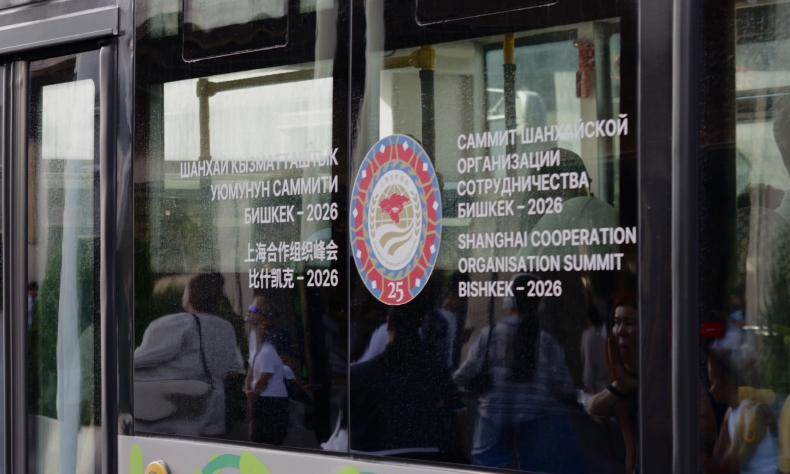
As world leaders prepare for the 2026 Shanghai Cooperation Organization Summit in Bishkek, much international attention will focus on what the gathering reveals about the emergence of a more multipolar world.
The SCO’s evolution tells a story that goes beyond geopolitical competition. Across the Global South, countries are increasingly unwilling to remain passive participants in an international system largely shaped by others. They seek greater economic sovereignty, diplomatic dignity, strategic autonomy, and the freedom to pursue development according to their own national priorities.
They are not simply asking for a seat at the table. They increasingly want a voice in writing the rules.
These aspirations should not be privileges reserved for already-developed nations. Every country wants to create jobs, modernize its economy, acquire technology, raise living standards, and exercise greater control over its development path.
When countries of the Global South become more economically capable, technologically sophisticated, and politically assertive, their rise is sometimes portrayed primarily as a challenge to the existing order rather than as the development the international community has long claimed to support.
Development cannot be encouraged only until developing countries actually develop.
For the developing world, the SCO’s growing weight provides something individual countries often struggle to achieve alone: collective confidence and a stronger voice. It gives emerging economies a platform to advocate greater representation in global governance, more diversified financial arrangements, deeper economic connectivity, and greater freedom to pursue their own development priorities.
This is also why the SCO’s support for greater use of national currencies should not be understood simply through the language of “de-dollarization” or geopolitical confrontation. For many developing countries, the objective is more practical: more choices, lower vulnerabilities, reduced transaction risks, greater financial resilience, and less dependence on any single currency, institution.
A global architecture that has not kept pace
Much of today’s international governance architecture was established in the aftermath of the WWII. The IMF, World Bank, WTO and UN Security Council remain central institutions, but the economic and demographic landscape around them has transformed dramatically.
The Global South now represents most of humanity and an increasingly important share of global economic activity. Yet many developing countries believe their influence within international decision-making has not increased proportionately with their economic and demographic weight. That helps explain why demands for reform are becoming harder to dismiss.
The Global South countries also want economic sovereignty and policy space. International financial assistance has often been accompanied by requirements for fiscal consolidation, market liberalization, privatization, and structural reform. Some measures may be economically necessary under particular circumstances. But adjustment can also impose substantial social costs when implemented too rapidly or without sufficient protection for vulnerable populations.
The frustration becomes sharper when advanced economies themselves turn to industrial subsidies, tariffs, strategic investment, and state intervention when important national industries or economic interests are at stake.
For developing countries, the question is therefore not whether reform is necessary, but who determines what reform should look like.
Increasingly, countries across the Global South want the policy space to experiment, industrialize, protect legitimate national interests, and design development strategies suited to their own circumstances.
The appeal of the Shanghai Spirit
The SCO offers a different proposition.
Rooted in the “Shanghai Spirit,” it emphasizes sovereignty, mutual respect, consultation, non-interference, and recognition that countries with different political systems and economic models can nevertheless cooperate.
That distinction matters to many developing countries. They are not necessarily looking for another institution to prescribe how they should govern. They are looking for partnerships capable of helping them achieve what their people actually demand: better connectivity, greater energy security, expanded trade, stronger infrastructure, economic opportunity, and regional stability.

The China-Kyrgyzstan-Uzbekistan railway captures that philosophy particularly well. The emphasis is not on making countries more alike, but on making them more connected.
Developing nations are not rejecting international cooperation or common standards. They are seeking a relationship based more on partnership than patronage, mutual benefit rather than dependency, and consultation rather than prescription.
Scale, connectivity and complementarity
The SCO’s growing influence also rests on a powerful economic reality: scale and complementarity.
Its members bring together enormous consumer markets, major manufacturing and technological capabilities, significant energy producers, resource-rich economies, and some of Eurasia’s most important transport corridors.
As these economies deepen cooperation in transport, trade, energy, investment, technology, and finance, the SCO has the potential to become more than a diplomatic forum. It can contribute to an increasingly interconnected Eurasian economic space in which members trade more, invest more, diversify supply routes, and build greater resilience through one another.
For developing countries beyond the SCO itself, this matters because the world now offers more choices.
Western countries and institutions remain important partners and will continue to play major roles in the global economy. But they are no longer the only significant sources of capital, technology, infrastructure, markets, development cooperation, or security partnerships.
This is where multipolarity becomes more than an abstract geopolitical concept.
The right to write their own future
Ultimately, the Global South’s growing interest in the SCO is rooted in a remarkably simple aspiration: the right to write its own future.
For too long, many developing countries have felt they were being offered a seat at a table where the fundamental rules had already been written and the major decisions already made. What they increasingly seek is not another invitation, but genuine agency — the ability to choose partners, diversify financial relationships, determine development priorities, and participate meaningfully in shaping the international system.
That is why the 2026 Bishkek Summit matters.
Its significance should not be measured by whether the SCO can replace Western institutions or construct a rival geopolitical bloc. The more consequential question is whether it can demonstrate that multipolarity can work in practice: more choices rather than new dependencies, diversified finance rather than financial vulnerability, connectivity rather than fragmentation, and development based on mutual benefit rather than hierarchy.
A genuinely multipolar order should not mean replacing one center of dominance with another. Nor should reform mean dismantling institutions that continue to perform important global functions. It should mean widening participation, increasing representation, creating additional avenues for cooperation, and giving countries greater freedom to pursue development according to their own circumstances.
The article reflects the author’s opinions, and not necessarily the views of China Focus.