Port City Colombo and Sri Lanka’s Economic Transformation
 Facebook
 Twitter
 Linkedin
 Google +
The project’s broader significance lies in what it says about Sri Lanka’s future economic direction.
Port City Colombo is often discussed in the language of geopolitics, debt diplomacy, or strategic competition. But for Sri Lanka, the more important story is economic transformation. At a time when the country is emerging from one of the worst financial crises in its modern history, Port City Colombo represents something rare: a long-term development platform capable of reshaping Sri Lanka’s role in the regional and global economy.
Sri Lanka’s economy has long operated within structural limitations. Without the population size of major Asian manufacturing powers, the country cannot rely solely on cheap labour driven industrialization for growth.
Growth has therefore depended on services, trade, logistics, tourism, and external markets. Nearly 60 percent of Sri Lanka’s GDP already comes from services, yet the country historically lacked a globally competitive financial and commercial hub capable of connecting it to regional capital flows.
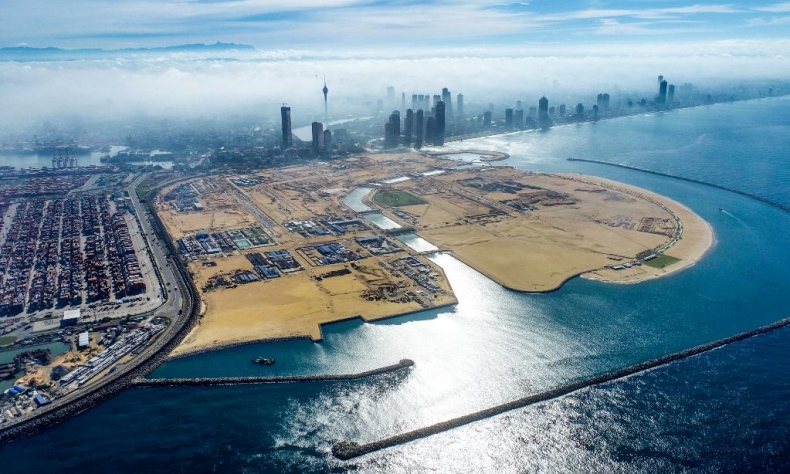
Port City Colombo seeks to change that. Developed as a flagship Belt and Road Initiative (BRI) project with major Chinese investment through CHEC Port City Colombo, the project is far more than reclaimed land or a luxury waterfront development. It is Sri Lanka’s first multi-services Special Economic Zone, specifically designed to attract foreign capital, international companies, and global talent into a ring-fenced, internationally benchmarked business environment.
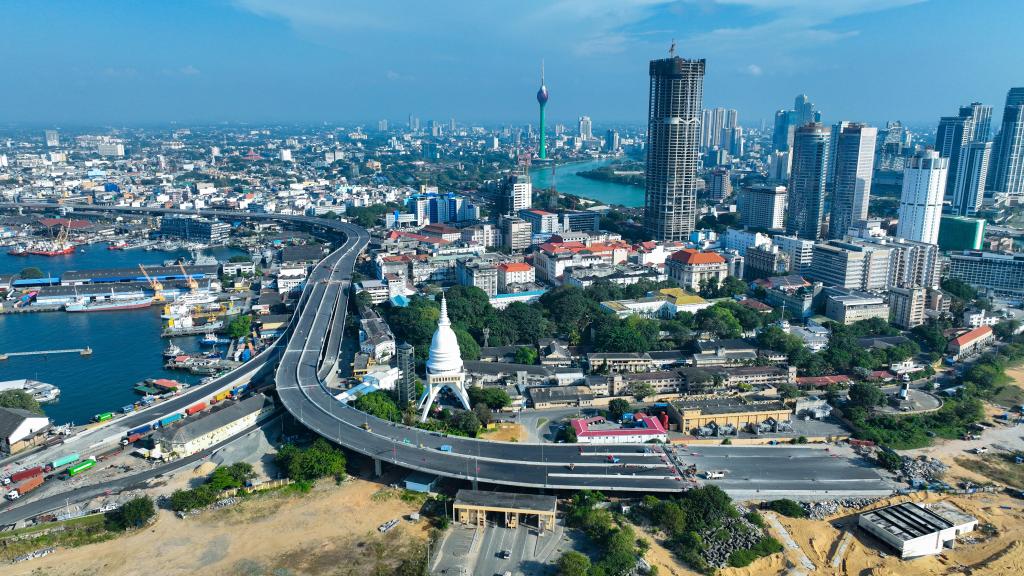
To date, approximately $1.3–1.4 billion has already been invested into land reclamation and core infrastructure development. Unlike many proposed megaprojects around the world that remain on paper, Port City Colombo has already completed its foundational phase. Roads, drainage systems, utilities, beaches, parks, and business infrastructure are operational. The project has moved beyond vision and entered implementation.
Importantly, investment momentum is no longer theoretical. More than 150 companies have already been licensed under the Colombo Port City Economic Commission framework, with dozens more applications under review. South Asia’s first downtown duty-free retail mall outside an airport is operational. The marina development is underway. Bay One Residences, the first residential tower project, is under active construction. Major mixed-use and residential developments by firms such as Home Lands, Prime Melwa, and the Colombo International Financial Centre consortium have already been signed or launched.
This matters because Sri Lanka urgently needs productive foreign direct investment, not merely debt-financed consumption. Port City Colombo is structured specifically to attract long-term investment into sectors such as IT-enabled services, offshore banking, professional services, headquarters operations, logistics, tourism, healthcare, education, and high-end urban services.
For ordinary Sri Lankans, the benefits could be substantial if managed effectively.
First, employment. Construction alone has already created thousands of jobs. Once fully operational, independent projections estimate Port City Colombo could support more than 80,000 jobs across finance, technology, hospitality, construction, retail, education, and professional services. These are not only low-skilled positions, but also high-value urban jobs capable of retaining Sri Lanka’s educated workforce, many of whom currently seek opportunities abroad.
Second, skills and knowledge transfer. The arrival of international schools, universities, hospitals, IT firms, and professional services companies will expose Sri Lankan workers and students to global standards and training. Countries including Singapore and UAE transformed themselves not simply through infrastructure, but by creating ecosystems that attracted talent, expertise, and international business networks.
Third, foreign exchange generation. One of Sri Lanka’s chronic vulnerabilities has been foreign currency shortages. Port City Colombo directly addresses this issue by functioning as a foreign-currency-based economic zone. Transactions are conducted in approved international currencies rather than the Sri Lankan rupee, helping attract foreign capital inflows while reducing pressure on national foreign exchange reserves.
Fourth, tourism and lifestyle development. Colombo has long lacked the type of integrated waterfront urban district seen in cities such as Dubai, Singapore, or Doha. The marina, luxury residences, hospitality projects, retail zones, and entertainment districts are designed not only to attract investors, but also to position Sri Lanka as a regional destination of tourism, shopping, and lifestyle.
It has been estimated that Port City Colombo, when fully completed, could create additional $13-15 billion GDP, and additional $5 billion of fiscal revenue each year.
Critics often portray Port City Colombo solely through a geopolitical lens because of its connection to China and the Belt and Road Initiative. Certainly, geopolitics cannot be ignored. China’s involvement reflects Beijing’s broader initiative to deepen economic connectivity across the Indian Ocean and strengthen its role in regional infrastructure development.
Yet reducing Port City Colombo to geopolitical competition misses the larger reality. Sri Lanka’s challenge today is not abstract strategic theory – it is economic recovery, job creation, and long-term competitiveness. For a country with limited fiscal space and heavy development needs, attracting large-scale foreign capital is essential.
Port City Colombo is definitely not a Chinese enclave. Ownership of the reclaimed land remains with the Government of Sri Lanka. The city operates under Sri Lankan sovereignty through the Colombo Port City Economic Commission. Increasingly, the project is attracting investors not only from China, but also from South Asia, the Middle East, Europe, and Southeast Asia.
The project’s broader significance lies in Sri Lanka’s future economic direction. For decades, the island’s economy was heavily dependent on remittances, apparel exports, tourism, and traditional trade. Port City Colombo offers the possibility of transitioning toward a more diversified, service-oriented, globally integrated economy.
This transformation will not happen automatically. Regulatory credibility, political stability, transparency, and investor confidence remain critical. Sri Lanka must ensure that the benefits extend beyond elite real estate development and reach the broader economy through employment, local business participation, and infrastructure integration. But the opportunity is undeniable.
At a time when many countries are struggling to attract global capital, Sri Lanka is building an entirely new financial and services city along one of the world’s busiest maritime routes. Few nations of Sri Lanka’s size have attempted something so ambitious.
Port City Colombo is therefore more than a construction project. It is a test of whether Sri Lanka can reposition itself as a modern Indian Ocean hub connecting South Asia, the Middle East, Africa, and East Asia.
If successful, it could become one of the most consequential economic transformations in Sri Lanka’s post-independence history.
The article reflects the author’s opinions, and not necessarily the views of China Focus.