Xi’s Five-Day Trip Deepens Ties with Neighbors, Global South
 Facebook
 Twitter
 Linkedin
 Google +
Viewed as a whole, this trip is best understood not as a discrete diplomatic event but as one installment in a broader and continuing pattern.
From Aug. 30 to Sept. 3, President Xi Jinping will undertake a five-day diplomatic mission that carries far more weight than its brief span might suggest. He will attend the Shanghai Cooperation Organization (SCO) Summit 2026 in Bishkek, Kyrgyzstan, pay a state visit to Kyrgyzstan at the invitation of President Sadyr Japarov, and then travel to Egypt for a state visit at the invitation of President Abdel Fattah El-Sisi.
Taken together, the trip offers a clear window into how Beijing sequences its diplomacy at a moment when late-summer travel schedules around the world grow crowded ahead of the U.N. General Assembly and, this year, ahead of a prospective Xi-Trump meeting in Washington.
Why Bishkek, and why now
This year marks the 25th anniversary of the SCO’s founding, giving the Bishkek summit a symbolic as well as a substantive character.
According to China’s Foreign Ministry, Xi will hold in-depth exchanges with fellow SCO leaders on deepening cooperation across multiple fields “under the new circumstances,” as well as on major international and regional issues, with the stated aim of providing guidance for the organization’s high-quality development and its participation in reforming the global governance system.
This is not boilerplate. The SCO today includes China, Russia, India, Pakistan, Iran, Belarus and four Central Asian states, and its members together account for a substantial share of the world’s population and landmass. When leaders representing this group gather to compare notes on shared concerns, the result is not a military-style binding alliance but a meaningful exercise in multilateral coordination, the kind that helps ensure that when issues arise at the United Nations or elsewhere, positions are broadly aligned rather than scattered.
That logic extends naturally to two of the more consequential and unsettled issues on the international agenda: Iran and Ukraine. An SCO summit cannot produce sweeping joint declarations that resolve either crisis. But member states continue to build common understandings on the illegitimacy of unilateral sanctions regimes, on the value of political rather than purely military solutions and on resisting the drift toward bloc confrontation. That work matters precisely because it is not flashy. It is one of the ways a multilateral body avoids being hollowed out by external pressure or drawn piecemeal into someone else’s proxy contest.
Kyrgyzstan: Consolidating a shared neighborhood
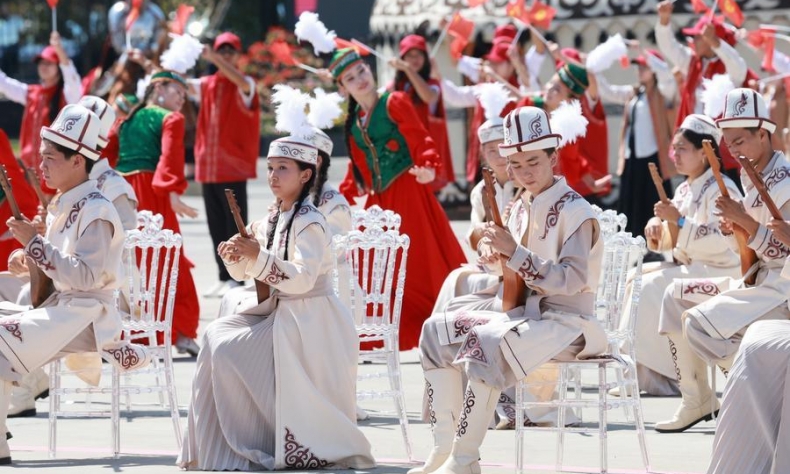
The Kyrgyzstan leg is where Beijing’s long-standing emphasis on “neighborhood diplomacy” is most visible in its purest form. Xi will hold talks with Japarov and take part in a range of state events. Chinese officials have framed the visit as an opportunity to deepen mutually beneficial cooperation, add new dimensions to the China-Kyrgyzstan community with a shared future, and deliver concrete benefits to both peoples.
Geography does not change, and in Beijing’s own account of its foreign policy priorities, the immediate neighborhood consistently ranks as a foundation on which broader diplomacy is built.
Combining a bilateral state visit with a multilateral summit in the same country, on the same trip, is itself an efficient expression of that priority. It reinforces the individual relationship with Bishkek while situating it inside the wider regional architecture the SCO represents.
Egypt: A decade in the making
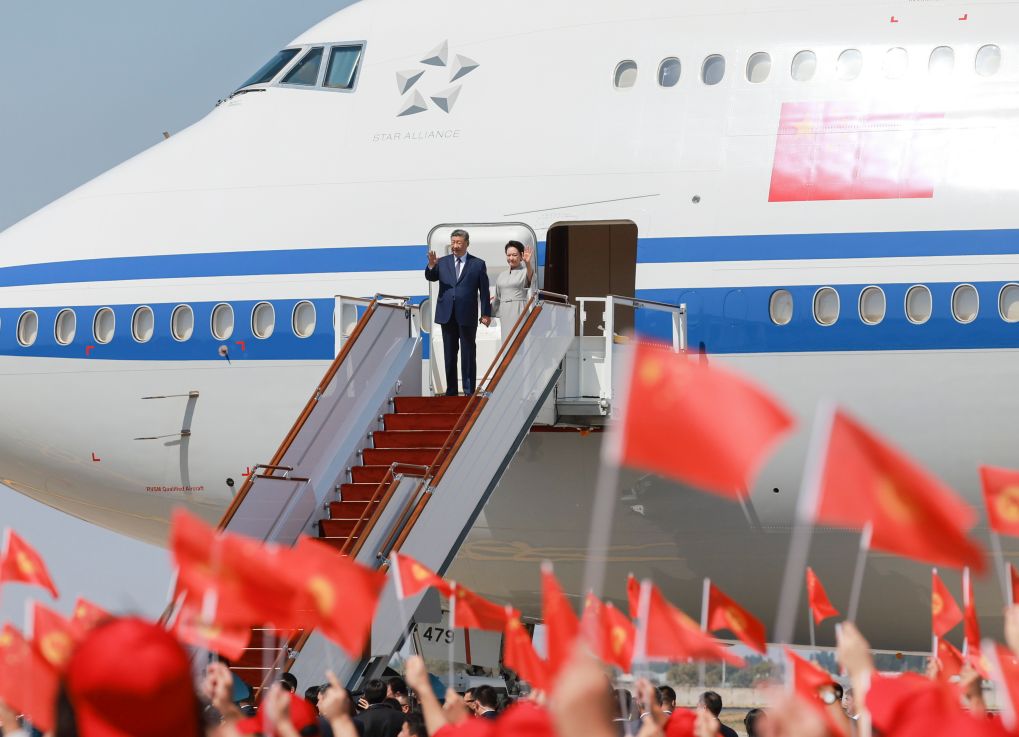
The Egypt leg carries a different but complementary significance. It will be Xi’s first state visit to the country in a decade, and it coincides with the 70th anniversary of the establishment of diplomatic relations between China and Egypt. Xi and Sisi are expected to hold an in-depth exchange of views on bilateral relations and on international and regional issues of shared interest.
A visit timed to a 70th-anniversary milestone signals an intent to refresh a relationship whose age already speaks to its durability. Egypt’s position, spanning Africa and the Middle East, and long an influential voice within the Arab world and the Global South more broadly, gives the visit weight well beyond the bilateral ledger.
The wider diplomatic season
This trip does not occur in isolation. It forms part of a broader diplomatic rhythm involving both outbound visits and inbound engagements. Earlier in August, Chinese Foreign Minister Wang Yi traveled to Seoul and Jakarta, his first standalone visit to South Korea in five years, where he met President Lee Jae Myung and Foreign Minister Cho Hyun, and to Indonesia, where he chaired the inaugural session of the China-Indonesia Comprehensive Strategic Dialogue Mechanism. Read alongside Xi’s own itinerary, the pattern is one of sustained, region-wide engagement rather than a single high-profile gesture.
The traffic has moved in the other direction just as steadily. On Aug. 18, Xi hosted Ecuadorian President Daniel Noboa at the Great Hall of the People for Noboa’s first state visit to China, marking the 10th anniversary of the two countries’ comprehensive strategic partnership and yielding concrete outcomes.
It was one entry in a much longer list: by early June, China had already hosted 26 leaders from 23 countries this year, spanning Europe, Asia, the Middle East, Africa and the Americas, according to a tally reported by Al Jazeera.
A country that is at once sending its president abroad and continuing to receive a steady stream of visiting leaders at home is not choosing between outward and inward diplomacy; it is doing both at once, which is closer to how Beijing itself describes the approach: “the ocean is vast because it admits hundreds of rivers.” An outlook broad enough to accommodate many different partners, on their own terms, is what allows a country to grow large rather than narrow.
Set against that backdrop, this trip is also notable for what it represents in Xi’s own travel calendar. His state visit to North Korea in June was his first trip abroad in 2026; Bishkek and Cairo will be only his second and third destinations of the year, a comparatively light travel schedule set against a very heavy hosting schedule.
Wang, by contrast, has covered considerably more ground on Beijing’s behalf: over the same period, he has traveled to Ethiopia, Somalia, Tanzania and Lesotho in January, North Korea in April, Denmark, Sweden, Finland and Norway in July, the Philippines and Kyrgyzstan later that same month, and South Korea and Indonesia in August — at least a dozen countries across three continents before this latest round of SCO-related diplomacy.
The division of labor is a familiar one: the foreign minister logs the mileage that keeps the machinery of bilateral and multilateral relationships running, while the head of state’s own appearances are reserved for moments, like this one, that carry the weight of a personal commitment.
Other Chinese senior officials travel abroad as well on various designated missions. For example, at the invitation of the government of Zambia, Xian Hui, President Xi Jinping’s Special Envoy and Vice Chairperson of the National Committee of the Chinese People’s Political Consultative Conference, will attend the inauguration of President Hakainde Hichilema of Zambia in Lusaka on September 1.
It is a reasonable reading of Beijing’s approach that, amid continued efforts by external powers to draw China’s neighbors into more adversarial postures, this two-way, sustained pattern of engagement, rather than episodic summitry in either direction, is the more durable strategic asset.
None of this happens without reference to the broader calendar. Wang also met U.S. Ambassador David Perdue in Beijing on Aug. 27, in preparation for Xi’s own expected state visit to Washington later this year.
That preparatory process continues even as friction persists, most recently over new U.S. measures targeting entities with commercial ties to Iranian oil, which China’s Foreign Ministry has publicly criticized as unhelpful. The coexistence of active summit preparation and unresolved points of friction is itself unremarkable; major-country relationships routinely advance on parallel, sometimes contradictory, tracks.
What can be said with confidence is that Beijing’s late-summer diplomatic calendar, anchored by Xi’s trip to Bishkek and Cairo and complemented by other top officials’ travels, reflects a deliberate emphasis on consolidating relationships close to home and across the Global South, independent of how the Washington meeting eventually unfolds.
Steering a wider current
Viewed as a whole, this trip is best understood not as a discrete diplomatic event but as one installment in a broader and continuing pattern: reinforcing ties with immediate neighbors, deepening long-standing partnerships across the Global South, and using multilateral platforms like the SCO to keep partner states within reach of one another on the issues that matter most.
The ocean that admits hundreds of rivers also must be navigated, not merely welcomed, and Xi appears less as a traveler on a five-day trip than as the helmsman, steering a course through waters that grow busier each season. Whatever the autumn tides bring, China has its course charted, and it will navigate shifting waters ahead.
Josef Gregory Mahoney is a professor of politics and international relations and director of the Center for Ecological Civilization at East China Normal University in Shanghai. He is also a senior research fellow with the Institute for the Development of Socialism with Chinese Characteristics at Southeast University in Nanjing.