Opportunities, not Threats, Define Chinese Economy
 Facebook
 Twitter
 Linkedin
 Google +
Rather than imposing limits on ourselves within the narrative of “peaking,” we would do better to seek cooperation in the facts of resilience.
For some time, Western public discourse has been dominated by terms such as “Peak China,” “China Shock,” and “China Threat.” This has fueled a narrative that questions whether China has reached its economic ceiling, and whether the global presence of Chinese manufacturing constrains the world economy or creates new opportunities for it.
On October 11, the Mingde Strategic Dialogue (2026), themed “Resilience and Vitality: New Opportunities China’s Development Brings to the World,” was held on the Tongzhou campus of Renmin University of China. A delegation of more than 20 former political leaders and renowned scholars from 10 countries – Australia, Bosnia and Herzegovina, Canada, Ethiopia, New Zealand, Norway, Poland, Russia, the United Kingdom, and the United States – gathered in Beijing after visits to Shanghai, Xinyu in Jiangxi, and Wenzhou in Zhejiang. They held in-depth discussions on such topics as China’s high-quality development and global economic growth, improving global economic governance, safeguarding the stability of industrial and supply chains, and AI-enabled industrial innovation, and arrived at conclusions that stand in sharp contrast to the “Peak China” narrative.
Xinyu’s leapfrog moment: rebutting the “Peak China” narrative
Xinyu, in Jiangxi Province, is a small city in central China built on steel, and also the place where the late Ming Dynasty scientist Song Yingxing (158-1661) completed his classic Tiangong Kaiwu (The Exploitation of the Works of Nature).
Today, the city boasts an annual lithium salt production capacity of over 300,000 tons, with lithium hydroxide exports accounting for more than half of the international market. As home to over 70 upstream and downstream lithium battery companies whose annual production capacity exceeds 45 GWh, it has established a complete industrial chain spanning lithium ore mining and processing, lithium salt production, battery manufacturing, echelon utilization and recycling.
At the ancient village of Jieqiao and the Tiangong Kaiwu exhibition hall in Fenyi County, the delegation saw the continuity of China’s scientific and technological civilization; and in the workshops of Xinyu Iron & Steel and Ganfeng Lithium, they saw how that legacy is being expressed through contemporary innovation.
George Galloway, former British MP and leader of the Workers Party of Britain, told China Today that he was deeply impressed by the high-end “hand-tearable steel” produced by Xinyu Iron & Steel, just 0.08 millimeters thick. “The steel they make there is so thin that a person can tear it apart by hand,” he said. “China is in a leading position in many industrial fields, a lead that is arguably almost unsurpassable.”
Galloway said the trip had left a deep impression on him. Setting out from Cape Town, he had traveled for a full month by way of Johannesburg, Addis Ababa, Moscow, and Shanghai. “I witnessed conflict and turbulence, and I also saw poverty and despair on a massive scale. Then I came to China, and I saw the future.” In his view, while many European countries are experiencing social disorder or changes of government, China is one of the few places in the world today enjoying stability and prosperity. The West’s labeling of Chinese exports as “overcapacity,” together with its tariff barriers, is protectionism in substance – a departure from the principles of free trade
Ryan Perkins, founder of the analytics platform Global Economic Indicators and a geopolitical and economic analyst, was visiting Xinyu for the first time. He told China Today that the trip had drawn his attention to a striking phenomenon: some small and medium-sized Chinese cities that are little known outside the country are in fact at the forefront of global competition, especially in future-shaping industries such as renewable energy.
“Chinese manufacturing, as exemplified by Xinyu and Wenzhou, integrates complex and sophisticated supply chains to deliver not only cutting-edge technologies but, more importantly, lower costs, making these technologies affordable for countries in the Global South and turning technological advantages into industrial capacity and better livelihoods,” he said.
Xinyu, a city “built on steel,” has moved traditional steel products to ultra-thin silicon steel, advanced lithium battery technology into the next generation, and helped its small and medium-sized enterprises cut costs and raise efficiency through digital transformation. The resilience of the Chinese economy lies not in speed but in the ability to repivot – to survive and compete on the new course it has taken.
Wenzhou’s going global: countering the “China Threat” narrative
Wenzhou, in east China’s Zhejiang Province, has just joined the club of Chinese cities whose annual GDP exceeds RMB 1 trillion (about US $140 billion). It is a frontier where the private economy engages in global cooperation.
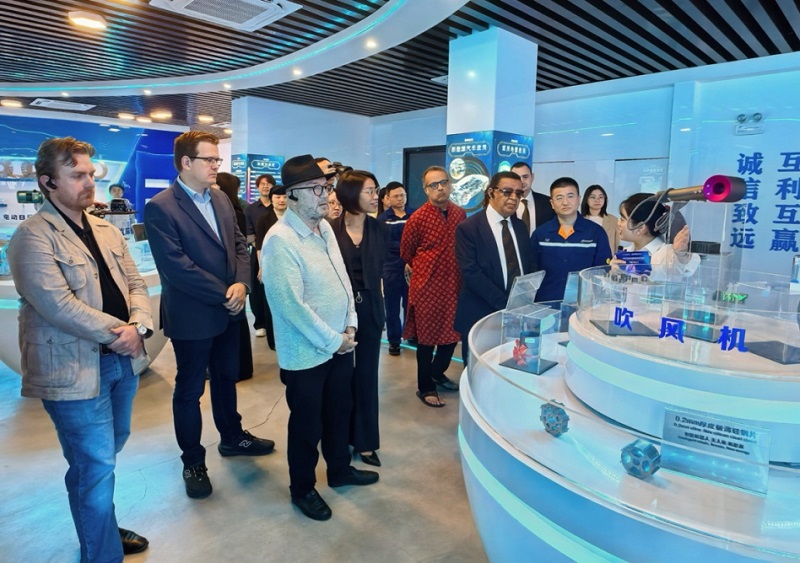
In the city, the foreign guests visited local enterprises, and observed the digital transformation of the manufacturing sector and the development of industrial and supply chains, experiencing firsthand the vitality of the private sector. They also attended the 2026 Wenzhou Business Development Forum – Zhejiang Belt and Road Think Tank Dialogue.
Speaking to China Today, Richard Caplan, professor of international relations at the University of Oxford, said, “Wenzhou is an extraordinary place in itself – I cannot think of anywhere else in the world that compares with it.” For a city that values entrepreneurship so highly, he noted that the government’s support for the private sector and its open policy orientation are deeply impressive.
Responding to Europe’s so-called “China spillover” and “overcapacity” narratives, Caplan argued that China is contributing to global growth through technology transfer, investment, and cooperation. “Some countries see China’s growth as an obstacle. But whether or not those arguments hold, it is essential to respond constructively.”
Perkins has been observing Wenzhou for nearly three decades. “I first came to China in 1998, when Wenzhou was known for producing ordinary everyday goods. Today it is known for frontier technologies in the renewable energy industry.” This, he said, fully demonstrates the momentum of China’s rapid rise in global value chains. “I hear people discussing companies ‘going global,’ but in my view Chinese companies have already gone global – a large part of China’s industrial development is already tightly connected to its overseas networks.”
Does the globalization path of Wenzhou’s private enterprises represent a squeeze on Europe’s small and medium-sized manufacturers or a completion of their supply chains? Galloway goes straight to the heart of the matter: “China is producing excellent products at very favorable prices. Why are Western governments always trying to keep these products out of consumers’ hands?”
The figures speak for themselves: during the 14th Five-Year Plan period (2021-2025), Zhejiang launched more than 2,400 direct investment projects in countries participating in the Belt and Road Initiative. At Wenzhou Business College, the delegation held face-to-face discussions with young students on topics such as the overseas expansion of Chinese manufacturing and global governance. Galloway was impressed by the “advanced teaching quality and facilities,” and described the city as “clean, spacious, green, and beautiful,” adding that he was giving serious thought to settling there.
Underpinnings of the Chinese economy’s resilience
At the dialogue in Beijing, the delegation sought to answer a deeper question: where exactly does the resilience of the Chinese economy come from?
Jennifer Shipley, former prime minister of New Zealand, attributed it to long-term planning and strategic resolve. China’s economic resilience and vitality, she said, stem from its commitment to long-term planning, sustained infrastructure development, continuous scientific and technological innovation, and constant strategic adjustment in response to changing circumstances.
“Anyone who has followed China’s development over the past 10 to 15 years will have noticed that China keeps improving its infrastructure in preparation for the age of AI.” In her view, China’s ability to maintain strategic focus, concentrate resources, and make timely directional adjustments has been a highly positive phenomenon over the past two decades, and in fields such as new-energy vehicles and AI, China will continue to play a leading role.
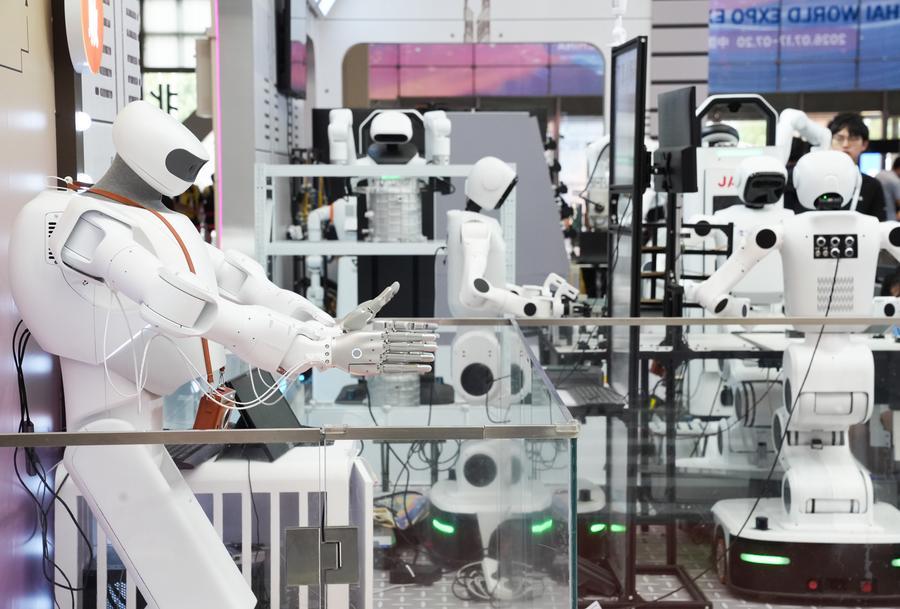
Mulatu Teshome, former president of Ethiopia, argued that resilience means not only withstanding risks, but also continuously adapting and growing stronger amid changes. China’s innovation in green technology, advanced manufacturing, and the digital economy, he said, has not only driven its own transformation and upgrading, but also injected new momentum into the world economy. This has created favorable conditions for Africa and other developing regions to expand trade channels and promote industrial development.
Radhika Desai, a professor of political studies at the University of Manitoba in Canada, explained from a financial perspective: the Chinese model channels savings and credit into productive expansion based on “patient capital,” which contributes to economic stability, whereas the Western model is highly financialized, emphasizes consumption, speculation, and short-term fluctuations, and is hence prone to financial crises.
Vijay Prashad, executive director of the Tricontinental Institute for Social Research in the United States, turned his attention to the Global South. “People assumed that only Europe and North America could produce advanced technology, but China has broken that assumption,” he said. The development of AI, he noted, is inseparable from electric power, yet many parts of the Global South still suffer from severe power shortages. Electrification is the precondition for benefiting from the AI wave. The Global South, he stressed, cannot remain a mere supplier of raw materials; it must move up the value chains and become a user and promoter of technology.
Seeing China as a development opportunity
If the same question were posed to policymakers in Brussels, Berlin, and Paris, would they turn China, this “anchor of growth,” into an opportunity for themselves, or continue locking themselves out in the name of “de-risking?”
Glenn Diesen, a professor at the University of South-Eastern Norway, told China Today that as hegemony declines, the once U.S.-centered international economic system is rapidly being replaced by one of neo-mercantilism, in which technology blockades, financial sanctions, and the control of key corridors have been weaponized. Rebuilding trust in supply chains and financial architecture, he argued, must rely on multipolarity and multilateralism – and mechanisms such as BRICS and the Shanghai Cooperation Organization (SCO) are becoming key forces for pluralistic balance and multilateral cooperation worldwide.
Perkins was equally blunt, noting that existing international institutions are structurally biased toward the West in their allocation of voting rights, their geographic locations, and their funding sources. In the short term, structural reform must be advanced; and in the medium term, the development of alternative trade settlement and financial infrastructure must be accelerated.
Shipley’s advice was even more direct: the protectionist practices of some Western economies are disrupting markets and supply chains, and these economies need to carefully consider how far they will go to protect their domestic industries, rather than simply opting to close their markets. “Whether you agree or not, China is where the strategic focus lies,” she said.
Wang Wen, dean of the Chongyang Institute for Financial Studies and the School of Global Leadership at Renmin University of China and president of Wenzhou Business College, said that the Belt and Road Initiative embodies a logic that goes beyond Westernization, emphasizing diversified connections with all parts of the world. The past decade, he noted, was the initial stage, and enormous room for growth still lies ahead.
The delegation generally agreed that the opportunities China’s development brings to the world can be observed from three angles: first, China’s supersized market underpins global trade; second, the upgrading of China’s industrial and supply chains supports the world’s “three transformations” – industrialization, intelligentization, and green development; third, the overseas expansion of Chinese enterprises supports the rebalancing of the global economy.
From Xinyu’s lithium batteries to Wenzhou’s private enterprises and on to the strategic dialogue in Beijing, the new opportunities that China’s development offers the world are no abstract slogan. They are embodied in ultra-thin steel that can be torn apart by hand, in the solid-state battery materials purchased by low-altitude aircraft manufacturers worldwide, and in the overseas business networks of Wenzhou merchants. The “Peak China” myth underestimates the Chinese economy’s ability to repivot; and the “China Threat” theory misreads the genuine needs of the Global South and of Europe’s small and medium-sized enterprises for cost effectiveness, green technology, and supply chain stability.
The world is in the midst of change. Rather than imposing limits on ourselves within the narrative of “peaking,” we would do better to seek cooperation in the facts of resilience. For China, high-quality development is still on the way; for the world, China’s role as a growth anchor still deserves to be taken seriously.
For the members of the foreign delegation, the visit’s deepest impression is perhaps best summed up in Galloway’s words: “In China, I saw the future.”