The Global Development Initiative Is a Boon for the Global South
 Facebook
 Twitter
 Linkedin
 Google +
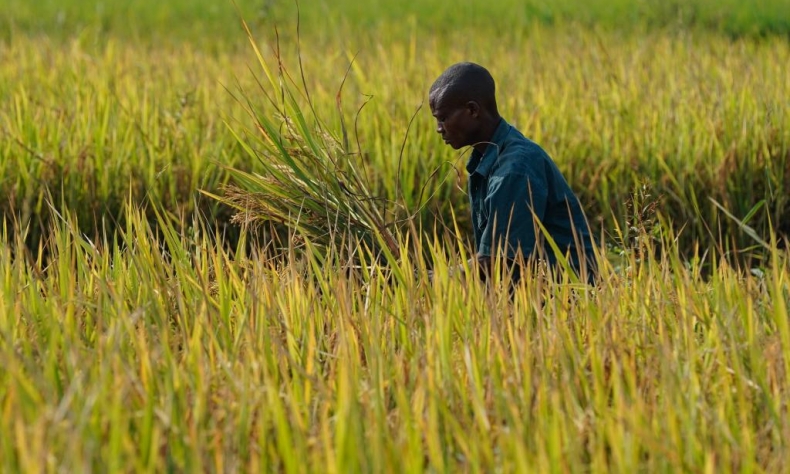
Over five years, the Global Development Initiative (GDI) has grown from a Chinese proposal into a multilateral effort backed by more than 130 countries and international organizations, restoring development to the center of global governance.
Over the past five years, the GDI has evolved from a Chinese proposition for international public goods into a broad-based global endeavor aligned with the United Nations 2030 Agenda for Sustainable Development.
Progress on the U.N. Sustainable Development Goals (SDGs) has stalled, unilateralism is escalating and the North-South divide is widening. Against that backdrop, restoring development to the core of the global macroeconomic policy agenda is indeed a tall order for the China-initiated GDI, especially as it seeks to foreground the long-marginalized priorities of the diverse Global South.
From the Chinese perspective, the GDI provides a material-focused framework for advancing sustainable development. It works in synergy with three other global initiatives: the Global Security Initiative, which treats indivisible security as a prerequisite for development; the Global Civilization Initiative, which fosters civilizational dialogue and pluralistic coexistence; and the Global Governance Initiative, which amplifies the voice and representation of the Global South amid the structural shifts in a world order long defined by the West-dictated “rules-based order.” Together, the four initiatives constitute a cohesive set of proposals responding to major global challenges amid a changing world.
Beyond the persistent geopolitical portrayal of the GDI as a disruption to the global order lies the fact that the initiative is inherently U.N.-centric, designed to tackle the common challenges confronting humanity. The official Group of Friends of the GDI at the U.N. now includes 88 member states, and more than 130 countries and international organizations have formally endorsed or joined the initiative, a clear testament to its alignment with the world body. Crucially, all eight priority areas of the GDI correspond directly to the SDGs.
Under this multilateral framework, more than 1,800 livelihood and development projects have been rolled out across the Global South. The initiative has left tangible footprints in poverty alleviation, food security, climate mitigation, green development, industrialization, development financing, the digital economy and connectivity. Capacity-building programs offering more than 200,000 training opportunities further demonstrate its inclusiveness.
Through the GDI, China offers a valuable experience for addressing global development priorities and financing gaps, with no geopolitical strings attached. In essence, it helps strengthen the UN-centered multilateral system, amplifying the voice of the global majority and embedding their development needs into global governance.
To institutionalize South-South cooperation, Beijing has created the Global Development and South-South Cooperation Fund, launched the China-FAO South-South Cooperation Trust Fund and expanded support for the China-U.N. Peace and Development Trust Fund. Together, these mechanisms have mobilized a cumulative $23 billion.
To realize the vision of “leaving no one behind” in the pursuit of common prosperity, stronger collaboration with regional bodies, such as the African Union’s Agenda 2063 and the New Partnership for Africa’s Development, is pivotal in addressing local priorities. One example is the transfer of Chinese agricultural technology, notably high-yield hybrid rice, which has eased food insecurity in countries such as Burundi.

In response to climate emergencies, the GDI fosters the deployment of meteorological early-warning systems, drought-resistant agricultural techniques and clean energy transition partnerships. These tools cushion vulnerable Global South economies against climate volatility, allowing them to pursue low-carbon development without sacrificing their legitimate right to economic growth.
Similarly, utility-scale solar projects and off-grid mini-grids in countries such as Kenya, Nigeria and Ethiopia demonstrate the GDI’s impact in bringing clean power to remote rural populations while lowering local production costs.
GDI-supported photovoltaic initiatives have created many training opportunities in manufacturing, construction and engineering to help developing nations move up global value chains. Chinese vocational Luban Workshops established across the Global South complement this work by delivering targeted technical education to nurture local industrial talent. For example, the workshop in Thailand provides hands-on training in fields like robotics and industrial maintenance. Its Egyptian counterpart runs specialized programs in intelligent manufacturing and new energy, helping to fill critical skill gaps and empower local youth to drive national industrial upgrading.
Juncao technology, a timber-substituting grass innovation, has proven highly effective in addressing poverty, the first of the SDGs. Used in China since the 1980s, it prevents deforestation while providing high-protein livestock feed, green bioenergy and soil erosion control. It is now recognized for reducing poverty and improving agricultural livelihoods in more than 100 countries.
Alongside livelihood programs, the “Digital South” initiative focuses on narrowing the North-South digital divide. By advancing capacity building, digital infrastructure and the transfer of technological capability, the GDI is set to usher in an era of innovation-driven development for the global majority. The GDI’s pivot toward high-tech economic drivers is not merely a move to keep the GDI relevant; more crucially, it is a strategic effort to prevent the Global South from being sidelined in the Fourth Industrial Revolution.
As digital infrastructure becomes central to development, the GDI’s agenda is increasingly extending into emerging technologies, particularly artificial intelligence. In the emerging field of AI governance, the GDI can champion inclusive regulatory frameworks for the global majority under U.N. auspices. To shield global AI governance from being maneuvered by a monopolistic few, the initiative offers an ideal multilateral platform to oversee data sovereignty, algorithmic fairness and the equitable distribution of computing power, areas in which the Global South’s legitimate aspirations and priorities should be heard and represented.
Looking ahead to a non-discriminatory AI era free of technological monopolies, promoting open technology sharing and open-source ecosystems through the multilateral GDI platform is the only viable path against technological blockades and patent monopolies. As technological hegemony threatens emerging AI governance, China’s rollout of the AI Plus International Cooperation Initiative offers a timely response. By integrating AI across key areas of international collaboration under the GDI, Beijing aims to preempt a potential “intelligence divide” in the interest of the global majority.
Through mechanisms such as the World Artificial Intelligence Cooperation Organization, the GDI envisions formulating AI technical standards and ethical norms suited to developing nations and emerging economies. Championing inclusive AI regulatory frameworks under U.N. auspices is no easy task. Yet, the GDI’s institutional inclusivity is what makes the effort vital, equitable and enduring.
Ong Tee Keat is president of the Belt and Road Initiative Caucus for Asia Pacific.