As China Rises, the Global South Ascends With it
 Facebook
 Twitter
 Linkedin
 Google +

Chinese trade and investment is transforming the Global South’s place in the world economy.
At the G7 session on “economic growth and global imbalances” held on June 17, Brazilian President Luiz Inacio Lula da Silva argued that the world’s central economic challenge is not China’s rise, but the failure of developed countries to invest sufficiently in the developing world.
He contrasted the concerns of advanced economies about competing against China with the aspirations of billions of people in the Global South who remain excluded from global markets and lack opportunities for economic advancement.
Lula noted, ironically, that China’s emergence as a manufacturing and economic powerhouse was enabled in part by decades of trade and investment and offshoring decisions made by Western companies seeking lower production costs.
So, rather than complaining about China’s economic success, the G7 economies should focus on reducing global imbalances by helping create jobs, expand consumer markets and strengthen productive capacity across the Global South.
A central point of Lula’s speech was that while Western countries fail to invest in the Global South, China is filling the vacuum. Chinese firms build ports, roads and power plants and expand trade ties; companies from Europe and the United States have often been less willing to participate in high-risk infrastructure projects. Developing countries naturally partner with whichever nations are willing to invest and engage economically.
Today China has become a uniquely important economic partner for much of the Global South in investment and infrastructure finance. According to AidData, Chinese government institutions and state-owned lenders committed approximately $1.34 trillion in loans and grants to 165 low- and middle-income countries between 2000 and 2021, spanning 20,985 projects. That makes China the world’s largest single source of official development finance and credit, surpassing the United States, the World Bank and other bilateral and multilateral lenders.
While the G7 countries collectively still exceed China in total foreign direct investment, private capital flows and development assistance, China’s influence in the Global South has been driven by its concentration on visible infrastructure projects — ports, railways, highways, power plants and industrial zones — often in regions where Western firms and governments have shown little interest in investing. This divergence helps explain why many developing countries increasingly view China as a central — or even the only — source of financing for economic development.
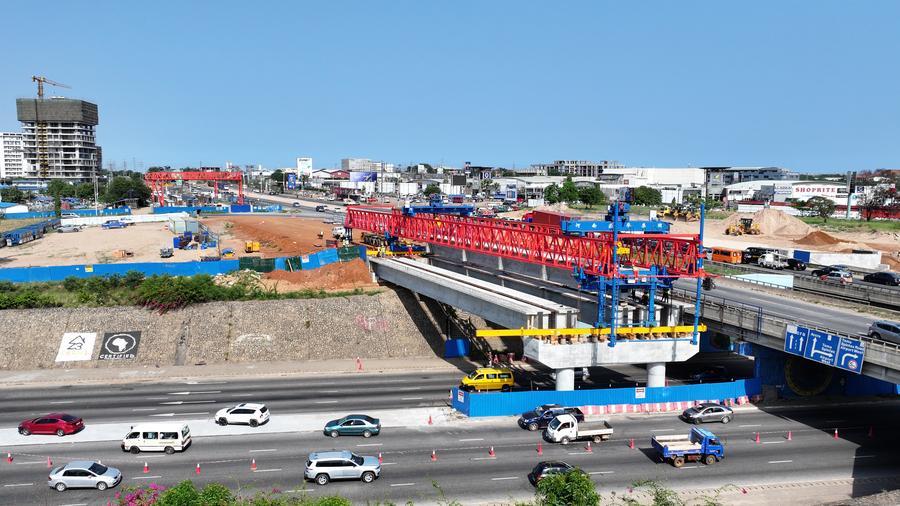
China’s economic integration with other Global South countries has reached a scale that now exceeds its trade with the major developed economies collectively. According to Chinese customs data, China’s total trade with Belt and Road Initiative (BRI) partner countries surpassed $3 trillion in 2024, accounting for more than half of its overall foreign trade.
China is Africa’s largest single-country trading partner, with China-Africa trade reaching roughly $295 billion in 2024-25, compared with about $70 billion to $90 billion for U.S.-Africa trade. In 2024, China-ASEAN trade exceeded $980 billion. By comparison, China’s trade with the United States was approximately $688 billion, with the European Union around $785 billion and with Japan about $308 billion, for a combined total of roughly $1.8 trillion. In other words, China’s trade with other Global South countries was more than twice as large as its combined trade with the United States, the European Union and Japan.
These figures suggest that China’s rise is not simply a case of a formerly peripheral economy integrating into an established global core. Rather, it is reshaping the landscape of the world economy itself, with the center of economic gravity increasingly shifting toward Asia and the wider Global South.
Unlike the traditional Western powers, whose economic stake has been largely rooted in finance and services, China’s economic weight remains heavily anchored in a vast industrial and physical economy, positioning itself as the largest player in the global supply chain. This industrial foundation creates strong complementarities with developing countries in terms of resources, labor, markets and infrastructure opportunities.
As a result, China’s rise is not only moving China closer to the center of the world economy; it is also pulling much of the Global South closer to the production networks, trade flows and demand dynamics that are indispensable to the center.
Through expanding trade, investment, industrial cooperation and infrastructure development, economic interactions are gradually shifting toward the Global South, whose growing markets, productive capacities and demographic dynamism are becoming increasingly important drivers of global growth. In this sense, the rise of China is contributing to a broader reconfiguration of the global economy in which the Global South plays a more central role than at any time in the modern era.
This shift reflects a profound reorientation of the world economy: whereas China’s growth was once heavily dependent on Western markets, it is now increasingly driven by economic ties with other emerging economies in the Global South. The result is that many countries in the Global South have become central, not peripheral, to the Chinese economy.
Historically, the relationship between much of the Global South and the advanced industrial economies was characterized by a pronounced asymmetry of power. People from developing countries often entered the global economy as slaves, indentured laborers, colonial soldiers, domestic servants, low-wage workers, refugees, students or migrants seeking opportunities unavailable at home, frequently contributing to patterns of brain drain and resource extraction.
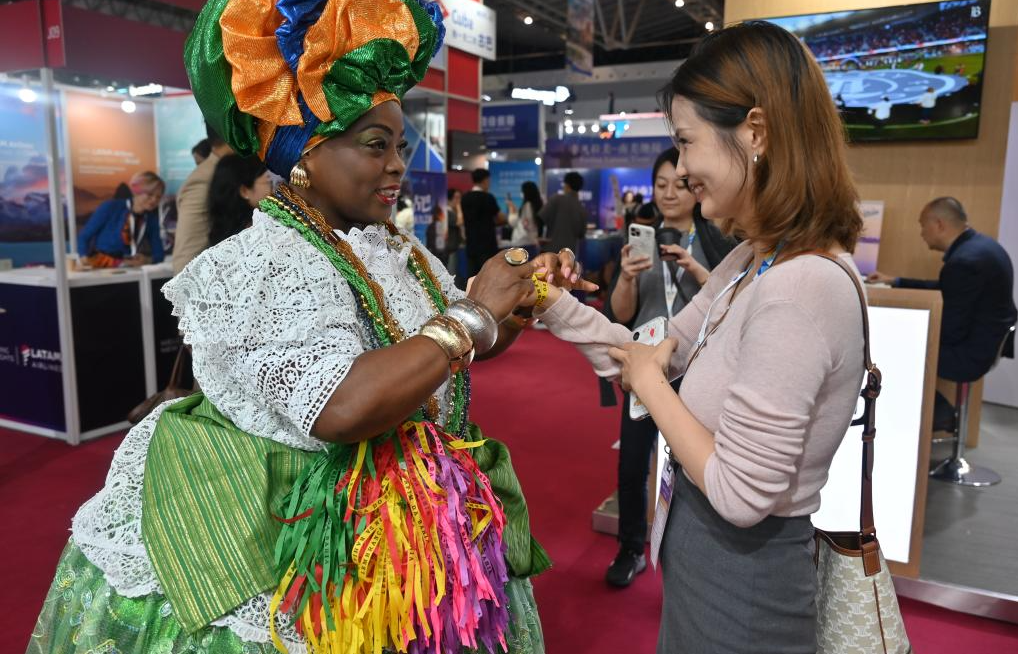
By contrast, those arriving from the developed world commonly came as explorers, missionaries, traders, colonial administrators, investors, aid workers, consultants, contractors, settlers or tourists, occupying positions associated with capital, expertise or authority. While these categories were never exhaustive, they captured a longstanding asymmetry in the global economy.
China’s rise is contributing to a gradual transformation of this historical pattern. As trade, investment and industrial cooperation deepen across the developing world, many Global South countries are acquiring greater economic agency and bargaining leverage.
They are no longer engaging with the global economy primarily as passive recipients of aid, sources of cheap labor or suppliers of raw materials. Instead, they are increasingly acting as business negotiators, commodity sellers, investment partners, project co-owners and strategic decision-makers capable of selecting among competing external partners on the basis of cost-benefit calculations.
In this sense, China’s emergence as a major economic center is not only altering the distribution of global economic power but also expanding the room for maneuver and upward mobility available to developing countries within the world system.
Lula’s remarks represent a broad appeal from the Global South for a shift from geopolitical rivalry toward development-oriented cooperation. He argued that the principal obstacles to economic development in poorer countries are political rather than technical, requiring deliberate choices by governments to invest in infrastructure, education, workforce training, energy systems and industrial capacity.
Using Africa as an example, he emphasized that Africa’s young population will only become an economic asset if substantial investments are made to create jobs, develop skills and expand productive opportunities.
Seen from the Global South, the broader challenge of globalization is whether developed countries are willing to participate meaningfully in the economic transformation of developing nations. The most effective response to China’s growing influence is not jealousy or resentment, but greater engagement with Global South economies. Such an approach would contribute to a more balanced world economy, reduce global inequalities and foster a more stable and inclusive global order.
Li Xing is a Yunshan Leading Scholar and director of the European Research Center at the Guangdong Institute for International Strategies, Guangdong University of Foreign Studies. He is also an adjunct professor of international relations at Aalborg University in Denmark.
Florencia Rubiolo is a senior researcher at the National Scientific and Technical Research Council (CONICET), Argentina, and director of Insight 21, a think tank based at Universidad Siglo 21.