 Facebook
 Twitter
 Linkedin
 Google +

Why EU-China Must Team Up on AI Governance
EU-China cooperation on AI governance is vital to prevent a fragmented global order and leverage complementary strengths for sustainable innovation.
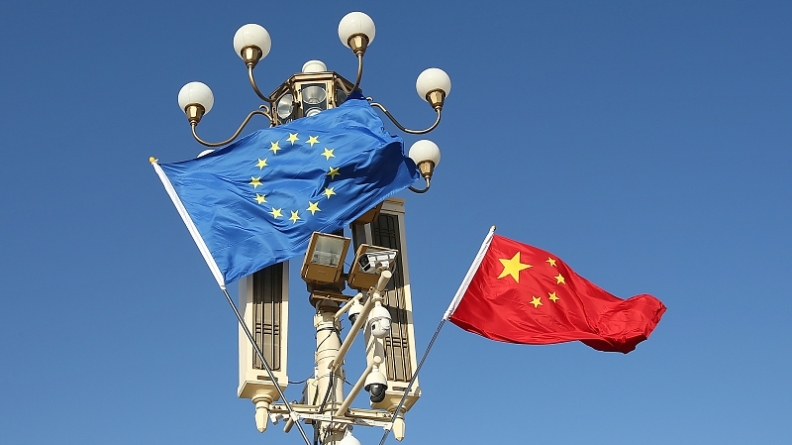
EU-China cooperation on AI governance is vital to prevent a fragmented global order and leverage complementary strengths for sustainable innovation.
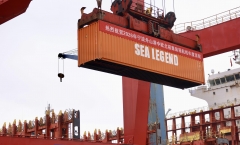
That ship that left Ningbo in early August wasn’t merely carrying electric vehicles and solar panels. It was carrying proof that the three gates the world has relied on for a century are no longer the only ones.

Genuine understanding therefore does not begin with the demand that we share the same gaze. It begins with the recognition that societies possess different ways of telling stories and turning information into meaning.

It demonstrated something equally important: dialogue remains necessary, mutual benefit remains achievable, and even in an era of strategic competition, cooperation can still prevail over confrontation.
In a world where uncertainty has become the norm rather than the exception, the importance of China-EU relations lies not in eliminating differences, but in preventing those differences from hardening into new fault lines.
Improved China-U.S. trade relations would benefit Europe significantly by reducing uncertainty across global supply chains and restoring investors’ confidence.

Despite years of U.S. and European efforts to reduce reliance on Chinese manufacturing, China has maintained and, in some respects, deepened its structural role in global supply chains.

At a time of shifting global alignments, China–Spain cooperation is increasingly becoming a bridge between China and the EU as well as a stabilizing force for the world, demonstrating the enduring value of dialogue, cooperation, and mutually beneficial partnership.

Amid a fluid and turbulent international situation, China and the EU, as two major global forces, two major markets, and two major civilizations, bear important responsibilities for world peace and development.
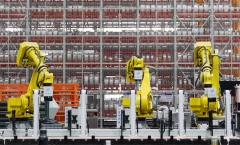
For the global economy, China’s 15th FYP Recommendations signal a transition from growth driven by sheer volume to growth driven by systemic capability.

European leaders increasingly recognize that deep and effective cooperation with China is possible—and necessary—while relations with the U.S. have become harder to forecast.

German Chancellor Friedrich Merz’s Beijing visit this week, where five intergovernmental agreements were signed, signals Berlin’s pragmatic bet that economic survival depends on China.