
China-EU: The Status Quo
This does not mean that all disputes or areas of contest will be bridged. However, bilateral consultations always help.
Some experts observe that the term ‘de-risking’ conveys a more moderate and less confrontational nuance on the part of some EU leaders, who acknowledge the impossibility of decoupling from China.
When it comes to foreign policy, the EU seems to be trying to rebalance itself between the U.S. and China. The U.S. undoubtedly remains the EU’s most important ally, and their transatlantic partnership will be Europe’s strategic focus for a long time to come.
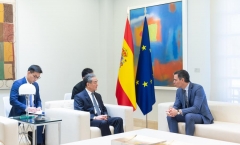
Leaders should be able to elaborate on disagreements and look for compromises instead of viewing them as insuperable obstacles – this is what guarantees progress, and this is what China and the EU endeavor to achieve.
China’s new policies and new expo ahead of the China-EU summit strengthen both economic and people-to-people links.
The more Europe engages with China and vice versa, the more likely a minimum degree of coordination can be secured in world politics. Greece acknowledges this reality and is prepared, within its limited capacity amid international antagonism, to promote the need for cooperation.
The GCI stresses the importance of cultural exchanges, which has moved from the sideline to the center stage of international relations.
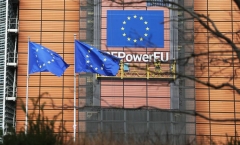
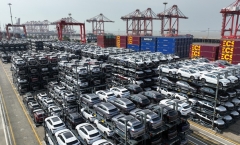
Competitiveness is gained through competition rather than isolation or protectionism. All that can be expected from the EU’s anti-subsidy probe is heightened risks for China-Europe trade and disruptions in international economic order, which is harmful for all parties involved.
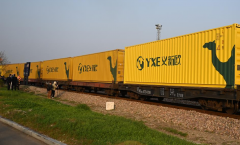
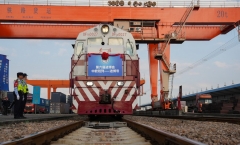
The Yiwu-Madrid freight rail service, a key part of the Belt and Road Initiative, is an opportunity for European companies to enter the vast Chinese market.
It is understandable that the purpose of the EU’s anti-subsidy investigation is to protect local enterprises, but the EU’s rash engagement in trade protectionism has nothing to do with ‘fairness.’
The present-day EU policy to appease Washington while harming the European economy will not become a winning resolution for Brussels.
In a world that is beset with challenges and uncertainty, Eurasia, with its connected markets and integration, is providing new paths for growth and prosperity.