 Facebook
 Twitter
 Linkedin
 Google +
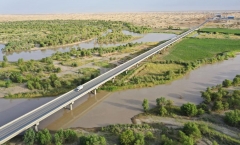
Sand Invaders to Sand Assets
‘Locking’ of the Taklimakan desert’s edge is a beginning. The challenge now is not only to hold the line but to widen it, to make it yield economic benefits, and to ensure its long-term ecological and social viability.
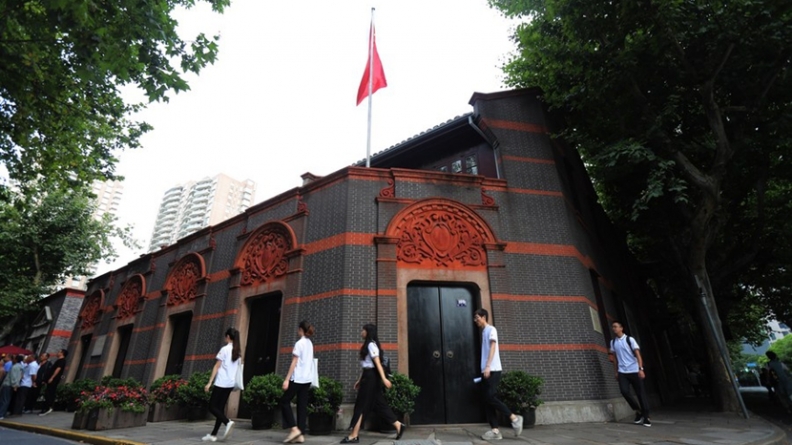
‘Locking’ of the Taklimakan desert’s edge is a beginning. The challenge now is not only to hold the line but to widen it, to make it yield economic benefits, and to ensure its long-term ecological and social viability.
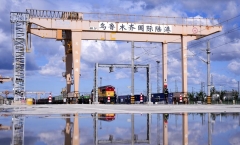
Once viewed as China’s remote western frontier, Xinjiang is emerging as a dynamic nexus—linking Chinese and international markets and industries while promoting people-to-people exchanges.

The cure for these misunderstandings is face-to-face dialogue, immersive exchange and mutual respect for civilizational diversity—exactly what the GCI embodies.

In Xinjiang, I felt that in a broader sense, not just family reunion, but a city reuniting with itself: different communities stepping into the same celebration, in the same spaces, at the same moment.

The emerging new forms of the smart economy point to the deep integration of AI with the real economy, digital infrastructure and industrial ecosystems, reflecting a new step in how intelligent technologies are reshaping the foundations of China’s economic development.
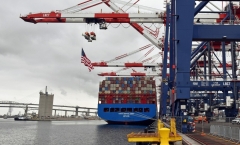
More predictable economic ties between China and the U.S. would have spillover benefits beyond the two countries.

China is demonstrating that it is possible to achieve high-quality economic development, technological innovation, social progress and environmental sustainability in a peaceful and people-centered way.
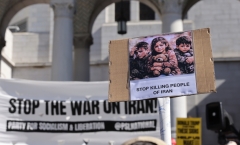
Without practicing benevolence and righteousness, the balance of power in offense and defense changes.

Safeguarding public health is no longer limited to doctors’ prescriptions. It is now embedded in urban planners’ blueprints and implemented through community-level governance.
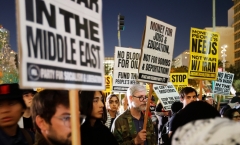
The ‘new imperialist’ America represented by the Trump administration is dragging the international order into an era of chaos, where ‘might makes right’ dominates.
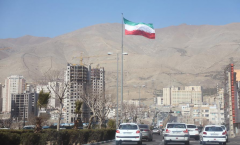
Any nation rich in strategic resources and unwilling to bend to Washington’s will, any region seeking to break free from dollar hegemony and chart its own course, may find itself on America’s hit list.

What Washington is willing to do should not be underestimated, including what it is willing to do to Iran, and what it is willing to allow happen to Israel in the process, since Washington’s ultimate objective is to preserve its unipolar world order.