 Facebook
 Twitter
 Linkedin
 Google +

Seeing ‘A Huge Place’ Through Experienced Eyes
In my view, Xinjiang is a place where modernization is unfolding in every sphere of life.

In my view, Xinjiang is a place where modernization is unfolding in every sphere of life.
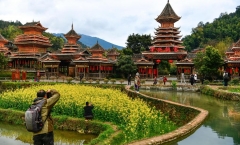
Poverty is not a natural condition or a person’s destiny. It can be overcome through sound political decisions, something irrevocably proven by China.
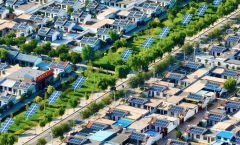
China has secured victory over extreme poverty through unprecedented systematic action and innovative strategies, setting a global benchmark for tangible poverty eradication while transitioning to rural revitalization and common prosperity.
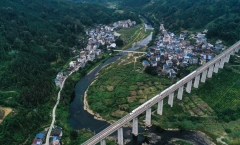
The fact is that China adopts a holistic approach to measuring poverty across multiple dimensions, including education, healthcare, housing and other welfare, rather than just income thresholds.
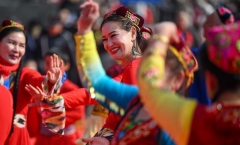
In Xinjiang, I felt that in a broader sense, not just family reunion, but a city reuniting with itself: different communities stepping into the same celebration, in the same spaces, at the same moment.

While China is making a century-long effort to actualize national rejuvenation, with key milestones reached, the U.S. has moved in the opposite direction.

The truth is that Xinjiang is a prosperous region where people lead stable lives and have meaningful futures ahead of them.
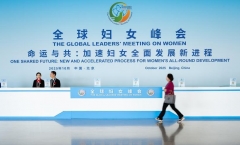
Should more nations, especially wealthy ones, join with China in making significant promises to enrich the lives of women and girls, that number will be larger than anyone might imagine.
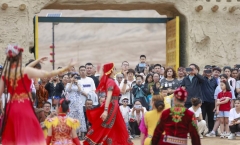
The great changes of Xinjiang over the past 70 years show that the system of regional ethnic autonomy respects history, conforms to national conditions, and meets the aspirations of the people, thus having tremendous advantages and strong vitality.
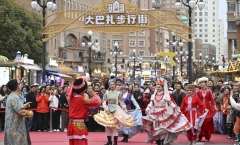
Xinjiang’s progress has enhanced the people’s sense of gain, fulfillment and security.
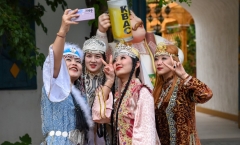
With strategic policies and substantial investments in infrastructure, technology and social programs, Xinjiang is rapidly transforming from a remote border region into a vibrant economic hub.
Understanding the autonomous region helps outsiders decode China’s broader ethnic policy: autonomy instead of federation, culture instead of secession, and minority faces in civilian posts.