Seeing ‘A Huge Place’ Through Experienced Eyes
 Facebook
 Twitter
 Linkedin
 Google +
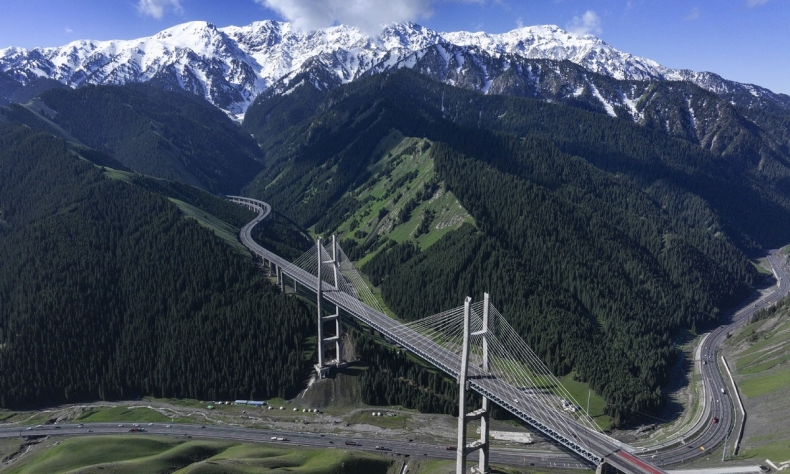
In my view, Xinjiang is a place where modernization is unfolding in every sphere of life.
For decades, David Ferguson, a British writer and Honorary Chief English Editor at the Beijing-based Foreign Languages Press, has traveled widely across China and covered many of the country’s major events, including the 2008 Beijing Olympic Games and the 2010 Shanghai World Expo. Xinjiang Uygur Autonomous Region remained one place he wished to explore in greater depth.
This April, Ferguson embarked on a research trip to Xinjiang for a book he plans to write about the region’s development. Over two weeks, he visited Aksu Prefecture and the regional capital city of Urumqi, seeing everything from cotton fields, hospitals and power plants to factories and e-commerce centers. In an exclusive interview with Beijing Review, Ferguson spoke about the many dimensions of modernization he witnessed in Xinjiang and how his firsthand observations contrasted with many prevailing Western narratives about the region. Edited excerpts of his insights follow:
Beijing Review: Having already traveled to Xinjiang, why did you feel a return trip was necessary before starting your new book?
David Ferguson: There is a professional reason and a personal one. Professionally, if you rely only on existing materials, you are relying on other people’s perspectives.
And in the case of Xinjiang, that is a particular problem. It is a sensitive and contested subject, especially in the Western media, and it is not always easy to know what is true and what is not. I wanted to see it with my own eyes, make my own judgments and reach my own conclusions.
The good thing about research travel for writing, as opposed to simply coming as a tourist, is that you are directed to specific places. You are given the opportunity to meet certain people and have in-depth conversations.
Anybody who knows anything about Xinjiang knows that it is a huge place. There are many beautiful places to visit, and it is very diverse. From a personal perspective, I obviously wanted to see it for myself. I like to experience new things, and I knew there was a great deal to see here.
Take Aksu, which is located in the heart of south Xinjiang, as an example. Even within a single prefecture, the diversity of the landscape is striking. South of Aksu City, desert plains stretch toward the vast Taklimakan Desert, while the Tianshan Mountains rise to the north. Between the two are barren Gobi outcrops of rock. Few places, I think, offer such sharp contrasts in one place.
Of all the sites you visited on this trip, which place left the deepest impression on you?
One visit I found especially interesting was to an e-commerce incubation center and e-commerce park in Aksu. It was a very good example of what targeted poverty alleviation can look like on the ground.
Infrastructure is the first key to opening the door from poverty to prosperity. In the past, when people talked about infrastructure, they usually meant physical infrastructure including roads, bridges and railways, the things that allow people and products to move. Those things remain essential. But now there is a third leg of infrastructure: information.
When it comes to villages in remote rural areas, they need roads, railways and air links to move products. But they also need the ability to transmit information about those products quickly. When you bring these things together, that is where e-commerce comes into play. Through e-commerce, a village can open itself not just to its own market, or even to other local markets, but to national and potentially international markets.
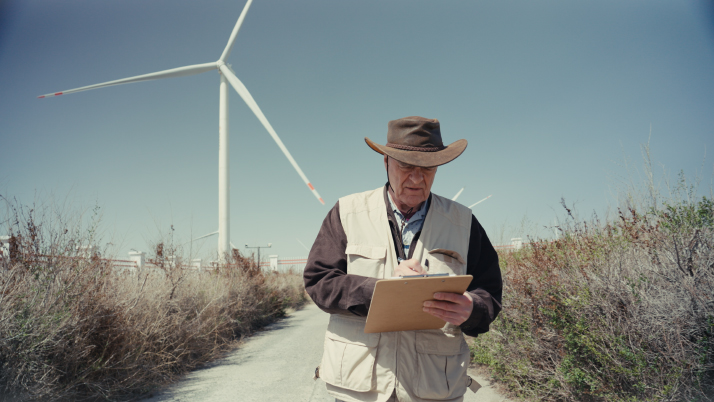
How different was the Xinjiang you saw from the picture many overseas audiences may have in mind?
It was totally different. The reason, I think, is that Western audiences are often conditioned to see China through a particular lens.
The United States has long been the world’s hegemon. Over time, that has produced a sense not only that America is number one, but that it has the right to remain number one—and that no one else has the right to challenge that position.
You can think of the U.S. as a kind of obsessive, paranoid athlete: a runner who has won every race he has ever entered, and who has come to believe that he is the only person allowed to win. Then another runner starts coming up on his shoulder. What does he do? Ideally, he would run faster himself. But he is already running as fast as he can. So he starts lashing out at the other guy, trying to block him or trip him. I think that is a very good analogy for what is happening in the relationship between the U.S. and China.
The U.S. cannot stand the idea that China might surpass it in any field—not just in GDP, but in any industry, or in any measure of human achievement. And so it has started this campaign of trying to undermine China in any way it can. Certain areas have become particular targets, and Xinjiang is one of them.
One particular area they focus on is cotton production.
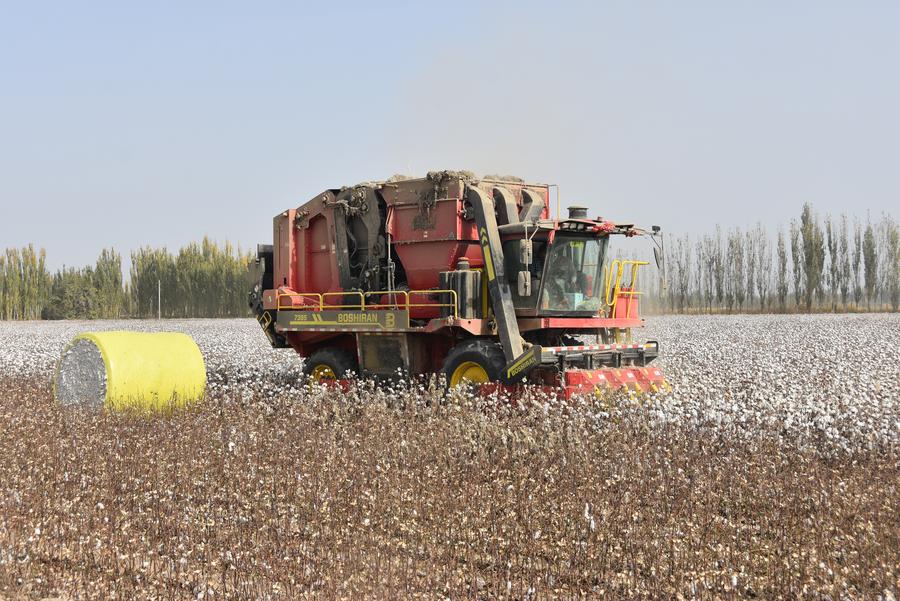
During the trip, I went to Xayar County, one of the most important cotton-producing counties in Aksu—and therefore in China.
Adrian Zenz, a German anthropologist, regularly makes sweeping claims about the abuse of Uygurs in Xinjiang. His most recent claim—delivered while I was personally in Xayar—was, essentially, that about 1 million people had been enslaved and transported to Xayar to perform forced labor in the cotton fields.
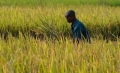
I spent half a day there, and that was more than enough for me to see that such claims were a complete fabrication (Zenz has never been to Xinjiang, according to the information available—Ed.). About 95 percent of cotton production in Xayar is now mechanized. It was planting season when I visited. In a large field of roughly 13 hectares, there were two tractors at work, each operated by a team of three people. They would finish the field in one day.
To do the same work manually would require about 30 people working for 14 days. By contrast, those two tractors, with six people between them, could cover 10 such fields in about 10 days. Given that reality, why would anyone choose to do it manually at all, far less with forced labor who don’t even know what they’re doing?
It is really unfortunate for Xinjiang, because it is one of the most promising regions in China. You can see why so many people have come here from central and east China—it’s a land of opportunity.
Most Western people are reasonable, but many have never heard an alternative account from a source they are willing to trust. The most important thing is to keep chipping away. Eventually you make a crack; then you knock out a chunk. In time, the whole thing begins to crumble. And one day, we will knock the false narrative down.
Viewed within China’s broader modernization drive, how do you understand Xinjiang’s development?
Part of the problem is that Western critics often present China as if it were a still photograph. But China is not a still photograph; it is a video. It is constantly changing. If you want to understand where China was, where it is now and where it is going, you have to watch the whole video. You cannot simply take one frame and point only to what is wrong in that single image.
A good example is the Kekeya Project, a massive afforestation effort in Aksu launched in 1986 to hold back the encroaching Taklimakan Desert. Since then, about 800 square km of desert has been transformed into a greenbelt. When you look at pictures of what it was before, and then look out at what it has become today, the change is unbelievable.
When it comes to innovation, people often think of it as something specifically related to technology, and of technology as something specifically related to industry. But that is not the case. Innovative modernization is also about improving the quality of people’s lives.
One important aspect is healthcare. At the First Affiliated Hospital of Xinjiang Medical University in Urumqi, I saw how telemedicine can connect the best medical resources in the region with smaller and more remote places. Doctors can make diagnoses and propose treatment across long distances. It shows how connections do not always have to be physical.
There is yet another dimension to modernization. One of the most interesting people I met during the trip was Mr. Gu, the head of a local trade union. He was not a high-ranking official, but he was deeply thoughtful about political systems and structures. I found him more politically informed than I would expect anyone in a comparable position to be in the UK. He could speak in an informed way about China’s political system and about other systems as well.
To me, that is also modernization: people becoming more engaged, more curious and more willing to learn.
So when I look at Xinjiang, I see agricultural modernization, industrial modernization, educational and healthcare modernization, energy development, and many other areas advancing at the same time. In my view, it is a place where modernization is unfolding in every sphere of life.