 Facebook
 Twitter
 Linkedin
 Google +

Creating Digital Connections
When young Americans and Chinese meet, not as representatives of competing nations but as fellow humans sharing meals, games and memes, they create the kind of trust that no policy paper can replicate.

When young Americans and Chinese meet, not as representatives of competing nations but as fellow humans sharing meals, games and memes, they create the kind of trust that no policy paper can replicate.

Despite claims of seeking ‘peace and stability’ for the region, Hegseth’s message to Asia was in reality, after destabilizing and destroying the rest of Eurasia, ‘you’re next.’

The U.S. loses first when it restricts the opportunities for Chinese students to study in the country.

Blockades never prevent breakthroughs; churning waves won’t hold back determined ships.

China and ASEAN share a common home, and the tariff hegemony is destroying our shared home. With Asian wisdom and action, we shall respond to the world’s uncertainties and establish a Southern paradigm for humanity’s peace and progress.
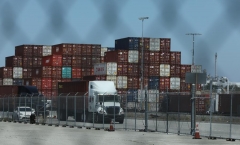
So the story is very simple—work with China on equal terms. Don’t deny China’s access. Because if you try to choke China, you end up with a much more formidable competitor.

Washington has created a chilling effect—closing the door to Chinese students and placing educational exchange, once a stabilizing pillar of China–U.S. relations, in a precarious position.
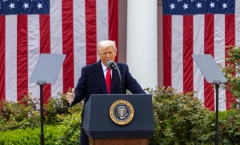
The U.S. imposition of high tariffs on Chinese goods has triggered short-term strains on China’s exports. At the same time, it has also accelerated its strategic pivot toward technological self-reliance, regional integration, and domestic demand expansion.

With the news of the tariff rollback came what many in the industry have referred to as a 90-day ‘golden window’—a narrow but decisive period in which foreign trade companies can rush to fulfill delayed demand and increase inventory.
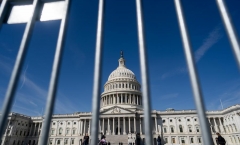
The ruling by the U.S. District Court for the Eastern District of Missouri ordering China to pay $24.49 billion in damages is nothing short of a legal farce.

The U.S.-China trade relationship is not a zero-sum game but a complex web of interdependence.
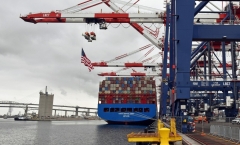
In an era of great economic upheavals, we need a framework that promotes dialogue instead of confrontation, and talks instead of tariffs.