China Aims to Create Jobs in the AI Era
 Facebook
 Twitter
 Linkedin
 Google +
The countries that thrive in the AI era will be those that prepare their people for the technology before it reaches the workplace, not after.
In China, new professions continue to emerge as the times change. AI trainer is one. Carbon emissions manager is another. Now, this quiet work of naming, standardizing and training will be organized around a single question: how artificial intelligence (AI) can create work rather than erase it.
At a press conference on employment and social security for 2026-2030, Li Zhong, China’s vice minister of human resources and social security, announced an initiative to promote employment in response to AI development. Its stated aims are responsible technology development and employment of better quality. The ministry will set up a regular mechanism to identify new occupations in AI, the digital economy, green industries and modern services. Before 2030, it plans to draft or revise more than 200 national occupational standards.
Much of the world still argues about whether AI will take jobs, but China has moved to a more useful question: who designs the AI-related jobs, and who trains people for them. Its answer puts workers, not machines, at the center of the transition. That approach may turn out to be one of China’s most valuable contributions to the Global South in the AI era.
The demand is already visible. On the Chinese networking and recruitment platform Maimai, new AI-related job postings rose 789.47 percent year on year between January and July. China’s core AI industry is now worth more than 1.2 trillion yuan (about 178.23 billion U.S. dollars), spread across over 6,200 enterprises. AI adoption across key industries has passed 80 percent. Technology on that scale is no longer a laboratory story. It is a story about factory floors, hospital wards and logistics depots.
Naming a job sounds bureaucratic, but it unlocks everything else. China has added 72 new occupations to its official catalogue over the past five years, and 11 more since the beginning of this year. Once a job sits in the national register, vocational colleges can design courses for it, employers can certify skills against it and social insurance can recognize it. A young person in Chengdu or Changsha who wants to become an AI trainer can see the path, the standard and the credential. Without a name, the same job stays informal and fragile.
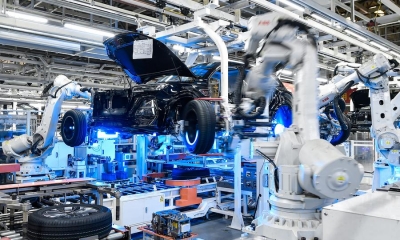
The plan does not abandon existing livelihoods. The five-year employment plan issued in June commits to stabilizing labor-intensive sectors such as light manufacturing, textiles, foreign trade and construction. It also expands work in elderly care, childcare, tourism and catering, and calls for new forms of human-machine collaboration.
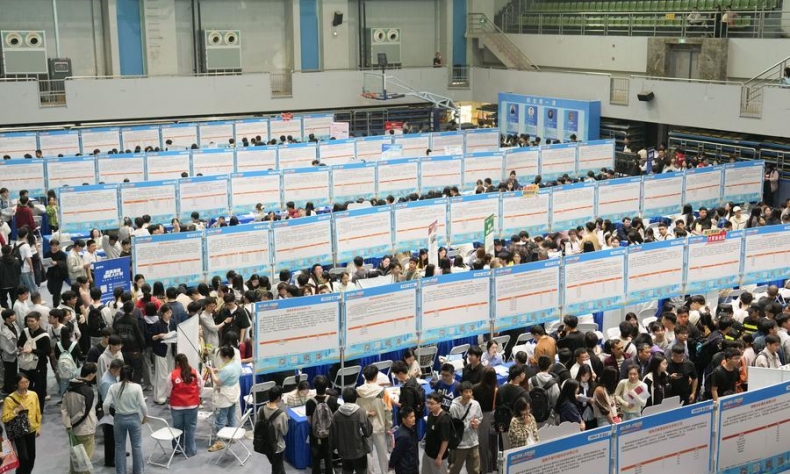
Training runs at national scale. Subsidized courses reached more than 11 million job seekers in 2025. The ministry organized 210,000 online and offline job fairs offering 10 million positions. It also pledged wider social insurance coverage for gig and flexible workers, the people most exposed to platform-driven change.
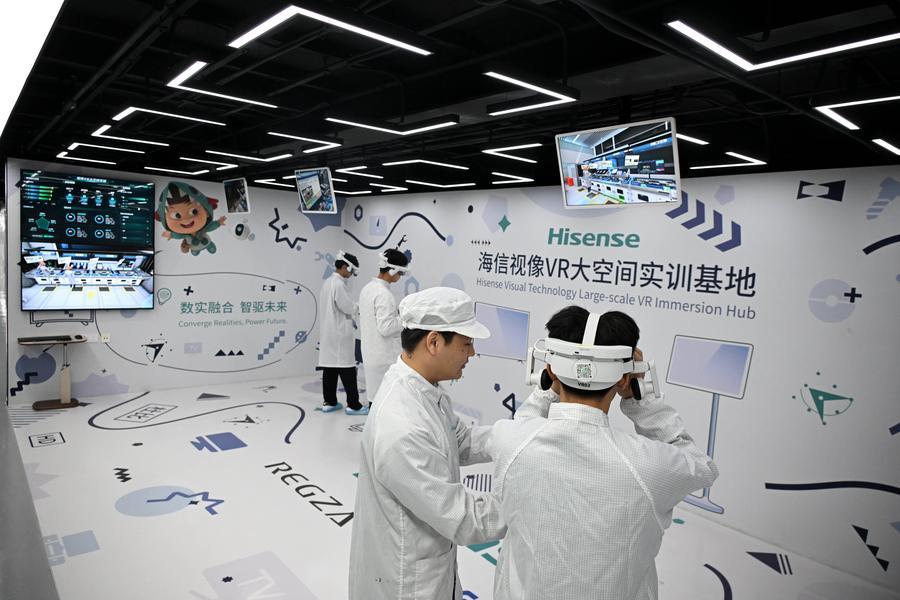
The labor strategy moves with industrial policy. On October 9, China issued guidelines on accelerating the development of new quality productive forces. The 19 measures commit to full implementation of the “AI Plus” initiative across traditional industries, alongside policies to cultivate the talent those industries will need. Of the 109 major projects in the 15th Five-Year Plan, 28 are devoted to new quality productive forces, accounting for 25.7 percent. Factories are being upgraded and workers are being trained to operate them within the same planning cycle.
The results so far are steady. China created 10.52 million new urban jobs in the first nine months of 2026, reaching 87.7 percent of its annual goal. The surveyed urban unemployment rate averaged 5.2 percent through August. All of this came in a year when a record 12.7 million graduates are set to join the job market.
What makes the model relevant beyond China is that Beijing is offering to share it. In July, China launched the World AI Cooperation Organization in Shanghai, with Kazakhstan, Laos, Pakistan, Russia and Indonesia among its founding members. China will provide developing countries with 5,000 opportunities in AI training and seminar programs in the next five years. Chinese universities are introducing targeted training programs to cultivate cross-border AI talent for ASEAN markets. The message was that developing countries should help make the rules of AI, not just receive the technology.
Across Pakistan, South Asia and Africa, AI is arriving in economies whose main task is creating jobs for millions of young people every year. These countries cannot match China’s fiscal resources, but they can learn from the sequence it has taken. That means naming the new occupations early, writing standards so training institutes know what to teach, and publishing employment data often enough to adjust policy as conditions change.
China’s 200 new occupational standards could become a shared resource through the World AI Cooperation Organization and existing Belt and Road training programs. A Pakistani polytechnic or a Kenyan technical college would gain a tested curriculum for jobs its graduates will soon be applying for. That kind of cooperation spreads the benefits of AI more widely than any single model or chip.
The countries that thrive in the AI era will be those that prepare their people for the technology before it reaches the workplace, not after. China has shown that this preparation can be planned, measured and shared. For the Global South, the most useful thing Beijing can export may be its job list.
The article reflects the author’s opinions, and not necessarily the views of China Focus.