China-EU Relations in 2026: Competition, Interdependence, and Responsibility
 Facebook
 Twitter
 Linkedin
 Google +
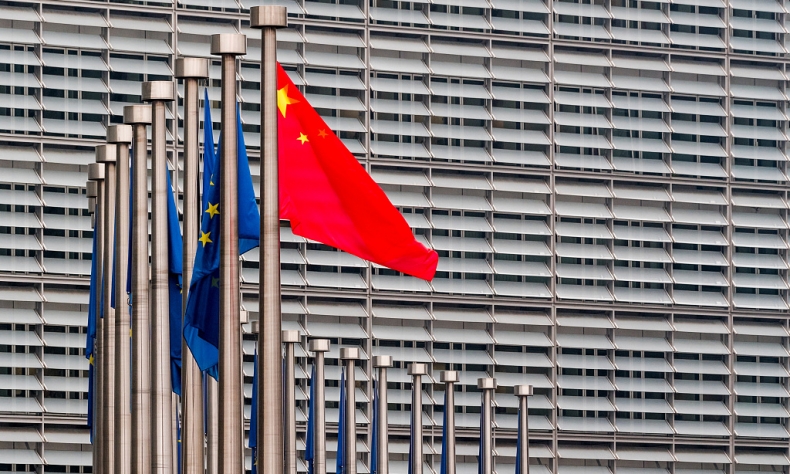
In a world where uncertainty has become the norm rather than the exception, the importance of China-EU relations lies not in eliminating differences, but in preventing those differences from hardening into new fault lines.
Relations between China and the European Union (EU) are entering a new phase of recalibration since the beginning of 2026. The year 2025 carried both symbolic and substantive significance: it marked the 50th anniversary of diplomatic relations, the 25th China-EU leaders’ meeting was held in Beijing, and there was sustained high-level engagement amid a noticeable rise in global uncertainty. While structural differences remain, a clearer consensus has emerged—under current international conditions, dialogue and coordination between China and the EU are no longer optional, but increasingly necessary.
From an economic perspective, expectations for coordination have strengthened as both sides look toward 2026. In October 2025, Chinese Minister of Commerce Wang Wentao met with EU Commissioner for Trade and Economic Security Maroš Šefčovič to upgrade the bilateral export control dialogue mechanism. At the same time, multiple studies indicate that the EU’s reliance on Chinese critical raw materials has increased over the past five years.
This interdependence goes both ways. China and Europe have developed structurally complementary trade and industrial ties: China is an important source of goods and technologies for Europe, while Europe is also a major market and partner for Chinese firms. European industries continue to depend on cooperation with China for key inputs, supply chain stability, and certain technological and high-end manufacturing segments. This reciprocal interaction forms the practical foundation of China-EU economic relations and explains why sustained dialogue and cooperation remain indispensable, even amid frictions.
A European perspective: pragmatic adjustment amid industrial competition
The most visible adjustments in China-EU relations in 2025 occurred in the industrial and technological domains, particularly in electric vehicles and battery supply chains. From a European perspective, the continued strengthening of China’s competitiveness in these sectors has become a key reference point for assessing the future trajectory of the relationship.
Official state visits by European leaders toward the end of 2025 reflected this dynamic. Spanish Prime Minister Pedro Sánchez and French President Emmanuel Macron visited China in November and December, respectively, with their trips closely aligned with concrete industrial developments. In November, China’s battery manufacturer CATL and automotive group Stellantis signed an agreement to build a lithium iron phosphate battery plant in Zaragoza, designed to operate as a carbon-neutral facility with a planned annual capacity of up to 50 GWh. Spain has framed the investment as an integral part of its decarbonization strategy and automotive electrification efforts.
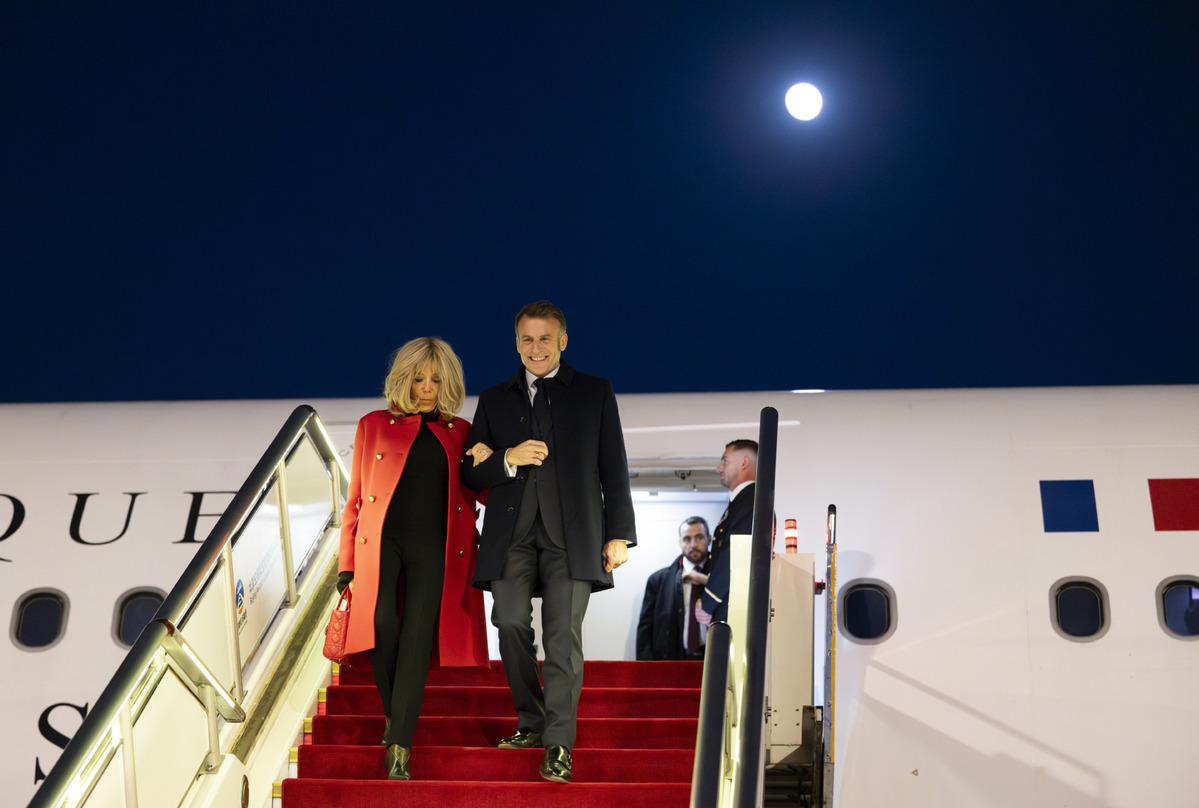
Discussions in France have similarly taken on a pragmatic tone. Following his visit to China, President Macron emphasized Europe’s openness to international investment, including from Chinese firms, to create value and employment. France is actively exploring multiple pathways to support the transformation and competitiveness of its automotive sector. Battery producer AESC has already begun operations in Douai with an annual capacity of 10 GWh, and further projects may follow. Within the French automotive industry, a growing consensus has emerged that the technological experience and cost efficiency demonstrated by Chinese electric vehicle manufacturers merit close examination as Europe advances its own industrial transition.
At the same time, trade and regulatory frictions have not disappeared. In December 2024, the European Commission imposed additional duties on imports of Chinese battery electric vehicles. Yet market developments in 2025 suggest that, even under such measures, Chinese electric vehicle manufacturers have maintained their competitiveness and market appeal in the EU, resulting in a sharp rise in its EV exports to the EU. This outcome has prompted renewed internal reflection within Europe on the effectiveness and long-term sustainability of relying on narrowly defensive policy instruments.
More broadly, the EU’s approach to Chinese electric vehicles and related industries is undergoing a subtle but important adjustment. Faced with rising energy transition costs, mounting pressure on industrial competitiveness, and a markedly more complex security environment, European debates are increasingly focused on balancing industrial protection, green transformation, and external economic relations. This shift does not represent a reversal of position, but rather a reassessment of policy priorities and tools in light of changing real-world constraints.
A Chinese perspective: interdependence as a stabilizing mechanism
Viewing China-EU relations solely through the lens of industrial competition risks overlooking a more fundamental question: what role does the relationship play in an international system marked by rising uncertainty and fragmentation?
From a Chinese perspective, the reassessment of China-EU relations at the start of 2026 is driven less by individual trade disputes than by deeper systemic changes. Over the past year, spillovers from geopolitical conflicts, heightened energy and supply chain risks, and growing strain on multilateral governance have become increasingly evident. In this context, Europe occupies a distinctive place in China’s external relations—not only as a major economic partner, but as a systemic actor with regulatory influence and rule-shaping capacity.
A defining feature of China’s approach to Europe is the acceptance that competition and cooperation will coexist over the long term. In areas such as batteries, electric vehicles, and green technologies, Chinese firms have developed clear technological and cost advantages. From Beijing’s perspective, deeper engagement with Europe through investment, localization, and compliance with European regulatory standards is not intended to weaken Europe’s industrial base, but to advance complementary development within existing international divisions of labor. In this sense, interdependence is viewed not as a source of vulnerability, but as a mechanism for synergizing the supply chain and reducing systemic uncertainty.
Chinese analysts have also taken note of the evolving European debate on Chinese electric vehicles and related industries, which has gradually shifted from a singular emphasis on risk prevention toward a search for more sustainable balances among competition, transformation, and security. This evolution reflects not policy inconsistency, but a rational response to changing material conditions.
Looking ahead to 2026: a shared responsibility in a turbulent world
Looking toward the rest of 2026, the central challenge for China and the EU is not whether competition will persist, but whether cooperation can prevent competition from becoming destabilizing. Competition is a normal feature of a globalized economy, as firms on both sides seek efficiency gains and market expansion. The critical task is to manage competition through institutional arrangements, multilateral rules and policy coordination so that it does not translate into systemic risk.
In this process, further participation by Chinese firms in Europe’s battery and electric vehicle supply chains—under European rules and standards—could contribute to industrial transformation and employment creation, while enhancing the long-term stability and predictability of China-EU industrial linkages. At the same time, the significance of China-EU cooperation extends well beyond industrial policy. On issues such as climate change, energy transition, and reform of international economic governance, both sides share strong interests in stability, rule-based interaction, and sustainable cooperation.
In a world where uncertainty has become the norm rather than the exception, the importance of China-EU relations lies not in eliminating differences, but in preventing those differences from hardening into new fault lines. Whether China and the EU can remain constructive amid competition and uphold basic boundaries amid disagreement will shape not only their bilateral relationship, but also the broader direction of the international system, as a potential force for stability and peace in an increasingly turbulent world.
Dr George N. Tzogopoulos, Lecturer at the European Institute of Nice (Cife)
Dr Ding Jie, Researcher, Director of Center for International Relations Studies, Academy of Contemporary China and Wold Studies
The article reflects the author‘s opinions, and not necessarily the views of China Focus.