China-Serbia Ties Go from Strength to Strength
 Facebook
 Twitter
 Linkedin
 Google +
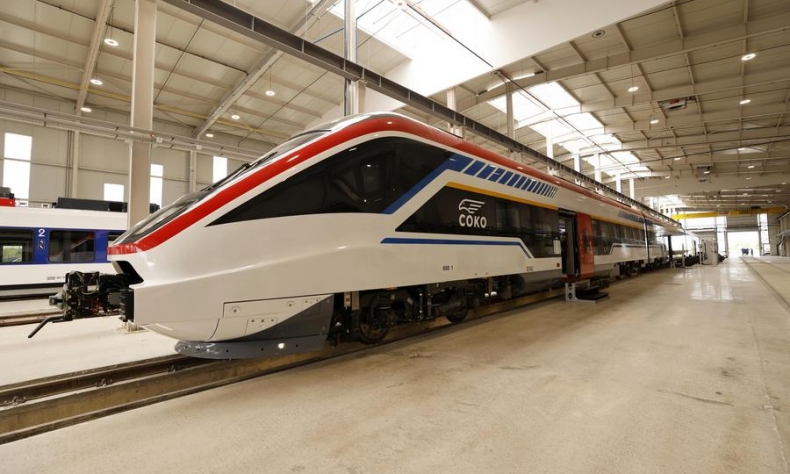
China-Serbia relations have grown into a wide-ranging partnership built on trade, investment and a shared vision for global governance.
The comprehensive bilateral relations between China and Serbia have been steadily progressing over the last two decades. The cooperation is not new, as it has historical roots dating back to the period when Serbia was part of Yugoslavia, which established diplomatic relations with China in 1955. Serbia, as one of the successor states of Yugoslavia, has continued as a sovereign country to develop its relations with China, with bilateral ties reaching their highest level in recent years.
This diplomatic cooperation has progressed through several key political agreements, including a strategic partnership agreement (2009), the China-Serbia comprehensive strategic partnership (2016) and the China-Serbia community with a shared future in the new era (2024).
These agreements were reinforced by frequent high-level visits, notably Chinese President Xi Jinping’s visits to Serbia in 2016 and 2024 and President Aleksandar Vucic’s visit to China in 2026. This consistent diplomatic engagement, often described as an “ironclad” friendship, has provided a strong foundation for broader cooperation.
Serbia supports China’s efforts to promote multilateralism and participates in all of China’s global initiatives: the Global Development, Global Security, Global Civilization and Global Governance initiatives. The values and norms promoted by these frameworks align with Serbian national policies and strategies, which is why Serbia has chosen to collaborate with China through them.
For Serbia, a Balkan country at the crossroads of East and West — a position that creates geopolitical complications — having partners who support its development is essential. China is among those partners, offering significant political and economic value.
Since Serbia joined the China-Central and Eastern European Countries cooperation framework in 2012 and the Belt and Road Initiative (BRI) in 2016, economic collaboration has improved significantly, making Serbia a leader in trade and investment ties with China among Western Balkan nations.
In terms of trade volume, the results speak for themselves: bilateral trade grew from $1.5 billion in 2013 to $7 billion in 2025.
Serbian exports to China rose significantly when Zijin Mining started exporting copper to China in 2018, making it the largest exporter from Serbia. Additionally, China and Serbia signed a free trade agreement in 2023. The Serbian government plans to use this agreement to export Serbian products to China under favorable tariff conditions. Within this FTA, Serbia included around 10,000 products that can be exported to China under improved conditions. The Serbian government is also using Chinese trade fairs to promote national products in the Chinese market.
Chinese state-owned and private enterprises are also active in the Serbian market, primarily as a result of cooperation within the BRI. Three foreign investments are especially important and play a significant role in Serbian economic development.
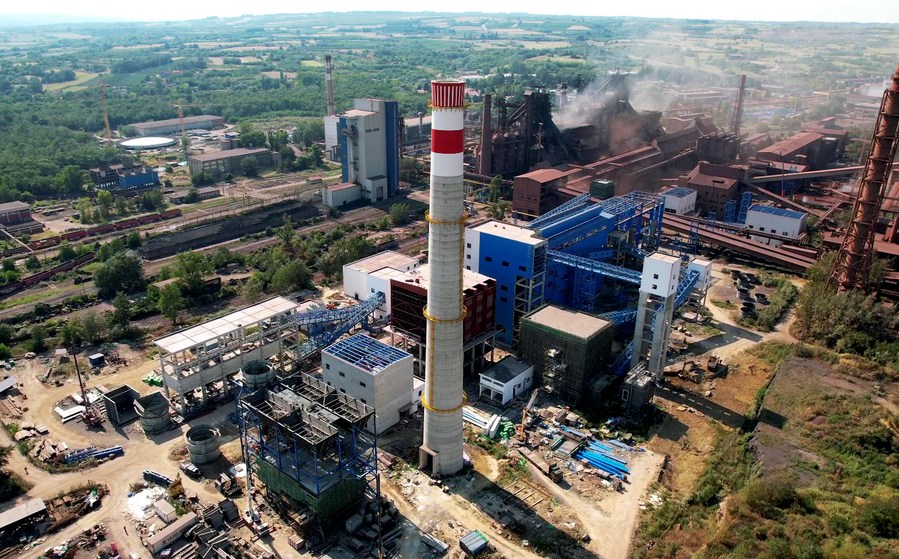
The first is the acquisition of the Serbian state copper mine Bor by China’s state-owned company Zijin Mining, which successfully transformed the mine and is now the No. 1 Serbian exporter. The second is the acquisition of the state steel factory in Smederevo by the Chinese state-owned company HBIS. This steel factory is among the biggest exporters from Serbia, a remarkable success bearing in mind that the factory had been struggling for many years and its future viability had been in question. The third is the investment by the Chinese private company Shandong Linglong, which produces tires for the European market and made one of the biggest foreign direct investments in Serbian history.
Besides those, many other Chinese companies, especially private ones, are investing in Serbia, such as Mei Ta, Minth, Xingyu, Yanfeng, Lianbo and Shanghai Huizhong Automotive Manufacturing. All of these investments are in the automotive sector, which is making Serbia a regional hub for the automotive industry.
Numerous Chinese state-owned companies are also working on construction projects across Serbia. The most important include the Mihajlo Pupin Bridge, the Budapest-Belgrade railway, the Kostolac Thermopower Plant, the Belgrade Metro, the Miloš Veliki highway, the Danube corridor, the National Football Stadium and the Clean Serbia project.
Of these, the infrastructure projects are especially significant, particularly railroads, highways and energy. Serbia faced difficult economic times after the disintegration of Yugoslavia and the NATO bombardment, during which its transportation infrastructure was severely damaged. The country also lacked the funds to modernize its energy facilities, which would have improved its energy security. Through cooperation with China within the China-Central and Eastern European Countries (CEEC) framework and the BRI, China provided the financing to enable these essential construction projects.
According to official sources, as of 2025, Chinese companies in Serbia employed 25,000 people, making a significant impact on the development of the national economy.
Strong diplomatic cooperation between China and Serbia led to the adoption of a visa-free regime between the two countries in 2017. In addition to this diplomatic achievement, Serbia now has four direct flights to China, from Belgrade to Beijing, Shanghai, Tianjin and Guangzhou. These developments have significantly boosted tourism, with a steady increase in Chinese visitors.
Following the pandemic, demand rose further, and last year Serbia welcomed 184,000 Chinese tourists, setting a record. This continued growth benefits the domestic tourism industry and further strengthens China-Serbia relations.
The latest visit of the Serbian delegation to China reflects the strength of bilateral ties between the two nations. It is a case in which two nations found a successful way to cooperate, support each other and achieve tremendous results in a short period. It is a testament to the fact that two vastly different nations, each with a specific cultural and historical background, one large and one small, one in Asia and one in Europe, could, in spite of all their differences, cooperate successfully.
Dr. Katarina Zakić is a senior research fellow at the Centre for China Studies at the Institute of International Politics and Economics in Belgrade.