Chinese Economy Shows Remarkable Resilience Against Headwinds
 Facebook
 Twitter
 Linkedin
 Google +

China’s firm and robust growth will continue, and so will the opportunities for the world.
On January 19, the China State Statistics Bureau announced that China’s GDP grew by 5 percent in 2025, achieving the target set at the beginning of the year and concluded the 14th Five-Year Plan (2021-2025) in a triumphant manner. It was a complete surprise to many observers and economists who had estimated around 4 percent growth for the year, due to the high tariffs imposed by the Trump Administration.
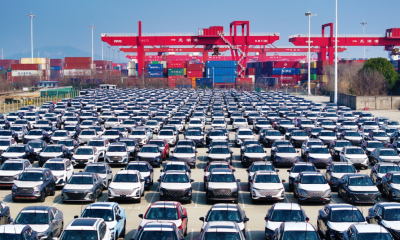
The unilateral high tariff, still at 40 percent by October 2025, did cause a sharp 20 percent drop in Chinese exports to the U.S., equivalent to a net loss of $104.61 billion. However, due to robust export growth to ASEAN, RCEP, and BRI countries, Chinese exports to the rest of the world soared by $299.26 billion, more than offsetting the decline to the U.S. As a result, Chinese global exports grew by 6.1 percent in 2025, very close to the 5.9 percent growth rate in 2024, before Trump re-entered the White House. China’s global merchandise surplus hit $1.19 trillion in 2025, the first trillion-dollar trade surplus recorded by a single country in human history. Net exports contributed 1.64 percentage points, or roughly one-third, to the country’s 5.0 percent GDP growth. The unilateral high tariff by the Trump Administration, meant to kill China’s growth and force it to kneel down, has been proven completely useless.
On January 19, 2026, when China announced its 2025 GDP growth, the IMF also published its World Economic Outlook (WEO), featuring a headline that was both sensational and phenomenal: “World Economy Shakes off Tariff Shock amid Tech-Led Boom”. It raised the world economic growth forecast by 0.3 percentage points to 3.3 percent for 2025, and by 0.2 percentage points to 3.3 percent for 2026. Hence, proving that Trump’s worldwide tariff have had little impact on the world economy.
However, the main engine is not strong export performance but robust growth at home, driven by new productive forces and green transition.
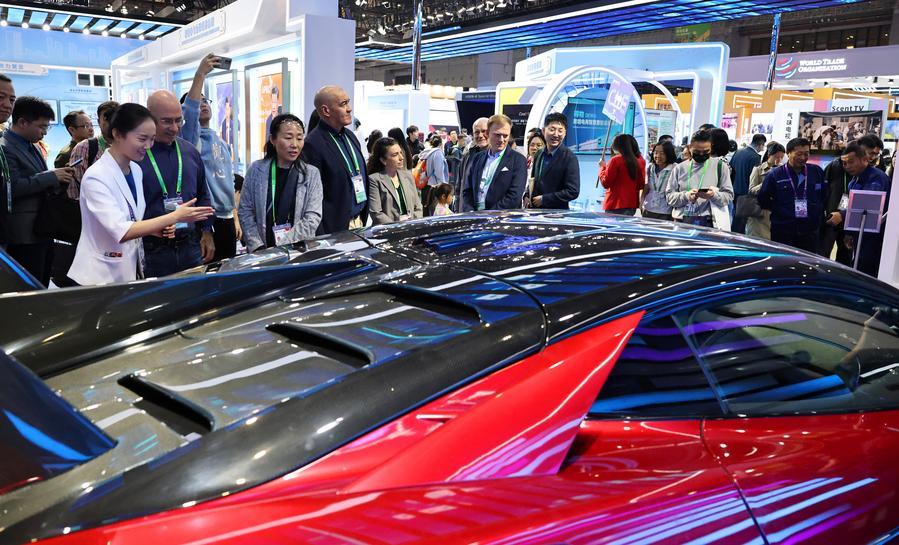
In 2025, the above-scale industrial output added value increased by 5.8 percent, faster than GDP growth, and increased GDP growth by a full 1 percent. Among total industrial production, information and telecom technology grew by 10.7 percent, while high-tech manufacturing grew by 9.4 percent. The added value of automobiles increased by 11.5 percent, and that of electronics by 10.6 percent. Among automobiles, output of new energy vehicles (NEVs) shot up by 25 percent, and lithium cells by 41.7 percent. The Chinese green transition continued at an amazing pace, with wind turbine output rising by 48.9 percent. The robust new productive forces growth is based on a solid national drive of innovation and technology. In 2025, total R&D expenditure in China accounted for 2.8 percent of total GDP, surpassing the OECD average for the first time in history.
China’s remarkable growth has earned wide spread recognition worldwide. Friedrich Merz, the German Chancellor, stated that “The U.S. global pole position is being challenged … and China, with strategic foresight, worked its way into the ranks of global powers.” The British Prime Minister, Keir Starmer, put it more explicitly that “For years, the narrative ran that China was the coming power. Now, it has arrived.”
Despite great achievements, China has a much more ambitious blueprint for the second centenary goal of realizing Chinese modernization. The first step, China’s per capita GDP, currently around $14,000, will reach the level of the medium developed economy by 2035, a time span of two five-year plan periods. This year is the starting year of the 15th Five-Year Plan (2026-2030), a decisive period for 2035 goal.
The Fourth Plenary Session of 20th CPC National Committee held in last October has made comprehensive guidelines which include seven core goals: Significant achievements in high-quality development, substantial improvements in scientific and technological self-reliance and strength, fresh breakthroughs in further deepening reform comprehensively, notable cultural and ethical progress across society, further improvements in quality of life, major new strides in advancing the Beautiful China Initiative, and further advances in strengthening the national security shield.
China is expected to maintain its current growth pace during the 15th Five-Year Plan (FYP). The main drivers will be the development of a modern industrial system, the upgrading of traditional industries, and the strong focus on high-tech and emerging industries. AI and big data will be the foremost driving forces behind growth across all industries and services. It is estimated that AI will create an additional $15 trillion for the world by 2030, with China and the U.S. being by far the leading AI powers. AI, big data, and quantum computing will be the driving force behind China’s growth over the 15th FYP period. To this end, China will, with greater self-reliance and strength, continue to strengthen the whole nation’s drive for science and technology R&D, innovation and application, targeting new breakthroughs in core technologies and in key fields.
China needs to work with all countries and regions as equal partners and to draw on the best resources of the latest knowledge, technology and civilization of mankind. China will, as always, adhere to the open-door policy and continue to build up a high-level open economy.
No worries about China’s cooperation with the rest of the world. The past year has shown that the continuous growth of the Chinese economy has created a tremendous market and infinite opportunities for businesses and countries worldwide. China does not have any policy of “China First”, but a policy of shared development for all countries and regions, big or small, developed or developing. And 2025 also witnessed China’s supports for globalization and multilateral cooperation, while firmly opposing unilateralism and bullying.
Looking ahead, the 15th FYP will present a promising roadmap for Chinese modernization and global opportunities. No matter what headwinds arise, China’s firm and robust growth will continue, and so will the opportunities for the world.
The article reflects the author’s opinions, and not necessarily the views of China Focus.