Debunking the BRI “Debt Trap” Narrative
 Facebook
 Twitter
 Linkedin
 Google +
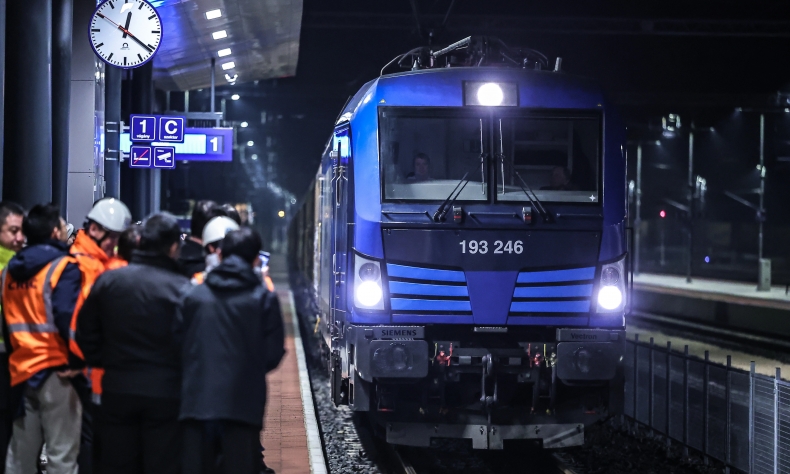
Western debt-trap narratives misinterpret China’s Belt and Road Initiative (BRI) and Eurasian connectivity boosted by the initiative could offer Europe a strategic pathway to shared prosperity.
Since 2013, the China-proposed Belt and Road Initiative (BRI) has supported transformative infrastructure construction and upgrading globally, yet Western critics have persistently cast doubt on its debt sustainability, transparency, and geopolitical motives. Against this backdrop, flagship projects like the China-Laos Railway demonstrate tangible benefits, helping Laos move from being land-locked to land-linked and boosting trade, tourism, and employment.
In a time of geopolitical fracturing and economic uncertainty, does the BRI offer a tangible pathway toward stability and shared growth? China Today spoke with Hussein Askary, vice-chairman of the Belt and Road Institute in Sweden, to separate myth from reality and to look at what the BRI means for the future of Eurasia.
China Today: Western media often raise concerns about debt sustainability, transparency, and governance in BRI projects. As a European researcher who has long studied the initiative, how do you view these criticisms?
Hussein Askary: When Western outlets cover Chinese policies, they look for a “fly in the ointment.” When they couldn’t find one, they tend to invent it – often by projecting Western problems onto China. My research into high-profile cases like Sri Lanka, Zambia, Pakistan, and Kenya, reveals a consistent gap between the prevailing Western narrative and the facts.
First, Chinese loans usually make up a relatively modest share of these countries’ total external debt, never exceeding 15 percent. When Sri Lanka defaulted in 2022, for example, Chinese debt accounted for only about 10 percent; the rest was owed largely to Western private bondholders.
Second, those Western private loans were typically short-term and carry high interest rates, dwarfing Chinese lending in both cost and risk.
Third, and most critically, Chinese financing builds productive infrastructure that expands long-term economic capacity, whereas Western private capital is frequently deployed merely to bridge trade deficits and fiscal shortfalls – generating no tangible assets, only further liabilities. That, in essence, is the real debt trap.
China Today: The China-Laos Railway has transformed Laos from a historically land‑locked nation into a land‑linked one, substantially enhancing its connectivity with China and the broader Southeast Asian region. How do you view the project’s significance for Laos and what impact do you expect it to have on the region’s economic structure, trade patterns, and social development?
Hussein Askary: The Chinese saying that “to get rich, first build a road” reflects a fundamental economic principle. Infrastructure – whether roads, power plants, ports, or railways – can unlock the productive potential of previously isolated regions by enabling the full utilization of their human and natural resources. This is the essence of what we term an “economic belt” or “development corridor.”
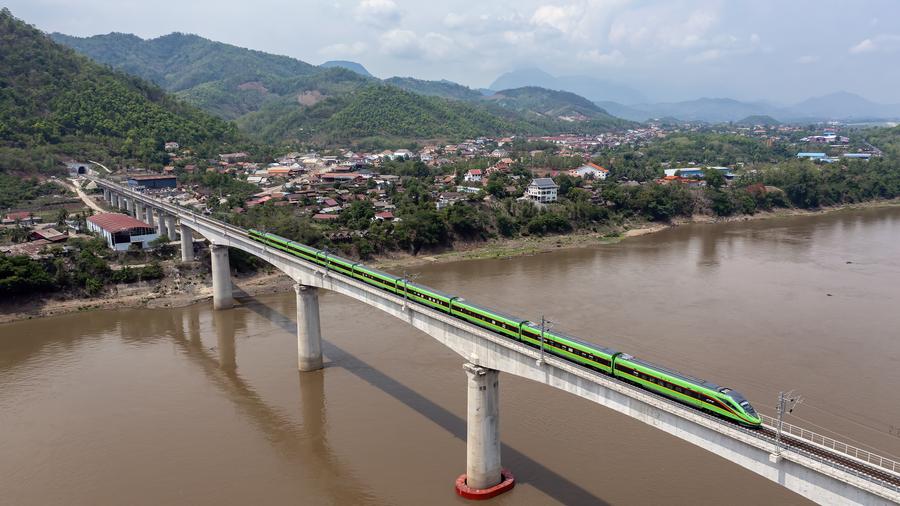
The transformative impact usually extends far beyond the mere transportation of goods from point A to point B. What matters most is what occurs in the space between those points: the emergence of new commercial activities, the introduction of modern production methods into low-productivity traditional sectors, and the broader improvement of local economies. This is precisely what is unfolding along the Kunming-Vientiane corridor.
Moreover, the full economic dividend will only be realized when Thailand and the wider Southeast Asia market are fully integrated into this network. The China-Laos Railway is not merely a bilateral project; it is a foundational link in a broader regional architecture that will reshape trade flows and industrial distribution, and ultimately, help improve living standards across mainland Southeast Asia.
China Today: Western narratives often view the BRI through a geopolitical lens. But on the ground, projects like the China-Laos Railway have boosted tourism, logistics, and jobs. What role does infrastructure play in the modernization of developing countries?
Hussein Askary: Geopolitical containment is an American preoccupation, as evidenced by Quad and AUKUS – initiatives that offer little in terms of real economic gain or lasting security for Asia. By contrast, China’s approach is different: it is grounded in the idea that peace is sustained through economic development.
Infrastructure connectivity is the critical enabler of this process. Enhanced physical integration – through the unrestricted movements of resources, integrated supply-chain linkages, and expanded market access – can directly elevate a developing country’s modernization capacity. These are not abstract benefits; they are measurable drivers of productivity and growth. Equally important, though less quantifiable, is the human dimension. The Belt and Road Initiative places significant emphasis on people-to-people ties and cultural exchanges – elements that foster mutual understanding of histories, traditions, and social contexts. This was the defining feature of the ancient Silk Road, where the exchange of ideas, cultural artifacts, and technological innovations – from musical instruments and paper-making techniques, to advanced water-management systems – generated shared prosperity across communities. The modern BRI, in this respect, is not inventing a new model but reviving a proven one.
China Today: With persistent conflict in the Middle East and beyond, does a development‑focused initiative like the BRI still matter for global stability and recovery?
Hussein Askary: As the saying goes, “There is no road to peace. Peace is the road.” The BRI embodies precisely that principle: it serves as a vehicle for cooperation among nations with disparate cultures, political systems, and historical trajectories, bound together by shared imperatives of security and prosperity.
Conflict is not the default condition of human society. It arises from uncertainty and perceived scarcity – the fear that resources are finite and must be fought over. The zero-sum mindset, where one’s gain necessitates another’s loss, has driven much of modern strife.
President Xi Jinping has offered an alternative: do not fight over the size of the pie; work together to make it larger.
This is not merely rhetoric. Human beings possess an inherent capacity for creativity and scientific discovery – tools that can transcend resource constraints through technological breakthroughs and innovation. The greater challenge lies in the cultural and ideological sphere: in cultivating an understanding of our shared identity and our responsibility to advance the common good, both for the present and for future generations.
Herein lies a critical tension in contemporary global affairs. There are still those who act from a belief that greater resources, power, and privilege are theirs by right – a right born of inherent superiority. It is an ideology – one that has inflicted catastrophic suffering on humanity over centuries.
The choice in front of us is fundamental. A culture corroded by such thinking turns the world into a jungle, ruled by raw competition. A culture guided by noble purpose can cultivate a garden – a system of mutual benefit and harmonious coexistence. What ultimately matters are the values we pass on and the education we give the next generation, preparing them to build a fairer world.
China Today: From a European perspective, how does the BRI fit into Eurasia’s development? Can cross‑border infrastructure projects such as the China-Laos Railway offer lessons for Eurasia’s connectivity?
Hussein Askary: At the Belt and Road Institute in Sweden, our assessment is that Europe’s strategic future hinges on establishing a harmonious and mutually beneficial relationship with both Russia and China – and by extension, with Eurasia and Africa. The economic rationale is compelling on multiple fronts.
Historically, much of Europe’s industrial prosperity has been underpinned by stable energy ties with Russia, even during the Cold War era. Russian natural gas and oil were instrumental in fueling Central Europe’s industrial advancement.
Today, a parallel interdependence defines EU-China relations: the bilateral flow of industrial goods and technologies has become critical to economic activities and livelihoods on both sides. A recent study by a leading Swedish economic think tank concluded that a substantial portion of productivity gains in the country’s machine-tool sector – and the corresponding wage growth for workers – stems directly from imports of high-quality, cost-competitive industrial input from China.
The imperative of Eurasian connectivity is perhaps even more vividly illustrated by the China-Europe Railway Express (CEER), which has evolved into one of the EU’s most vital economic arteries.
Remarkably, it has maintained operations despite the war in Ukraine. While sanctions have been imposed on broad swathes of Russian activities, this corridor remains exempt, precisely because numerous European industries depend on it. One can only speculate on the security and economic environment dividends that additional Asia-Europe connectivity corridors might yield.
We also see great potential in triangular cooperation. China’s engagement with African nations – centered on infrastructure-led development – could serve as a model for Europe’s own relationship with the continent.
European politics often focuses on African migration, but rarely on its root cause: the lack of economic opportunity that drives young Africans to leave their countries. Accelerating Africa’s development would not only create incentives for its youth to remain and build domestically; it would simultaneously inject momentum into Europe’s stagnant economies through high-quality growth. In this sense, the BRI offers Europe not a threat, but a strategic opportunity – on multiple fronts.