The Chinese Modernization Model: Patience as Strategy
 Facebook
 Twitter
 Linkedin
 Google +

China’s experience is worth examining because it shows there was never only one model to begin with.
The Communist Party of China (CPC) has traversed 105 remarkable years of history. Under its leadership, China has fundamentally transformed itself from a poor and weak nation, and is advancing toward modernization suited to its own national conditions.
For decades, the word “modernization” carried an unspoken suffix: Westernization. Grow the economy, hold elections, open the capital account, and prosperity would follow in roughly that order. China’s experience is worth examining because it shows there was never only one model to begin with.
The numbers are the easy part to state. China’s GDP rose from 117 trillion yuan in 2021 to roughly 140 trillion yuan in 2025, averaging 5.4 percent annual growth through a period that included a pandemic hangover, a property slowdown, and an increasingly hostile trade environment with the United States. Per capita GDP has grown from $ 12551 in 2021 to $ 13953 in 2025, staying above 13,000 U.S. dollars for three consecutive years. The country has, by its own official account, accounted for something like 30 percent of global growth over that stretch. In a world where the IMF has repeatedly trimmed its global forecasts, that is not a small claim.
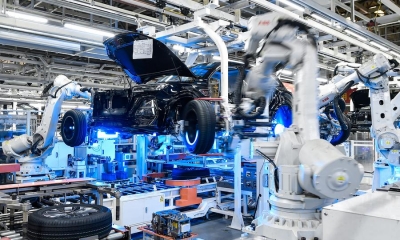
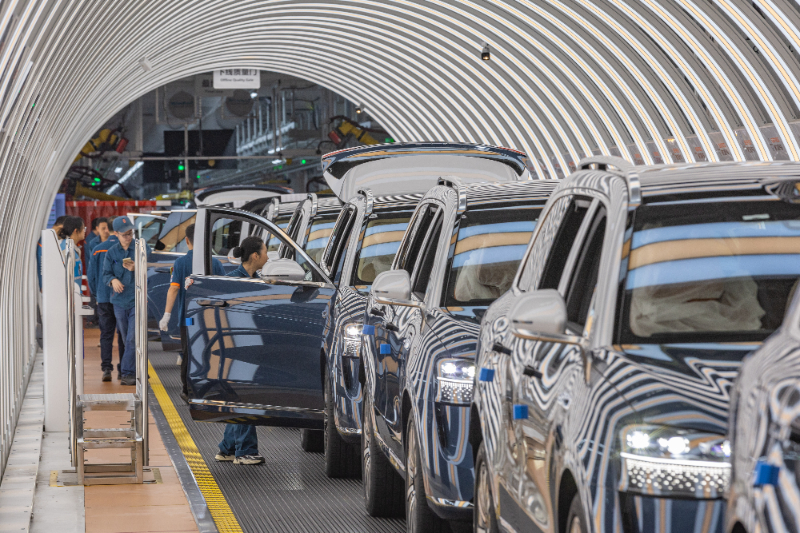
What is more interesting than the growth rate is its composition. The digital economy’s share of GDP climbed from 7.8 percent to 10.5 percent over the 14th Five-Year Plan period (2021–2025). High-tech manufacturing now contributes roughly a quarter of industrial growth. A domestically built passenger jet, the C919, is flying commercial routes. New energy vehicles passed half of domestic auto sales for the first time last year. None of this fits the old caricature of China as a low-cost assembly line for other people’s inventions. It fits, instead, into a pattern that other late developers, from South Korea to Japan before it, have followed: heavy state coordination of industrial policy, sustained investment in infrastructure and education, and a willingness to run the economy for the long term rather than the next election cycle.
That last point is the one Chinese commentators, and increasingly some foreign ones, keep returning to. An oft-cited Foreign Policy piece on African development made the observation that many governments on the continent plan around electoral calendars rather than industrial ones, which produces roads and power plants that get started, defunded, and abandoned as governments change. Whether or not one finds the comparison flattering to Beijing, the underlying diagnosis, that infrastructure and manufacturing capacity require patience that election cycles don’t always reward, is a real and separate question from whether authoritarian planning is desirable on other grounds.
China’s answer to that tension has been to package its domestic experience into public goods for the world. The Belt and Road Initiative, now well into its second decade, has shifted from large-scale loans for ports and railways toward smaller, more targeted projects, a change partly forced by China’s own slower growth and its banks’ appetite for risk. Trade with BRI partners still reached 8.28 trillion yuan in the first four months of this year, up 13.5 percent year on year. In May, Beijing launched the Global Partnership for Poverty Reduction and Development with 53 countries and nine international organizations, explicitly built around transplanting rural poverty-reduction techniques that lifted close to 100 million Chinese out of poverty over the past decade.
On the diplomatic side, the Global Governance Initiative, the newest of four framework documents Chinese President Xi Jinping has rolled out since 2021, has picked up declared support from around 150 countries and international organizations, and a white paper released in June laid out follow-through plans on AI governance, dispute mediation, and a new forum in Xiong’an. Sovereign equality, adherence to international law, multilateralism. Washington’s retrenchment from international institutions and its more unilateral turn under the current administration have left a vacuum that Beijing is visibly ready to fill.
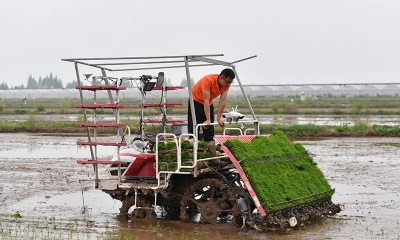
China has made substantive records: poverty reduction at scale, a manufacturing base that has moved up the value chain, and a diplomatic architecture that genuinely resonates with governments tired of being lectured. The more useful question, for policymakers in Lagos, Jakarta, or Islamabad weighing which parts of the model to borrow, is not whether China’s path is real. It clearly is. It is which pieces of it travel, and which depend on conditions, party discipline, state capacity, decades of patient planning, that are harder to replicate than a five-year plan on paper suggests.
The article reflects the author’s opinions, and not necessarily the views of China Focus.