The Limits of American Power
 Facebook
 Twitter
 Linkedin
 Google +
China, meanwhile, doesn’t need to do very much. The more the United States damages its own global reputation through conflict and coercion, the more attractive China becomes as a source of investment, infrastructure and development.
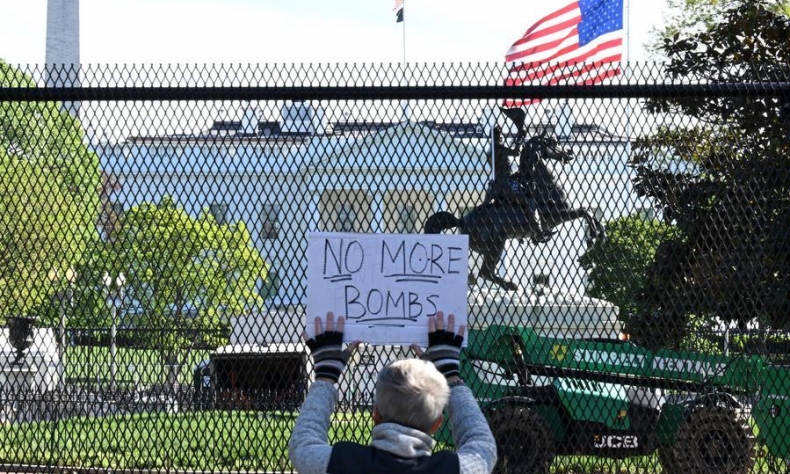
Recent tensions between the United States and Iran have once again thrust the Middle East into the global spotlight. As military confrontation gives way to renewed political bargaining, fundamental questions remain: What do Washington and Tehran ultimately want? And what do these developments reveal about the shifting balance of power in an increasingly multipolar world?
To discuss these issues, Beijing Review spoke with Danny Haiphong, an American independent journalist and researcher specializing in U.S. foreign policy and geopolitics. The following is an excerpt of Danny Haiphong from the interview:
Danny Haiphong: Iran’s primary objective is to consolidate the leverage it has gained through its strategic position at the Strait of Hormuz and through its demonstration of military capability. By showing what it is capable of, Tehran wants the international community to recognize that it is an indispensable regional actor whose interests must be taken seriously. Ultimately, Iran seeks fair cooperation with the rest of the world so that it can pursue its own development and safeguard its national interests.
The United States, on the other hand, has pursued a very different objective. Its goal has been to weaken, or even destroy, Iran’s capacity to develop independently and to exist as part of an international order that is not dominated by Washington. Initially, the U.S. sought regime change, but that objective has proved unrealistic and remains unlikely in the foreseeable future.
In that sense, the broader strategic goals of both the United States and Israel have not been achieved. They have failed to significantly weaken Iran or eliminate it as an alternative center of influence in the Middle East.
One important consequence is that future military interventions will become far more difficult to justify, even among America’s own political and business elites. They increasingly recognize that future conflicts could be prolonged, costly and carry no guarantee of success.
More importantly, the United States now faces a new reality: any major conflict involving countries such as Iran, Russia or China could trigger severe economic disruptions beyond Washington’s control. The consequences would extend far beyond the battlefield, affecting the global financial system as well as the U.S. domestic economy. Public support for such wars is also likely to continue declining, raising deeper questions about the sustainability of America’s global military posture.
This represents a significant turning point. It creates an opportunity for the international community to rethink whether the existing global economic and political system remains capable of addressing humanity’s shared challenges. In my view, if we are serious about solving those problems, the world will ultimately need a fundamentally different system rather than continuing along its current path.
On the one hand, the United States, in what I see as a period of imperial decline, is increasingly isolating itself. On the other hand, much of the world is still tied to, and frankly trapped within, the global financial system that the U.S. has long dominated.

That system still exists in a very significant way. Many countries remain constrained by both their domestic political realities and a global financial architecture that is, at the very least, shaped by U.S. dominance and what we might call a debt-based model of governance. But here’s the contradiction: the very environment that has sustained U.S. dominance has also created the conditions for countries to seek an alternative.
It’s not just political or geopolitical will pushing countries like China, Russia, Iran and many others toward a different model. It’s also economic necessity. Under the current system, development itself eventually stalls. For many countries, especially in the Global South, there is no path to sustained development unless they pursue greater integration outside the existing U.S.-led framework.
The problem is that the current financial system has become increasingly detached from real development. It can offer debt, but very little else. If countries are burdened with debt while receiving no meaningful development in return, they inevitably suffer. That has been the story across much of the Global South.
This is where the multipolar world comes in. It has already emerged, and now it is developing. Like any historical process, that development is not linear. But at this moment, in 2026, I think it has entered a period of acceleration.
Just look at the last four years. The Ukraine conflict and the West’s sanctions campaign against Russia fundamentally reshaped the global economic landscape. The unprecedented scale of sanctions forced Russia to reorganize its economy and geopolitical relationships. Ironically, instead of collapsing, Russia has strengthened its capacity for independent development.
Perhaps even more importantly, it demonstrated to other countries that maintaining sovereignty and adapting to sanctions can actually leave a country more independent, more resilient, and in a stronger international position than before.
Iran has reinforced that lesson. From Russia’s perspective, there are very few plausible outcomes of the Iran war in which Russia does not benefit strategically.
China, meanwhile, doesn’t need to do very much. The more the United States damages its own global reputation through conflict and coercion, the more attractive China becomes as a source of investment, infrastructure and development.
That is true even for countries traditionally aligned with Washington. Consider Saudi Arabia or other Gulf states. They remain closely connected to the United States in many important ways. But if they face prolonged economic disruption and regional instability, I can easily imagine them picking up the phone and calling Beijing, saying: We need help. We need investment. We need a better path to recovery. China is uniquely positioned to provide that kind of assistance.
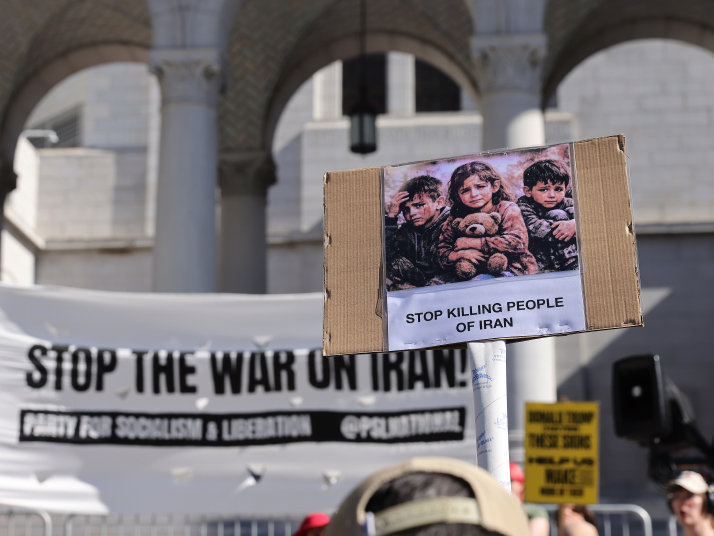
In that sense, the multipolar world is already here. The United States is trying to stop or even reverse it, essentially continuing the Cold War logic of eliminating alternative political and economic systems wherever they exist.
But the opposite is happening. A multipolar system, by definition, recognizes that different political and economic models can coexist. And that system continues to grow stronger because its principal pillars are emerging from these crises in a stronger position.
The Ukraine conflict, the events following October 7, 2023, the broader regional war that followed and ultimately the Iran conflict, all of these interconnected developments have, in my view, left Russia, China and Iran with greater strategic influence and more resources than before.
Iran, in particular, now plays a much more significant role in the global economy because of its sovereign control over the Strait of Hormuz. That gives it not only the ability to recover but also to exercise considerable influence over global trade and energy flows.
China, meanwhile, continues expanding global connectivity through trade, infrastructure and long-term development partnerships. That trajectory has not been interrupted. If anything, these crises have accelerated it.
That said, the process is not linear. Some multilateral organizations, especially consensus-based institutions such as BRICS and the Shanghai Cooperation Organization, will not always be able to lead this trend as effectively as people might expect.
In the short term, as countries like Russia, China and Iran become stronger, other states that remain on the fence face even greater pressure from Washington. We see this with countries such as India, Pakistan, Saudi Arabia and others that continually balance between closer ties with the United States and closer engagement with China.
Take the UAE, for example. In my view, taking such a hard-line position against Iran has proven costly. Iran is its regional neighbor. The economic consequences, from real estate to energy and broader regional stability, have been significant. If Abu Dhabi continues doubling down politically, its role in an increasingly multipolar world may diminish, ultimately to its own disadvantage.
That will remain one of the central contradictions. Many people in the West may be disappointed that more countries are not moving faster toward what they see as a more peaceful and development-oriented international order. But over the medium and long term, as the core pillars of the multipolar world continue to strengthen, countries that are in a position to join that trend will increasingly choose to do so, and, I believe, they will be better off for it.
So my expectation is that the coming years will see consolidation followed by expansion. Even if some newer BRICS members or other emerging partners are temporarily unable to play leadership roles, or even move backward under U.S. political pressure, the broader tendency toward a more multipolar world will continue. It has already gained too much momentum to be easily reversed.