China Ushers in New Era of Global South Cooperation in Changing World
 Facebook
 Twitter
 Linkedin
 Google +

Beijing hosted leaders from more than 10 Global South countries across Asia, the Middle East, Eastern Europe and Africa in the past three months, marking a new upsurge in China’s diplomatic engagement with the Global South.
The second quarter of 2026 has been a defining moment in China’s diplomacy with the Global South. Within just three months, Beijing welcomed leaders from Vietnam, Laos, Cambodia, Myanmar, Bangladesh, Tajikistan, Pakistan, Mozambique, Brunei, Belarus, and the UAE for high-level exchanges with President Xi Jinping.
Taken individually, each visit produced new agreements, renewed political trust and injected fresh momentum into the next phase of ties. Viewed together, however, they reveal something much larger. China’s diplomacy with the Global South is entering a new stage.
The focus is no longer simply on building roads, ports, bridges or power stations. Increasingly, Beijing is working with developing countries to build complete development ecosystems, spanning industrial capacity, technological innovation, digital transformation, green development and security. These efforts align with the global trend toward innovation-led cooperation amid geopolitical volatility. This is what Xi has consistently described as building a community with a shared future for humanity and advancing shared modernization.
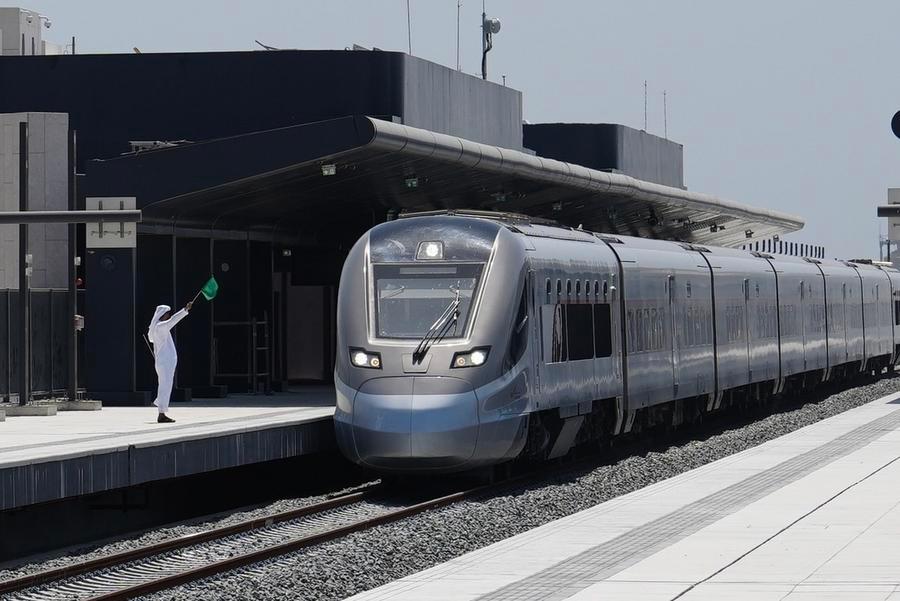
One striking feature of this diplomatic wave is that almost every visiting leader spent time beyond Beijing. They traveled on China’s high-speed railways and took part in tours of advanced manufacturing zones, innovation parks, technology companies, agricultural demonstration centers, business summits and poverty alleviation projects. These visits reflected a shared question: how did China transform itself into the world’s second-largest economy, and what lessons can other developing countries adapt to their own modernization?
The answer increasingly shapes China’s diplomacy. The Belt and Road Initiative’s first decade focused on addressing infrastructure deficits. The next phase is broader. China is not only exporting infrastructure but also sharing industrial know-how, digital technologies, vocational training, green industries and development experience. Rather than financing isolated projects, it is helping partners build the foundations of long-term economic competitiveness.
Today, these countries are aligning their development strategies with China’s for a better future, guided by frameworks that range from China’s four major global initiatives to its 15th Five-Year Plan (2026-2030).
The significance of these visits lies not simply in the number of leaders received, investment packages declared or agreements signed, but in the direction they collectively point. China and the Global South are laying the foundations for a new model of cooperation, one that pairs energy security with the green transition, connectivity with industrialization, and technology transfer with capacity building.
As this vision takes shape, the world is witnessing the emergence of a development partnership built not on geopolitical blocs but on common aspirations for prosperity and sustainable growth. Institutional security cooperation with South and Southeast Asian countries on combating digital fraud and counterterrorism is also gaining momentum.
Vietnam provides the clearest example. China and Vietnam signed more than 30 cooperation agreements covering high-speed rail, artificial intelligence, customs modernization, agricultural trade, digital economy and supply-chain integration. Bilateral trade exceeded $296 billion in 2025, making Vietnam China’s largest trading partner in ASEAN. More importantly, the relationship is evolving beyond trade toward co-production.
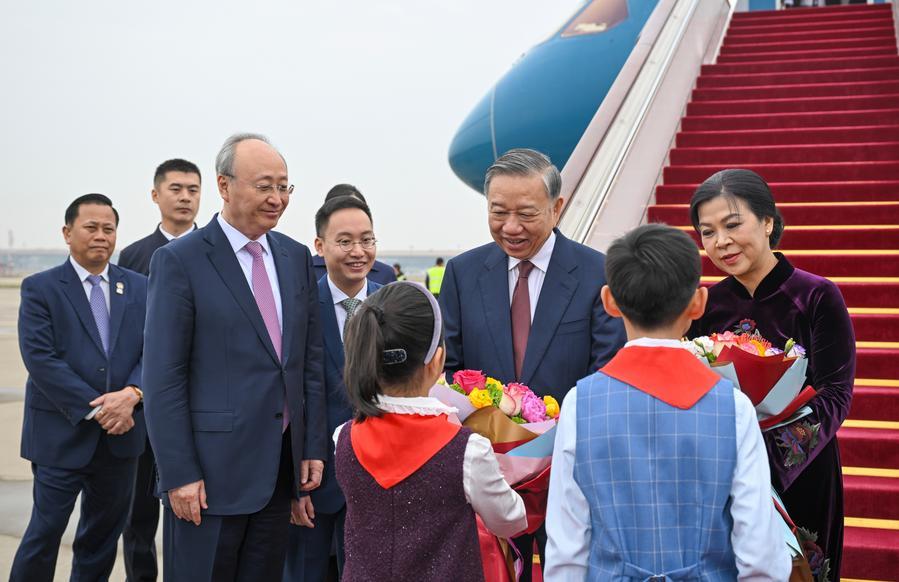
As multinational manufacturers diversify regional production, China and Vietnam are increasingly building complementary industrial chains in electronics, semiconductors, renewable energy and intelligent manufacturing. Rather than competing for investment, the two economies are becoming increasingly integrated.
Xi’s meeting with Lao President Thongloun Sisoulith reinforced another important pillar of China’s neighborhood diplomacy. The two leaders witnessed the signing of 32 cooperation agreements and documents spanning infrastructure, trade, finance, agriculture, customs cooperation, education and people-to-people exchanges, while jointly reaffirming their commitment to building a stronger China-Laos community with a shared future. The China-Laos Railway has already transformed Laos from a landlocked country into a land-linked economy, carrying tens of millions of tons of freight and opening a faster trade corridor between southwestern China and mainland Southeast Asia.
But both sides now see the railway as only the beginning. Their discussions focused on developing industrial parks along the railway, expanding cross-border supply chains, promoting agricultural exports, accelerating customs connectivity and attracting manufacturing investment. The railway is no longer simply moving goods; it is reshaping the economic geography of mainland Southeast Asia.
China’s engagement with Myanmar reflects the same strategic evolution. The two countries signed 18 cooperation agreements covering transport infrastructure, health care, agriculture, post-earthquake reconstruction, digital connectivity, media cooperation and livelihood projects. At the center of the discussions between Xi and Myanmar’s President Min Aung Hlaing was the continued development of the China-Myanmar Economic Corridor, one of the flagship projects of Belt and Road cooperation. Stretching from China’s Yunnan province to the Indian Ocean through highways, railways, pipelines and the Kyaukphyu Deep-Sea Port, the corridor creates an alternative gateway for trade and energy while strengthening regional supply-chain resilience.
Yet its significance extends well beyond logistics. By encouraging industrial development, improving livelihoods and expanding cross-border economic cooperation, both countries are seeking to make development itself the strongest foundation for long-term peace and stability.
The visit by Bangladesh’s prime minister, Tarique Rahman, offered the clearest expression of China’s new approach to neighborhood diplomacy. Xi and Rahman jointly announced the establishment of a China-Bangladesh community with a shared future in the new era, elevating bilateral ties to their highest level. The two sides signed 13 cooperation agreements and memorandums of understanding covering investment, trade, health care, education, green development, media cooperation, vocational training and human resource development.
More importantly, the agenda has moved decisively beyond traditional infrastructure. Artificial intelligence, the digital economy, advanced manufacturing, renewable energy and technological cooperation have become new engines of bilateral collaboration. Discussions also accelerated work on the modernization of Mongla Port, the China Economic and Industrial Zone in Chattogram and the proposed China-Bangladesh-Myanmar Economic Corridor, a project that could eventually link southwestern China with the Bay of Bengal through an integrated network of ports, industrial parks and logistics corridors.
Increasingly, Bangladesh is looking not only for Chinese investment but also for China’s industrial experience, technological capabilities and development expertise.
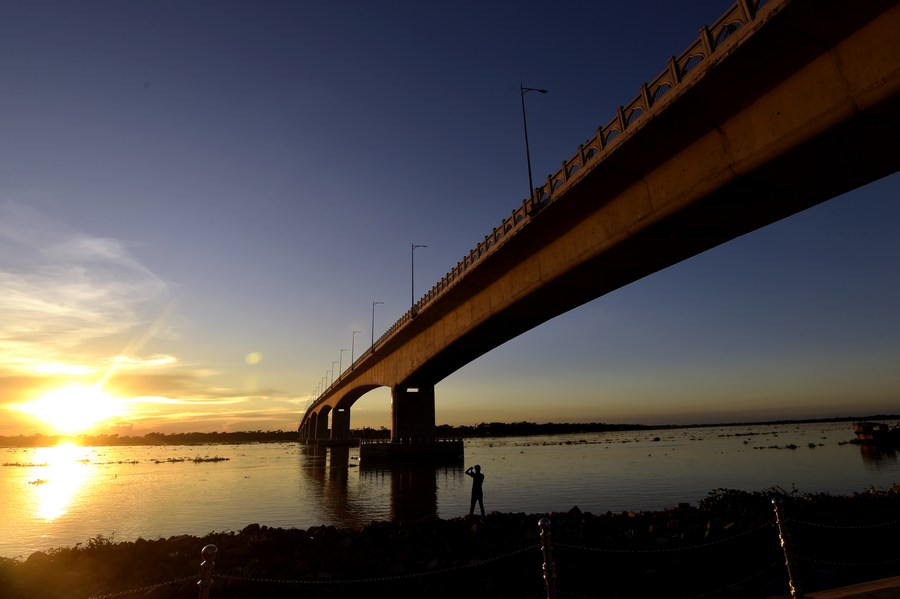
Central Asia has emerged as another key frontier of China’s shared modernization agenda. During President Emomali Rahmon’s visit, China and Tajikistan signed more than 30 cooperation documents covering artificial intelligence, digital trade, customs modernization, hydropower, green mining, scientific research and agricultural innovation. Chinese investment in Tajikistan has approached $6 billion, while bilateral trade reached $4.31 billion in 2025 and has continued to grow strongly this year.
As the global economy accelerates its transition toward clean energy, Tajikistan’s abundant hydropower resources and reserves of critical minerals including lithium, antimony and rare metals are becoming increasingly important. Combined with expanding transport links across Central Asia, these partnerships are helping build more diversified regional supply chains while supporting the green transformation of both economies.
During the visit by Pakistani Prime Minister Shehbaz Sharif, China and Pakistan signed multiple cooperation agreements and memorandums that advanced the second phase of the China-Pakistan Economic Corridor. The emphasis is shifting from large-scale infrastructure toward industrialization, modern agriculture, digital connectivity, science and technology cooperation and the development of special economic zones. As the corridor enters a new phase, it is becoming not only a transport corridor but also an integrated industrial and innovation platform linking western China with the Arabian Sea.
Xi’s meeting with Cambodian Senate President Hun Sen likewise advanced the Industrial Development Corridor and the Fish and Rice Corridor, supported by a new package of cooperation documents covering investment, manufacturing, agriculture, transport and vocational education. These initiatives are designed to help Cambodia climb the industrial value chain while strengthening food security and regional connectivity.
The same strategic thinking extends well beyond China’s immediate neighborhood. Mozambican President Daniel Chapo’s visit produced a series of new cooperation agreements in natural gas, agriculture, transport infrastructure, industrial parks and critical minerals. For China, Mozambique represents an increasingly important partner in securing the resources needed for the global energy transition. For Mozambique, Chinese investment offers opportunities to move beyond raw resource exports toward greater value-added industrial development.
During his meeting with Brunei Crown Prince Haji Al-Muhtadee Billah, Xi emphasized not only deepening traditional cooperation but also advancing major flagship projects and expanding cooperation in emerging fields. China-Brunei energy cooperation expanded collaboration from traditional oil and natural gas into petrochemicals, renewable energy, hydrogen technologies and the wider low-carbon economy. Rather than replacing conventional energy, both sides are working to ensure that traditional and renewable energy systems develop in parallel, strengthening long-term energy security while supporting the transition toward cleaner growth.
Xi’s meeting with Sheikh Khaled bin Mohamed bin Zayed Al Nahyan, Crown Prince of Abu Dhabi, carried significance that extended well beyond bilateral relations. The two sides signed a series of cooperation agreements covering energy, logistics, investment, finance, artificial intelligence and advanced manufacturing.
At a time of continuing uncertainty in the Middle East and heightened concerns over the security of maritime trade through the Strait of Hormuz, China and the UAE reaffirmed their commitment to safeguarding stable energy markets, strengthening regional connectivity and promoting dialogue as the preferred path toward peace. As one of China’s largest trading partners in the Arab world, the UAE is becoming an increasingly important bridge linking Asia, the Middle East and Africa through trade, finance and logistics.
When Xi welcomed Belarusian President Alexander Lukashenko to Beijing on June 29, it was not simply another summit. It was the latest chapter in a relationship that has gathered remarkable momentum over the past few years. Xi described China-Belarus relations as being at their “best period in history,” while Lukashenko’s trip, his 17th visit to China, spoke for itself. Few foreign leaders have invested as consistently in personal diplomacy with Xi, and that steady engagement has given the partnership unusual stability.
The timing also mattered. As Belarus continues to navigate the fallout from the Ukraine crisis, Western sanctions and mounting geopolitical pressure, Minsk has sought to broaden its foreign economic relationships beyond its traditional dependence on Russia. China has become a crucial part of that strategy. Beyond trade and investment, the relationship has given Belarus greater confidence in pursuing a more diversified diplomacy while securing its access to vital international markets, technology and long-term development.
The numbers tell the story. Bilateral trade has surpassed $8.8 billion, making China Belarus’ second-largest trading partner. Chinese companies have participated in 27 major industrial projects worth more than $5 billion, while the Great Stone China-Belarus Industrial Park outside Minsk has grown into one of the BRI’s flagship industrial hubs in Europe.
Now the partnership is moving into higher-value industries. 2026-2027 has been designated the Years of Industrial Cooperation, with both governments focusing on 11 strategic technologies, including artificial intelligence, robotics, semiconductors, electric vehicles, biotechnology, smart agriculture and digital infrastructure. The momentum extended beyond the leaders’ meeting. At the first China-Belarus Forum on Local Cooperation in Lanzhou, Gansu province, 43 cooperation agreements worth nearly $1 billion were signed, covering investment, science, education and regional partnerships. The message is increasingly clear: China and Belarus are no longer simply expanding trade, they are building the foundations of a long-term industrial, green and technological partnership.
Beyond the above high-level visits to Beijing, China’s diplomatic outreach extended to the 2026 Summer Davos Forum in Dalian (June 23-25), where Premier Li Qiang translated Xi’s strategic vision into an economic agenda. In separate meetings with the prime ministers of Kazakhstan, Guinea, Mongolia, Montenegro and South Korea, Li called for closer cooperation in advanced manufacturing, digital innovation, green development, industrial investment and resilient supply chains.
Together, these meetings underscored that China’s diplomacy is increasingly measured not only by political trust but by its ability to generate tangible opportunities for modernization and shared economic growth. Summer Davos demonstrated that China’s diplomacy increasingly extends beyond state-to-state relations. It is becoming a platform where political trust is translated into business confidence, technology partnerships, investment flows and practical cooperation that supports long-term modernization.
Taken together, these initiatives point to what Li has called “China Opportunity 2.0.” During the first decade of the BRI, China’s primary contribution was helping developing countries close their infrastructure gap. Today, the focus has shifted toward something far more comprehensive. China is helping its partners build development ecosystems. Railways are being connected to industrial parks. Ports are being integrated with manufacturing clusters. AI is being paired with vocational education. Renewable energy projects are supporting new green industrial chains. Customs modernization, digital trade and financial cooperation are being developed together to strengthen domestic productive capacity. This is the practical meaning of shared modernization.
In conclusion, as the world navigates unprecedented challenges, the nature of China’s engagement with the Global South is evolving. It is no longer about just exporting a single project. It is about co-creating the engines of future prosperity—be it in digital innovation, green industries, or supply chain resilience—ensuring that development is both sustainable and driven by domestic momentum.
Masuda Khatun is an international affairs analyst and freelance columnist based in Bangladesh.